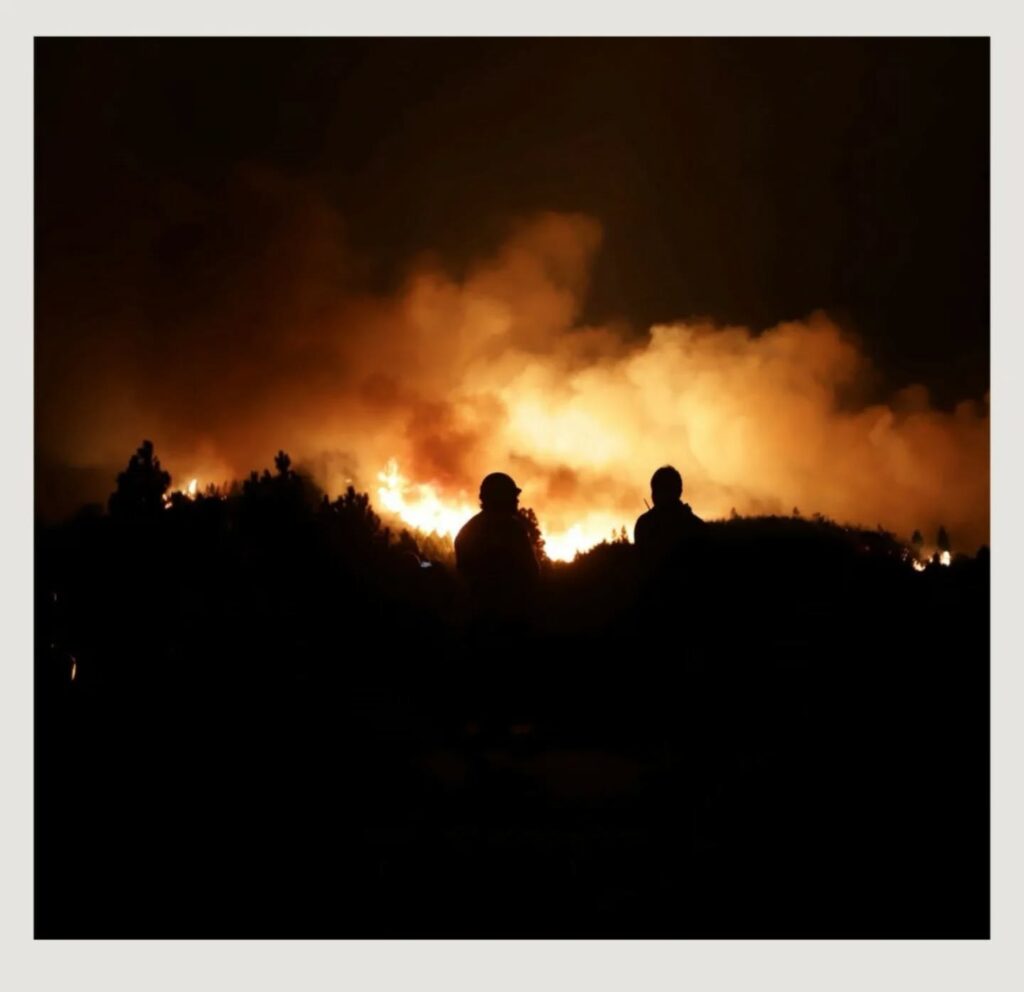
January 2026 will go down in history as the month in which some of the Planet’s oldest forests went up in smoke. As flames devoured thousands of hectares along the Andean slopes between Chile and Argentina, trees capable of living more than 3,000 years burned in Los Alerces National Park. The Alerces, Patagonian cypresses among the longest-lived organisms on Earth, represent living witnesses to millennia of natural history. Now their future appears increasingly uncertain.
A study by World Weather Attribution quantified for the first time the role of global warming in this catastrophe: the weather conditions that fueled the fires became three times more likely in Chile and two and a half times more likely in Argentina than in a pre-industrial world. Temperatures increased by 1.3 degrees Celsius, seasonal precipitation decreased by 25 percent in Chile and 20 percent in Patagonia. The result: a tinderbox ready to explode.
When drought meets fire
The fires broke out Jan. 16 in Chile’s Biobío and Ñuble regions, then spread to La Araucanía and Maule. Temperatures above 38 degrees, winds up to 50 kilometers per hour and months of drought turned forests into combustible material. The flames traveled so quickly that pyrocumulus clouds formed over some areas-clouds generated by the extreme heat of the fire itself-signaling the exceptional intensity of the event. The official Chilean death toll is 23 dead, more than 1,000 homes destroyed, and 52,000 people evacuated. As of January 23, 64 thousand hectares had burned.
In Argentina, the situation was no better. Fires, initially triggered by lightning in early January in Chubut province, flared up violently again on Jan. 27, expanding through forested valleys and lake districts near Cholila, El Hoyo, and El Bolsón. The city of Esquel recorded 11 consecutive days of maximum temperatures, the second longest heat wave in 65 years. El Bolsón touched 38.4 degrees, an all-time record for January. By February 2, more than 45,000 hectares had gone up in smoke, with at least 3,000 people forced to flee.
The price of plantations
The researchers identified an aggravating factor: monocultural plantations of radiata pine. These highly flammable trees replaced the more fire-resistant native vegetation. The plantations’ uniform structure, tree density, and species characteristics have created perfect corridors for the spread of flames. In Chile, these plantations are often found adjacent to urban settlements, as was the case during the devastating Valparaiso fires of 2024.
“Timely removal of invasive pines is critical to preventing increased risk of landscape-scale fires,” the study points out. The problem is not just about forest management: we need to completely rethink land use planning in high-risk areas.
Unique ecosystems under siege
Wildlife is taking a huge toll. Vulnerable species such as the huemul and pudú are losing critical habitats that do not exist elsewhere. Patagonian black-backed woodpeckers remain without nesting sites, while native plants see seeds needed for their reproduction burned. The fires are encroaching right into Los Alerces National Park, a UNESCO World Heritage Site since 2017, where some of the world’s oldest Alerce specimens grow.
These plant giants have spanned centuries of human history, growing slowly under extreme conditions. Now they are in danger of disappearing in a matter of weeks, victims of a climate that changes too rapidly for them to adapt.
Divergent responses
Chile has increased its firefighting budget by 110 percent over the past four years, investing in forecasting systems and equipment. The Chilean Red Cross has developed an early intervention protocol based on weather forecasts. However, researchers point out that in Argentina, budget cuts to firefighting teams and deregulation of tourism activities in national parks may have limited response capacity. Fire monitoring still relies on low-resolution, low-frequency data.
Climate models agree: conditions favorable to wildfires will continue to increase as long as fossil fuels are burned. Patagonia’s forests, and with them the thousand-year-old trees they guard, may not have much time.