Whilst the West frets ridiculously about the energy transition, it is in the streets of Lahore and Karachi that a silent green revolution is taking place. Pakistan, a country that many still associate with instability and underdevelopment (but which has the atomic bomb, and 250 million industrious inhabitants), is rewriting the rules of the global energy game, demonstrating how necessity sharpens wits, and accelerates innovation.
The numbers tell an amazing story: during 2024 Pakistan became the world’s third largest importer of solar panels from China. We are talking about monstrous quantities: 22 GW of solar panels, thus multiplying the installed solar capacity by 17 times in a single year. To make a comparison, we are talking about more solar power than the UK has added in the last five years. We are talking about half of the Asian country’s entire electric generation capacity, which stands at 46 gigawatts. A transformation that is taking place not from the top, through large government projects, but from the bottom, through the initiative of individual citizens and entrepreneurs.
A combination of factors
The impetus for this revolution comes from a combination of factors: soaring energy prices following the Russian invasion of Ukraine have made traditional electricity bills unaffordable. In the past two years, electricity consumption has dropped by 10 per cent, a figure that would normally indicate a severe economic crisis. Yet, paradoxically, Pakistan’s economy grew by 2 per cent. After that, Pakistan has at least 300 days a year of sunny days on average.
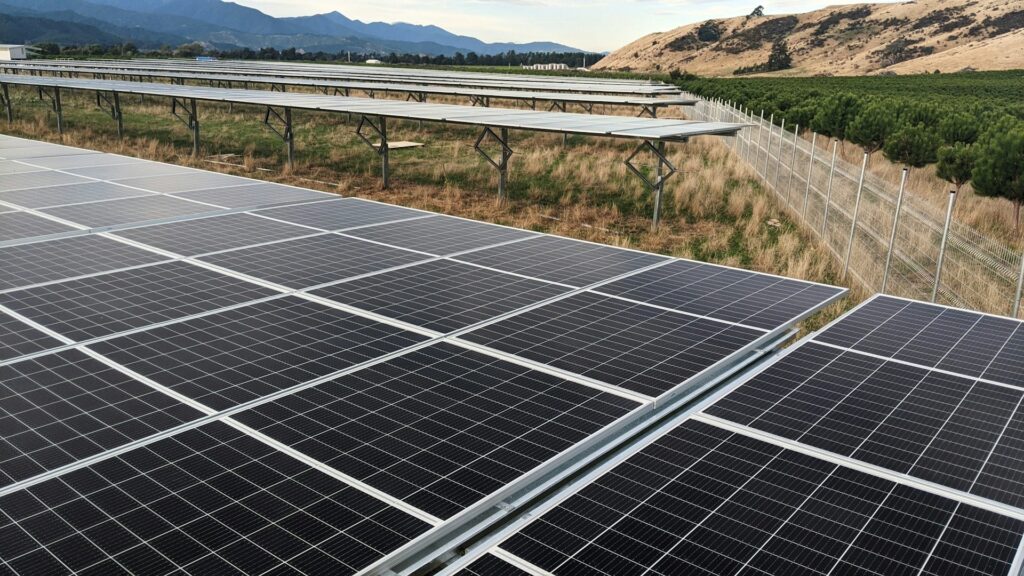
The secret of this revolution lies on the rooftops of Pakistani cities. Energy analyst Dave Jones has documented, through satellite images, a proliferation of solar panels on buildings of all kinds: warehouses, textile factories, farms, anything with a flat roof. The government has kept red tape to a minimum and abolished the tax on solar power, and falling prices on the panel market in China have done the rest.
The investment pays for itself in a few years
For the Pakistani middle class, the investment pays for itself in a few years through the ability to sell excess energy back to the grid. In rural areas, irrigation wells are increasingly being powered by solar energy, replacing expensive and polluting diesel generators. In other words, experts project that by the end of the year, Pakistan’s distributed solar capacity could approach half of the entire national grid capacity. This is a momentous change that is happening almost quietly, without any major announcements or five-year plans. Of course, even the poorest should be allowed to use electricity, which has now become essential everywhere.
But Pakistan is not alone. A similar phenomenon is occurring in different parts of Africa. Joel Nana, analyst at Sustainable Energy Africa, reports impressive figures: in Namibia, distributed solar accounts for 11 per cent of installed capacity with 70 MW, in Eswatini (the former Swaziland) 15 per cent, in South Africa about 9 per cent of national capacity, at 5 gigawatts. Numbers that tell of a silent but profound energy revolution also happening in Zimbabwe, Lesotho, Madagascar and many other countries.
The African market
The key to this transformation lies in the dramatic reduction in the cost of Chinese solar panels and their wide availability. The African as well as the Asian market is literally flooded with affordable panels, making solar power not only an environmentally friendly but a cost-effective option for businesses and individuals. Driving this transformation is not only the high cost of electricity, but also the unreliability of the supply: in much of the continent but also in Asia, power outages (planned or unplanned) are the order of the day, forcing companies that can afford it to resort to noisy diesel generators. But fuel is expensive and generator maintenance is complex. Photovoltaics is therefore the most logical choice for almost all businesses. The African market has become strategic for Chinese manufacturers, who guarantee a large—indeed, very large—supply of panels. The market is literally flooded with them.
This story tells us much more than just technological change. It shows us how, whilst industrialised countries debate targets and roadmaps for energy transition, in areas considered “developing,” this transition is already happening, driven not by government policies or environmentalist pressures, but by pure market logic and practical necessity.