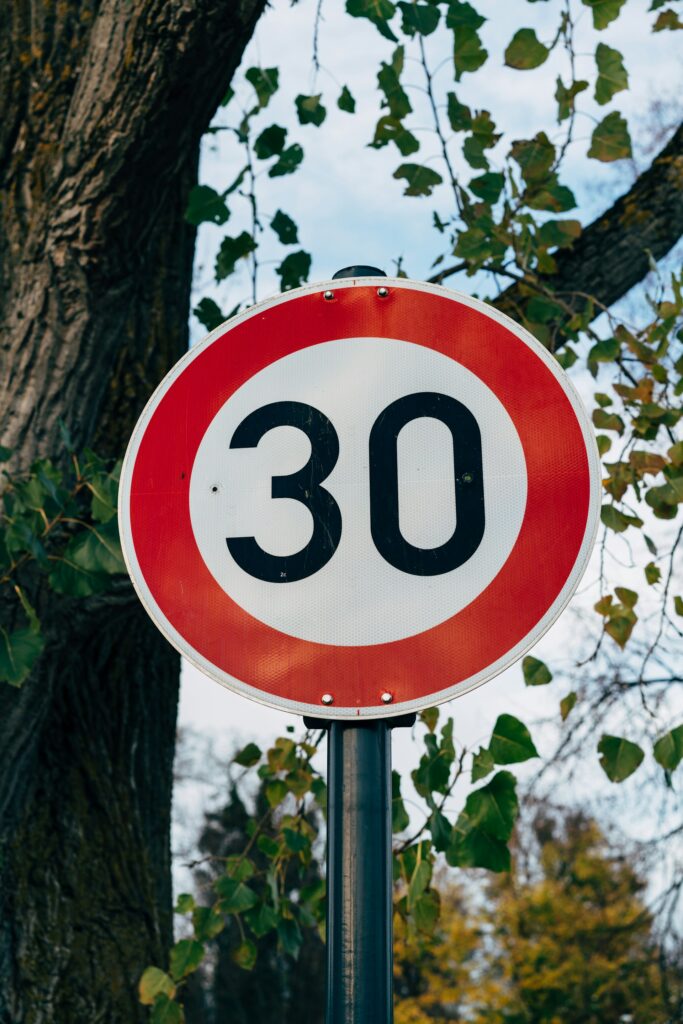
Italy, too, is increasingly talking about 30 km/h cities. Let’s see what it means and what benefits it brings. Reducing the maximum speed to 30 km/h in urban centres is a strategy that is changing the face of many European cities. From France to Spain, from Brussels to Bologna to Helsinki, hundreds of municipalities have chosen to lower limits to get closer to the goal set by the European Union: to halve deaths and serious injuries by 2030 and to achieve zero fatalities on the roads in 2050, the so-called Vision Zero.
The lower the speed, the greater the reaction time, the lower the impact of any accident. And the numbers bear this out: in cities that have adopted the blanket 30 km/h limit, traffic accidents have dropped by an average of 23 per cent, fatalities by 37 per cent and injuries by 38 per cent.
Safety for pedestrians and cyclists
In Brussels, where the measure went into effect in 2021, accidents dropped by 10 per cent, serious injuries were reduced by more than a third, and fatalities were cut in half. In Paris, where the limit covers 60 per cent of the road network, accidents with bodily injury have fallen by 25 per cent, while serious injuries have dropped by 40 per cent. In Bologna, after the first three months of implementation in 2024, traffic crashes are down 14.5 per cent.
The greatest benefit is for the most vulnerable users—pedestrians and cyclists—who gain space and safety. In Bilbao, Spain, cycling has literally exploded: from 320,000 bike trips in 2018 to nearly 1.8 million in 2022.
The 30 km/h limits not only save lives, but also improve quality of life. Pollutant emissions have dropped by an average of 18 per cent, urban noise levels by 2.5 decibels, and fuel consumption by 7 per cent. In Berlin, for example, the introduction of 30 km/h on some arterial roads has reduced nitrogen oxides by up to 29 per cent. In Bilbao, concentrations of fine particulate matter fell by 19 per cent.
Noise reduction is another important chapter: in Zurich, decibels have dropped by almost two units, in Modena by as much as 3-5. And less noise means less stress, better sleeping conditions, lower cardiovascular risks.
Viability and resistance
One of the arguments most often used by critics concerns travel times. But the data disprove fears and urban legends: average delays are between 3 and 5 per cent, often imperceptible in urban traffic. In some cases, as in Brussels, travel times have even shortened thanks to a smoother flow that is less interrupted by hard braking.
As with other “anti-smog” or safety measures, initial resistance tends to fade. In Graz, Austria, the first European city to adopt 30 km/h in the 1990s, only 30 per cent of citizens were in favour. Today 81 per cent strongly support them.
From quieter streets to wider pavements, from cycle paths to increased neighbourhood sociality, 30 km/h is reshaping the idea of the city. It is not just about mobility: it means giving urban space back to people, reducing inequalities between strong and weak road users, and bringing European metropolises closer to a model of sustainability.