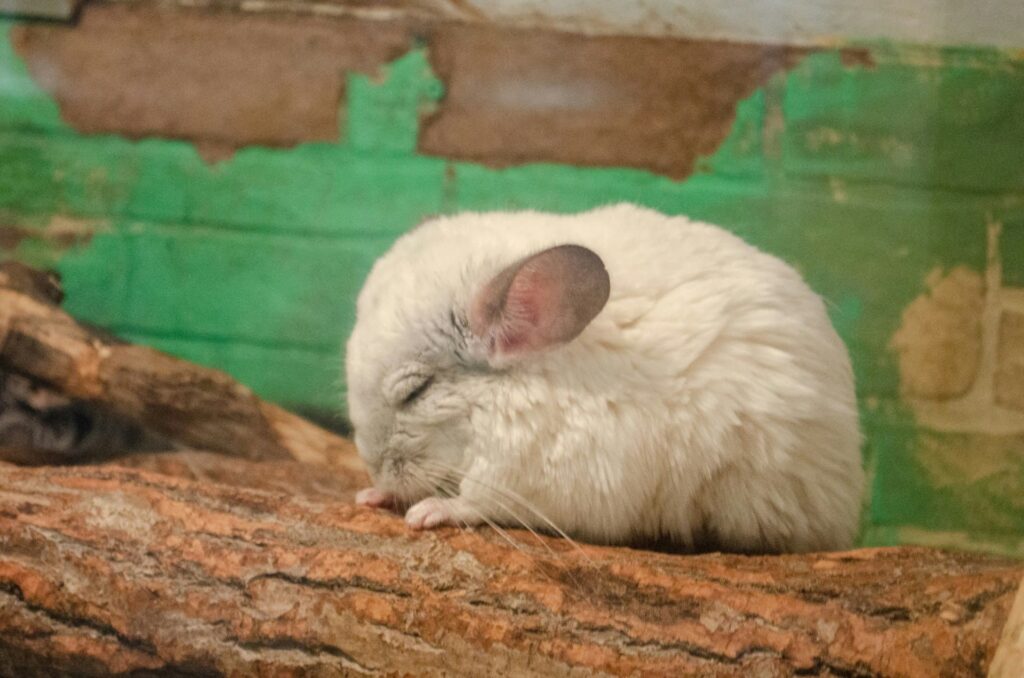
As of September 2026, New York Fashion Week will officially be free of animal fur. The 3 December announcement comes from the Council of Fashion Designers of America, the organisation that coordinates New York Fashion Week’s calendar: no more fur in official shows, nor on social media or the organisation’s website. The policy bans fur from animals bred or captured for their fur-from minks to foxes, rabbits to chinchillas. An exception remains for furs obtained from indigenous communities through traditional subsistence hunting practices.
“Already on the runways of New York Fashion Week we see very little fur, if any,” explains Steven Kolb, CEO of CFDA. “With this decision, we want to encourage U.S. designers to question more deeply the impact fashion has on animals. More and more consumers are moving away from products associated with cruelty, and our goal is to make sure that American fashion is at the forefront of change, including by promoting innovative materials.”
The decision ends years of confrontation between Cfda and non-profit organisations such as Humane World for Animals and Collective Fashion Justice, which have followed the evolution of brand choices and worked to achieve this structural change.
A market already in retreat
New York thus aligns with fashion weeks that are already fur-free: London, with the first fur-free runways in 2018 and a formalised ban in 2023, Copenhagen, Berlin, Stockholm, Amsterdam, and then again Helsinki and Melbourne. In parallel, large groups such as Condé Nast along with Elle and InStyle, have adopted fur-free policies in editorial and advertising content.
In fact, on the New York catwalks-and in luxury fashion more generally-fur was already in retreat. Prada, amongst the last major European fashion houses to announce the stop, communicated a fur-free policy in 2019 starting with its women’s spring/summer 2020 collections; Michael Kors adopted a similar policy in 2017, with complete elimination by 2018; and Coach announced a stop to fur in 2018 with a phase-out concluded in 2019.
Milan and Paris: still no regulation on furs
Lagging behind are Milan and Paris: neither fashion week has currently adopted a formal ban on the use of animal fur. More than 17 brands with a declared “fur free” policy appear on the official Milan Fashion Week calendar, and another 33 that have not used fur in their latest collection. However, the event has not yet taken a clear and binding position, leaving the choice in the hands of individual brands. This is a major difference from marketplaces like London or New York, where the ban is now institutionalised and integrated into official regulations.
Paris, too, lacks an explicit policy: the Fédération de la Haute Couture et de la Mode has introduced environmental guidelines to promote more sustainable events and sets, but has placed no specific restrictions on the use of fur. International campaigns have long called for both capitals to align with standards already adopted elsewhere.
Meanwhile, the Cfda promises concrete support for American designers through educational resources and a materials library dedicated to alternative solutions. The 2026 deadline is designed precisely to provide time and tools to rethink materials and collections.
The debate over the environmental impact of synthetic alternatives remains open, but New York’s choice is first and foremost a cultural signal. A decision that makes mandatory what was hitherto left to the initiative of individual brands and helps redefine the boundaries of acceptability in the fashion system.
Poland closes with fur era
New York’s clampdown comes as a decisive game is being played in Europe: with a law passed by Parliament and signed by President Karol Nawrocki, Poland-the world’s second-largest producer after China and Europe’s largest-has outlawed fur farming, becoming the 18th EU state to introduce a total ban. The rule provides a transition until 2034 and compensation for farmers, and is supported by the European Citizens’ Initiative“Fur Free Europe,” signed by more than 1.5 million people, and by EFSA assessments of structural suffering on farms.