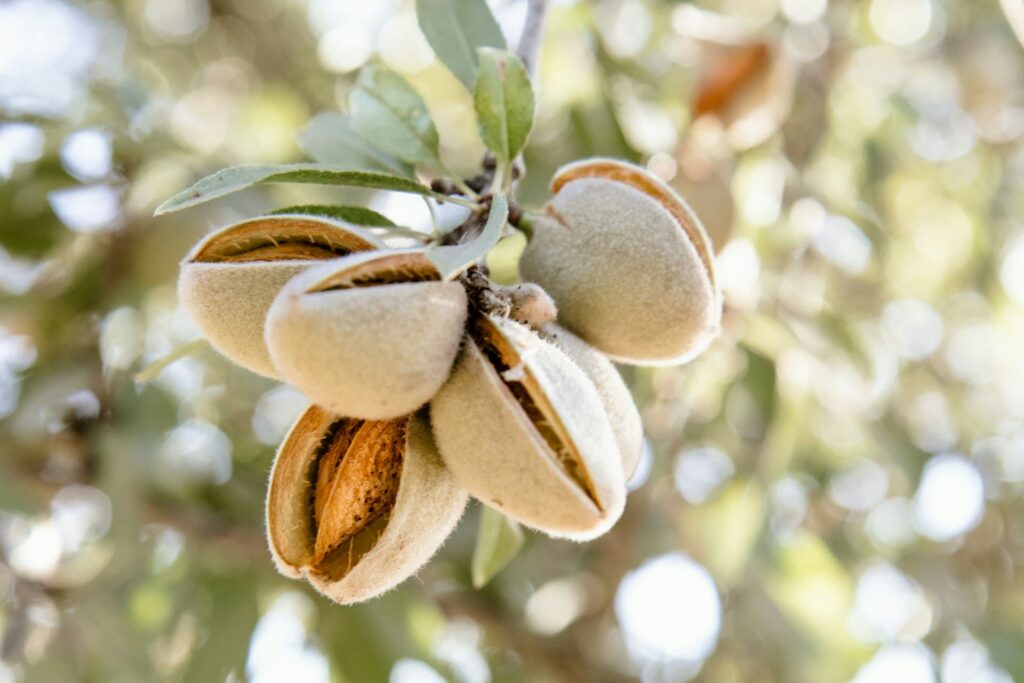
The idea sounds like something out of a science fiction tale: transforming almond shells, a very poor agro-food waste of commercial value, into flexible and fully biodegradable electronic circuits. Instead, it is reality, and it is signed by the Scuola Superiore Sant’Anna of Pisa, which with a study published in Advanced Functional Materials has developed a technology capable of changing the way we think about electronics-and the management of technological waste.
The project is called LIGASH(Laser Induced Graphene from waste Almond Shells) and was funded by the Ministry of University and Research. It is coordinated by
The turning point of upcycling
Almond shells represent bulky waste that is difficult to dispose of. Yet, as chemical characterisation carried out by researchers has revealed, they are extremely rich in
This resulted in flexible, uniform and stable films that are perfect as substrates for green electronics. Phd student Yulia Steksova, first author of the study, tells how graphene was obtained using ultraviolet and infrared lasers, with excellent results from the standpoint of conductivity and application versatility: the prototyped circuits work, and work well.
A paradigm shift
The most disruptive aspect is not just the ability to produce electronics from waste, but the fact that it is completely biodegradable. In a world awash in e-waste and microplastics, imagining environmental or biomedical sensors designed to dissolve naturally after use is not a detail-it is a possible revolution.
The hypothesised applications range from soil moisture monitoring to water quality controls to single-use systems for health and agriculture. All devices that, instead of leaving a trail of unrecyclable waste, could return to the earth without unwanted impacts. “Developed by nature for nature,” summarises Steksova in describing the project’s philosophy
Not only electronics
Upcycling almond shells could go beyond electronics. By modifying the composition of the material, the team has achieved a composite that is similar to natural leather, durable, sewable and free of the critical environmental issues of traditional tanneries. A prospect that also opens up scenarios for sustainable fashion and design.
Meanwhile, research continues: almond husks, as well as hazelnut and pistachio shells, are being tested, with encouraging preliminary results. In parallel, 3D printing of the same materials is being explored to obtain low-impact customised components. For Luca Sebastiani, of the Institute of Plant Production, this approach shows how innovation can make agriculture “an increasingly sustainable process,” turning what is now a cost into a new technological resource.
The Ligash project is one of the first concrete examples of how electronics can become truly circular, replacing fossil and hard-to-dispose-of materials with agricultural waste that nature itself is capable of reabsorbing. An invitation, as the researchers hope, to grow a scientific community capable of envisioning devices that are useful, high-performance and at the same time destined to disappear without a trace.