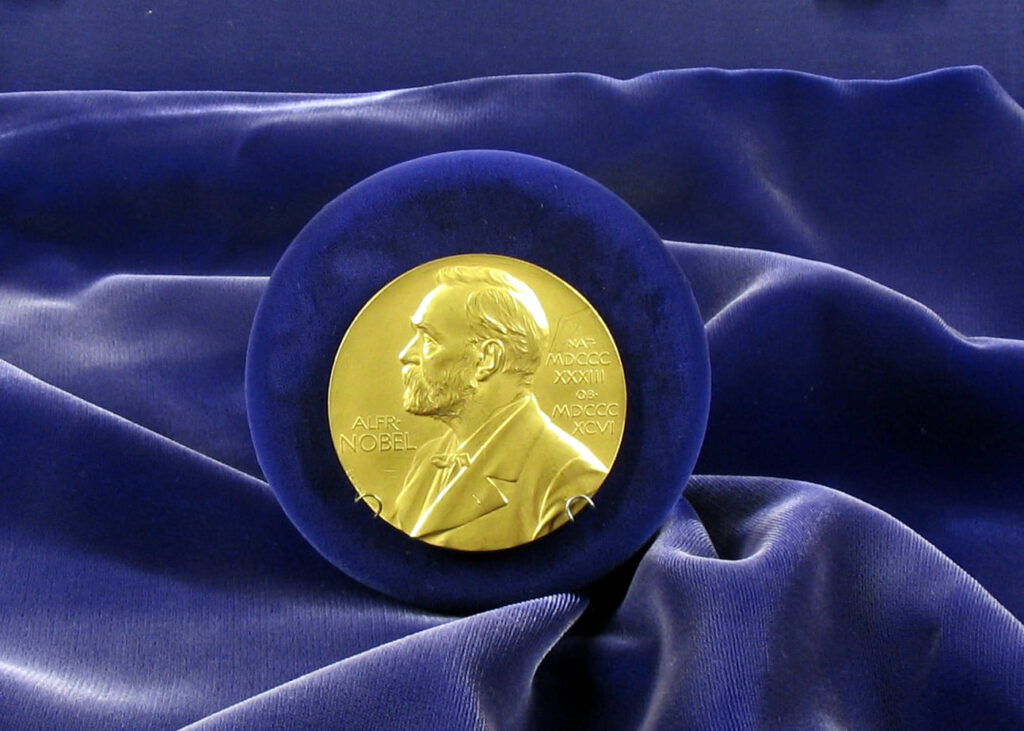
For years the climate crisis has dominated the global debate, but amongst the most prestigious awards on the planet there is still a lack of a category explicitly dedicated to the environment. Out of this absence comes a proposal that is causing debate: create a true Nobel Prize for the Climate and Health of the Planet, capable of giving environmental action the same symbolic weight reserved for peace, science or literature.
The idea is not just theoretical. For the first time, someone has decided to put real money into it, turning a wish into a concrete challenge.
One million on the table
Concretely promoting the idea of a Nobel Prize for the environment is Ecosia, the European search engine known for reinvesting its profits in reforestation and environmental protection projects. The company has decided to go a step further than symbolic activism by providing one million euros as an initial endowment for the prize, which has already been set aside to ensure seriousness and continuity for the initiative.
The stated goal is to stimulate the emergence of an international award of the highest prestige dedicated to climate and the health of the Planet, capable of rewarding concrete achievements and scientific, social or institutional leadership. An award that, whilst not formally part of the historic Nobel system, traces its spirit, authority and global impact. To give visibility to those who contribute decisively to the defence of climate, ecosystems and living conditions on the Planet.
Why now
The call for a Nobel for the environment stems from a simple observation: the climate crisis is not a sectoral issue, but one that intertwines science, economics, health, security and social justice. Yet those working on these fronts often receive fragmented, less visible recognition than those reserved for other areas of human knowledge.
A high-profile award would serve a function beyond the individual winner: it would bring the environment to the centre of the global cultural agenda, signalling that protecting the planet is one of the great challenges of our time, not an ancillary chapter.
Creating a new official Nobel is not easy. Historical categories are managed by precise institutions, and changing them requires rare and politically sensitive decisions. That is why the proposal follows a pragmatic path: starting with an autonomous prize, but built with high scientific standards, an international jury, and transparent selection criteria.
The ambition is that, in time, this award can gain prestige comparable to that of the traditional Nobels, becoming a global benchmark for environmental action.
Symbolic value matters
In an era marked by record high temperatures, extreme events and growing environmental inequality, a Nobel Prize for the Environment would also have strong symbolic value. It would say something simple but powerful: saving the Planet is not an act of militancy, but a universal merit.
The million euros put on the table marks a change of pace: from the idea to a concrete attempt to give the environment the recognition it should have had long ago.