Artificial intelligence devours energy. Whilst tech giants chase the utopia of nuclear fusion, their huge, hungry and impatient data centers, however, have to make do with the energy that is there today. And sometimes it comes from unsuspected places: from the roaring hearts of old aircraft engines adjusted and repurposed.
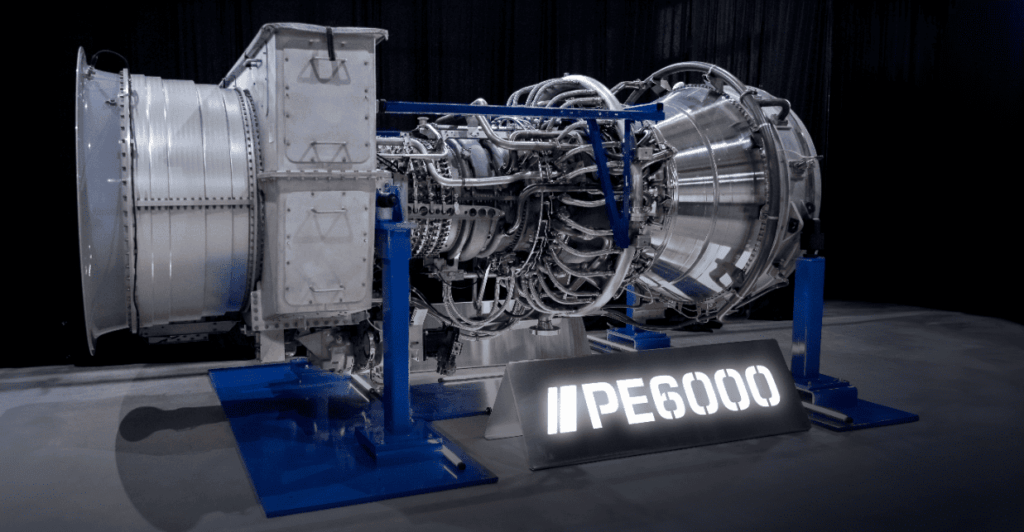
According to a report in the U.S. IEEE Spectrum magazine , the U.S. company ProEnergy has set up a profitable business supplying data centers with the used cores of General Electric CF6-80C2 engines, “high-bypass turbofans” designed to propel Boeing 767s. Dismantled, overhauled and converted into stationary turbines, these engines obviously do not fly, but they gain cables and switchgear: fixed on concrete pads or housed in trailers, they can be brought up to 48 megawatts of generation. Enough to power tens of thousands of American homes, or a particularly ravenous digital server cluster.
“We sold 21 of them to power data centre sites,” explained Landon Tessmer, ProEnergy’s vice president of sales, on the sidelines of the World Power Show in San Antonio. The idea is simple: grid connection times get longer, demand for computing runs faster. These retrained aero turbines fill the gap, allowing server farms to be built (and often started) without waiting for the final transformer cabin. When the grid arrives, Plan B becomes a back-up plan: the same units can be converted back to backup generators, ready to go into operation in the event of peaks or blackouts.
The choice of “jets on the ground” speaks well of the present of AI: an industry proceeding by ingenious patches and bridging solutions, with the urgency of keeping machines burning electrons on at impressive rates. But there is more than just the fossil path. In parallel there is a return to nuclear power, more industrial than ideological: long contracts, stable power, no chimney CO2.
Google announced that the Duane Arnold Energy Centre, an Iowa power plant closed in 2020, will be restarted to power its artificial intelligence data centres starting in early 2029. Operator NextEra Energy confirmed a 25-year power purchase agreement-an injection of predictability that pleases those who must grow computing lanes without pause. This is not an isolated case.
Plans circulated last year to restart a reactor at Three Mile Island, Pennsylvania, with the goal of supporting Microsoft’s loads. Meta, the parent company of Facebook, has signed up for full power from a power plant in Illinois for 20 years. And by 2030 Google plans to buy power from innovative small reactors developed by Kairos Power. Of course, technology does not negate questions. CF6-80C2s are born for the sky: on the ground they require filters, silencers, optimised combustion systems and stringent emission controls. Their advantage is instant power, i.e., the ability to get up to speed quickly and chase load with aircraft dynamics. The disadvantage is in utility bills and climate footprint: for the same megawatts, gas remains cleaner than coal, but it certainly does not compete with nuclear and renewables. This is where the“transition mix” that many operators are experimenting with comes in: ex-aeronautical engines for inter-times, upgraded grids over the medium term, and contracts with zero-emission baseload generation for site maturity.