In the case of a war decided by the United States, experience suggests that following oil is one of the elements that can clarify the real motivations. And it just so happens that hydrocarbons are one of the motivations (though perhaps not the main one, which must be sought in the affirmation of the so-called“Monroe doctrine” of full U.S. control over the entire Western Hemisphere) of themilitary intervention in Venezuela. An intervention that as far as oil and gas is concerned looks not to today or tomorrow but mainly to the day after tomorrow, since the great Permian oil basin, worth half of U.S. production has probably reached its peak and, although it will not decline for 15-20 years, poses in the long run a problem of finding other large production areas. Exactly what Caracas has.
Venezuela floats on oil
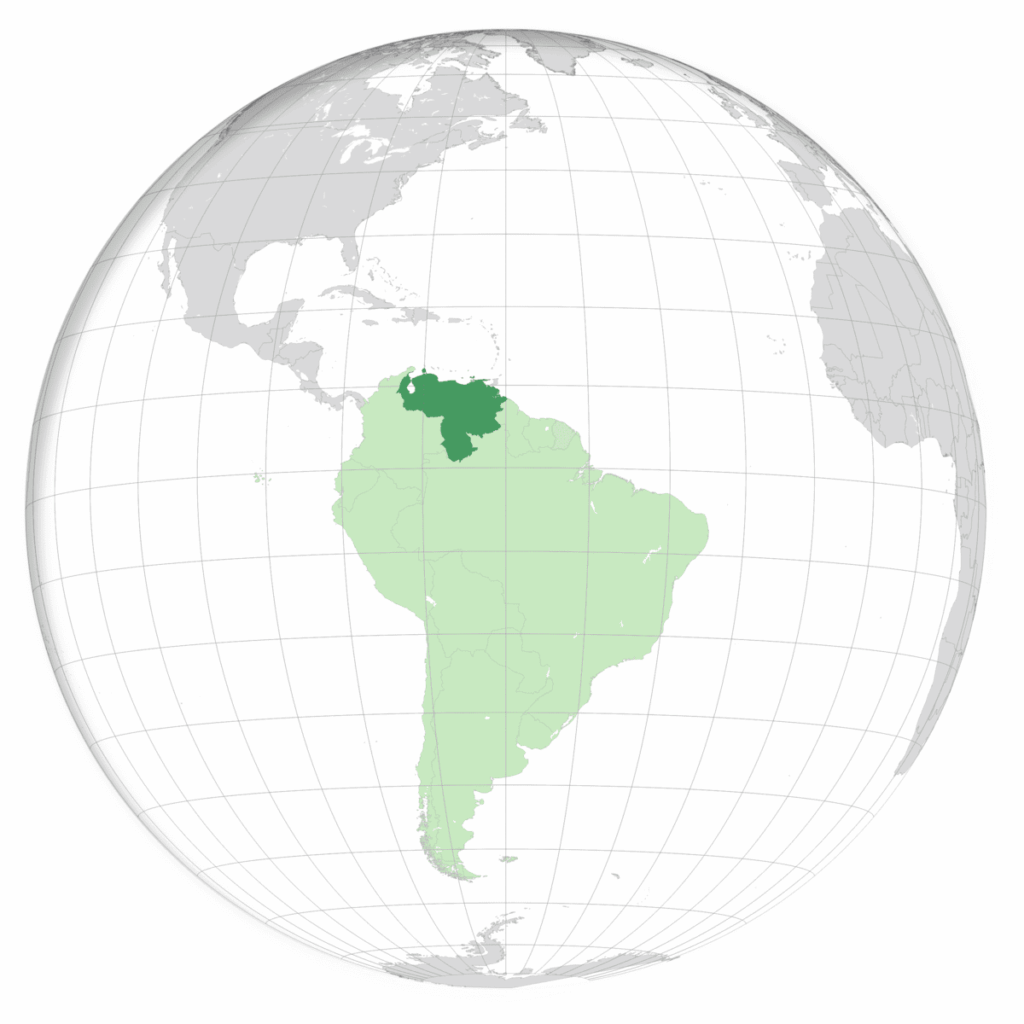
Venezuela has the largest proven crude oil reserves in the world with an estimated 303 billion barrels, representing about 17 per cent of global reserves, but its potential far exceeds actual production: Venezuela now produces only about 1 million barrels of oil per day, or about 0.8 per cent of world crude oil production. Nibbles. That is less than half of what it produced before Maduro took control of the country in 2013 and less than a third of the 3.5 million barrels it extracted before the advent of the socialist regime.
Before Venezuela nationalised its oil industry in 1976, American companies such as Exxon, Mobil, and Gulf Oil were major players. Venezuela reopened its oil industry to foreign drillers in the 1990s, but Hugo Chávez, Maduro’s predecessor, began another round of nationalisation in 2007, and U.S. oil giants such as Exxon Mobil and Conoco Phillips are claiming billions of dollars in compensation because their operations were blocked.
But now the tune has changed: Trump’s America wants “its” oil back. “Caracas,” the president said in the press conference after the attack, “has unilaterally seized and sold American oil, American assets and American infrastructure, costing us billions of dollars. They have done this in the past but we never had a president who did anything about it. They took all our property. They were our properties. We built them, and we never had a president who decided to do something about it.” “This was,” he continued, “one of the greatest thefts of American property in the history of our country, considered the greatest theft of property in the history of our country. The huge oil infrastructure of our country was taken away as if we were children, and we did nothing about it. Now we are going to get our big oil companies to step in, take back their property, spend billions of dollars to repair the badly damaged infrastructure. We will take huge amounts of oil and a part will go to the United States as reimbursement for the damage caused by the Maduro administration.” And, having enriched the budgets of the star-studded oil majors, the remaining slice will go to the South American country.
The Permian Basin has reached its top
Suggesting to Trump an intervention in Venezuela is not only the desire to firmly establish his control over South America but something related to his boundless love of hydrocarbons. Specifically, the strategic considerations that have been suggested to him by fossil energy engineers. To understand, we need to look at what is happening in the so-called Permian Basin, which stretches from West Texas to southeastern New Mexico and has been the heart of the U.S. shale oil industry since it took off around 2010, helping to make the United States the world’s largest oil producer in 2018.
By 2025, this basin accounted for nearly half of total U.S. production, which hit 13.6 million barrels per day last year. Now, as it happens, oil production in the Permian Basin would have peaked just last December, marking a pivotal moment in the U.S. shale boom that has revolutionised the global energy market over the past 15 years. Thanks to technology, innovations in drilling, production in America’s most prolific oil patch will remain stable for years to come, probably until 2040. But a bell has rung.
In December in particular, the basin would produce-according toU.S. Energy Information Administration estimates reported in its latest Short Term Energy Outlook-a record 6.76 million barrels per day (bpd) of oil, only slightly higher than November’s total. This is historic. This monthly figure could be peak production, as most of the Permian’s high-grade oil fields have been tapped and significantly depleted after more than a decade of drilling.
But for oil companies, there is no reason for panic in the short to medium term. This year, for the first time since early 2021, U.S. oil prices fell below $60 a barrel, and at that level earlier in the decade, this would have caused a collapse in Permian Basin production. But today things have changed, due to lower production costs daughter to increased efficiency: Exxon and Chevron’s costs in the Permian have dropped to around $30 to $40 per barrel, lower than the industry average of $62. This, as EIA points out, more than balances the fact that the basin is reaching its limits. And so, in the third quarter, the number of active drilling rigs in the basin, yes, decreased by 15 per cent from the previous year, but, despite this, production increased. To use a phrase dear to Trump: drill baby drill. Not surprisingly, some companies are even counting on doing slightly better in the coming years, others on maintaining current levels for at least 15 years, and others on reducing production a bit.
Recently, Exxon CEO Darren Woods said the company is using a new proppant-a granular material used in fracking to hold open the holes created in rocks and allow the extraction of hydricarbons-patented to improve hydraulic fractures and artificial intelligence software to better direct drilling paths, which can extend the reach of lateral wells by up to 4 miles (6.4 km). Overall, these innovations will reduce drilling costs by about 40 per cent and increase oil recovery rates in wells by 50 per cent between 2019 and 2030, an increase of 200,000 barrels per day to 2030. For its part, Chevron plans to keep production in the Permian stable at 1 million barrels per day through 2040; it is now using a technique to fracture underground rock in three wells simultaneously, reducing drilling time and costs. Technological advances in drilling are indeed enabling companies to explore new, often deeper formations.
All good for the oil companies? Just about. Current production levels can probably be maintained for years, debunking earlier predictions of a dramatic decline in the shale boom. But after 2035/2040? Alternatives are needed, and Venezuela is perfect for continued hydrocarbon production. Of course, assuming the country is “stabilised” with a solidly pro-American government, U.S. oil majors will selectively return and it will take at least 10-15 years to progressively rebuild Venezuela’s broken oil industry and export its crude to U.S. refineries, but that is the direction and the timing coincides with the future slow decline of the Permian Basin. America wins and China, which was now the recipient of 80 per cent of Venezuelan crude, loses a satellite country supplier of cheap crude. And the environment loses too, of course, because more oil and more gas means more greenhouse gas emissions. To paraphrase a well-known book by Antonello Pasini and Grammenos Mastroieni, “war effect, greenhouse effect.”