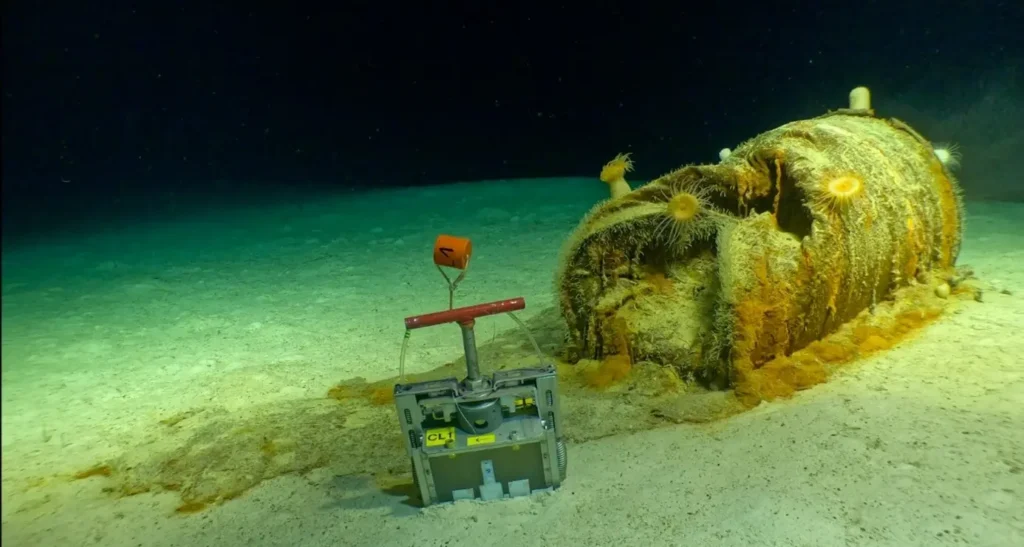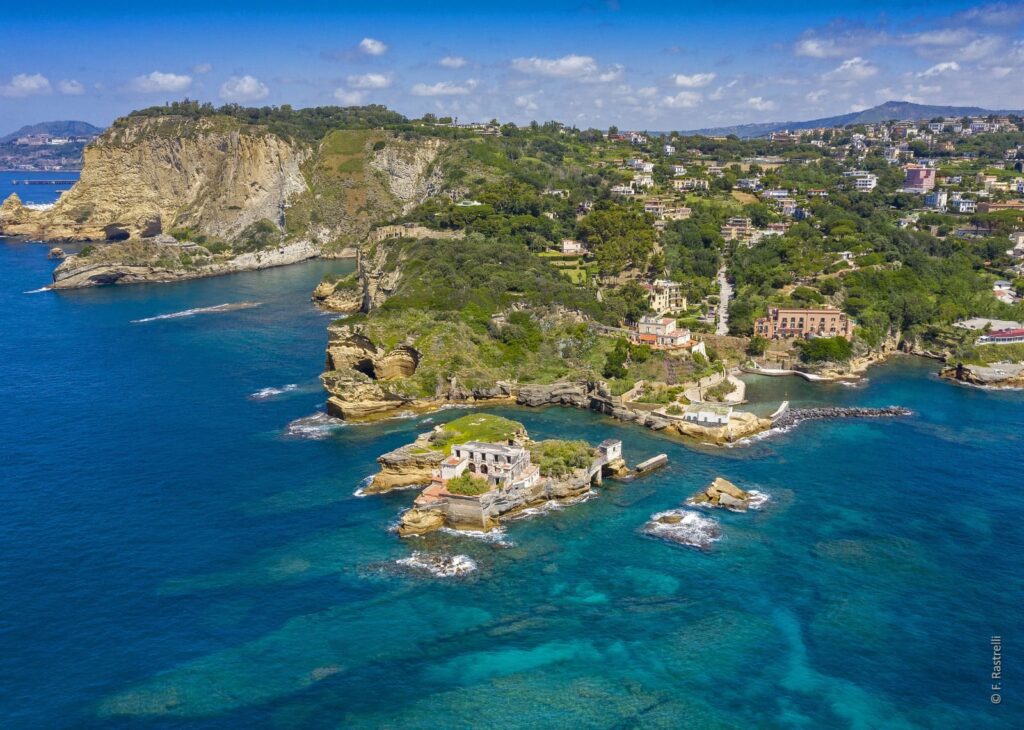
The battle for the Gaiola sea enters a new phase. After the stop that came in November, Marevivo and Greenpeace have decided to challenge before the Council of State the ruling of the Campania Regional Administrative Court that rejected the appeal against Invitalia‘s project for the reorganization of infrastructure in the Bagnoli-Coroglio area.
For the associations, that decision is not only wrong on the merits, but also enters on a collision course with constitutional principles that protect the environment and ecosystems.
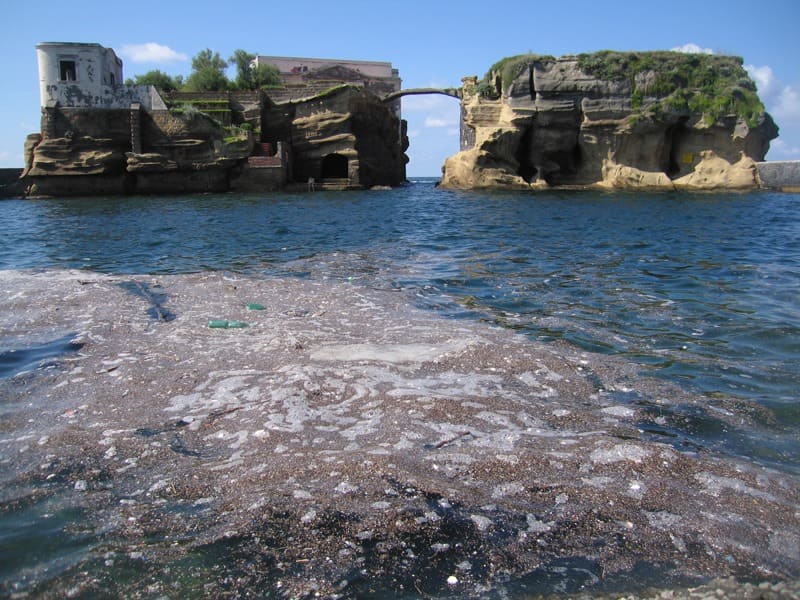
The drains in the heart of the protected area
The contested project concerns the reconfiguration of the sewage network of the Bagnoli-Coroglio SIN. Specifically, it plans to channel flood discharges from the entire western basin of Naples right into an area of maximum European protection: the SAC “Seabed of Gaiola and Nisida,” part of the Natura 2000 Network. Translated: more discharges on the shoreline and an enhancement of emissions on the seabed.
A choice that the Gaiola Underwater Park Authority has been contesting for years, calling for the exact opposite: to close, not strengthen, the spill points.
Procedure okay, environment no
According to the associations, the Regional Administrative Court focused on the formal correctness of administrative procedures, but took it for granted that the upgrading of the network would automatically reduce pollution and improve water quality. Hence the most contested assumption: the waters that would come out of the bypass would not be “waste” in the technical sense, and therefore would not configure environmental damage.
A reading that, for Marevivo and Greenpeace, glosses over the concrete consequences for a fragile and unique ecosystem, and risks emptying the protections provided for marine protected areas of meaning.
Valuable habitats, insufficient studies
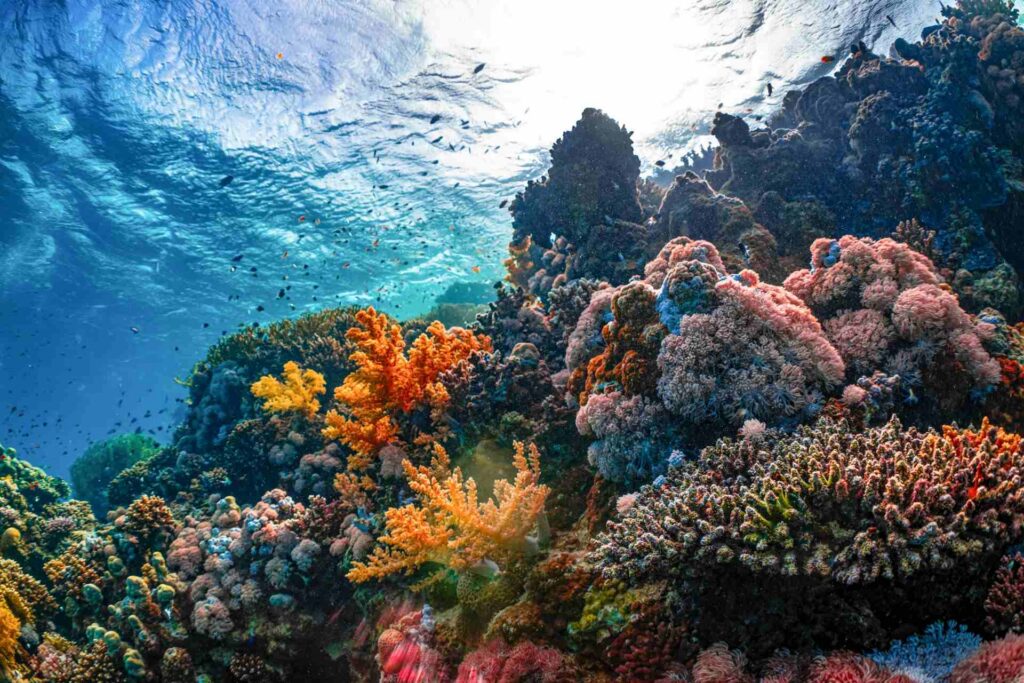
The stretch of sea between Gaiola and Nisida is one of the last corners of intact biodiversity in a dense urban context. Here coexist large coralligenous reefs and Posidonia oceanica meadows, key habitats in the Mediterranean and protected by European directives and international conventions.
The critical point, environmentalists point out, is that there are no independent, in-depth assessments of the impact that new discharges could have on these seabeds, nor have less invasive project alternatives been seriously explored.
“The stretch of sea that separates Gaiola from the Island of Nisida hosts marine habitats of great value, unique in the urban coastal context, such as the three large coralligenous reefs, one of the most important biological communities in the Mediterranean, and Posidonia oceanica, both protected by the Habitats Directive and the Barcelona Convention. Yet no adequate studies have been carried out on the impact these new discharges could have on existing biodiversity, nor have any viable alternative solutions been proposed,” says Rosalba Giugni, president of the Marevivo Foundation.
Laws and Constitution called into question
The appeal to the Council of State also cites the decree establishing the submerged park, which explicitly prohibits any alteration of the marine environment and the chemical characteristics of the water, including spills. In addition, the Consolidated Environmental Act itself defines pollution as the introduction of substances or agents that can harm health, the environment and legitimate uses of the sea.
For the associations, the ruling ignores this regulatory framework and even the recent evolution of the Constitution, which has included the protection of the environment, biodiversity and ecosystems among the fundamental principles, including in the interest of future generations.
A mobilization that has gone unheeded
A broad and transversal front has been built around Gaiola in recent months: citizens, scientists, economic operators such as mussel farmers, sixteen associations united in the “Chi Tene ‘o Mare” coordination, foundations and cultural realities. Even the Campania Regional Council had branded the reclamation program as “nefarious,” unanimously passing a motion opposing it.
None of this, however, affected the Tar’s decision.
Now the State Council has the floor
The appeal aims to put back at the center the question that really matters: whether it is acceptable to sacrifice a marine protected area for a project judged, at best, to be only partially ameliorative and not solving the problem of pollution.
For environmentalists, the real chance of redemption for the sea of Naples passes through a different choice: channeling discharges toward adequate purification systems and returning to Gaiola the role it deserves, that of a laboratory of protection and not a sacrifice zone. The game, in short, is far from closed.
“Protecting a marine protected area is not only an ethical but a legal duty,” proposes Alfonso Pecoraro Scanio, president of the Univerde Foundation – And action to prevent spills also serves to avoid the EU infringement procedure against Italy. It would be useful for the state, in administrative self-defense, to immediately change the project by directing all discharges to the Cuma purification plant.”