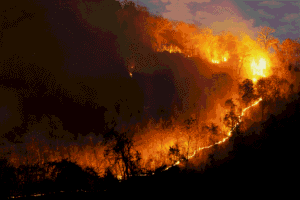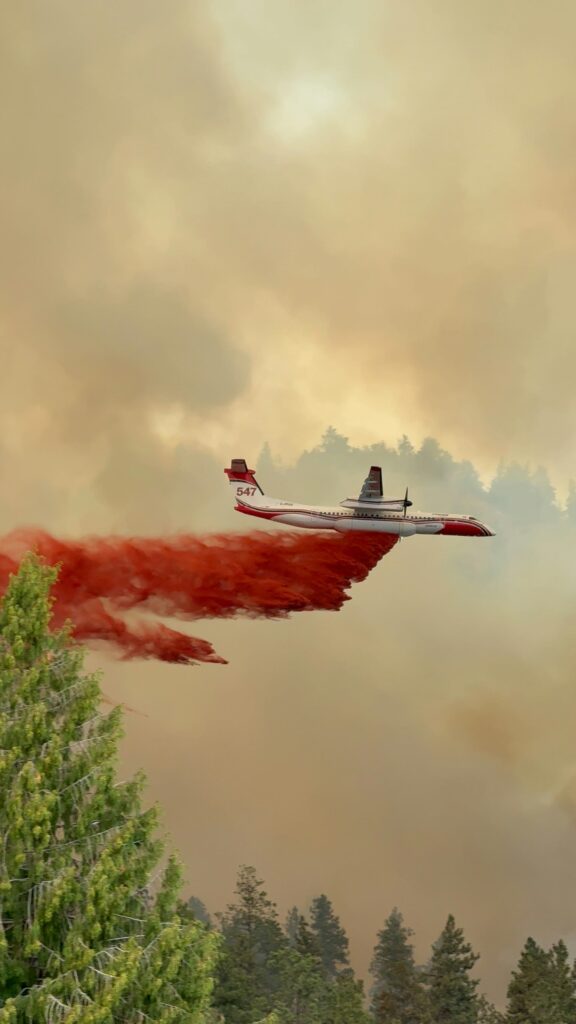
In 2024, flames devoured an area of forests exceeding 360 square kilometers every single day. To give an idea, it is as if an area larger than the entire island of Malta disappeared every 24 hours.
At the end of the year, the total balance exceeded 134,000 square kilometers, a scar on the land surface larger than England. It is the highest figure recorded in the past two decades.
Since 2001, fire has obliterated 1.5 million square kilometers of forest cover, an area equal to that of Mongolia. According to analysis by the World Resources Institute (WRI), fires today destroy more than twice as many trees as in the early 2000s. But it is not just a question of quantity: what is changing is the geography of the disaster. While in African savannas and agricultural areas the area burned has decreased thanks to landscape fragmentation, forests have become the new, glowing global hotspot.
A smoke that crosses oceans
The crisis spares no one, but some regions are paying a heavy price. Canada has experienced apocalyptic seasons: 78,000 square kilometers of boreal forests burned in 2023 alone. Canadian toxic fumes have crossed the Atlantic to Europe and have been linked to thousands of premature deaths. Among the victims is Carter Vigh, a boy only nine years old who died of an asthma attack while at a summer camp in British Columbia.
In Russia, the situation is equally critical. More than 623,000 square kilometers of forest, an area similar to the entirety of France, burned between 2001 and 2024. The flames have now reached the permafrost regions within the Arctic Circle, areas that were historically too cold and wet to burn. The millennia-old ice melts, the ground dries up, and the land, literally, catches fire where it shouldn’t.
The carbon “loop”
The real scientific drama lies in what experts call the “feedback loop.” Forests are our most valuable allies because they absorb CO₂, but when they burn they turn into giant smokestacks that release carbon that has been accumulating for centuries. In 2024, global forests absorbed only a quarter as much CO₂ as in a standard year.
WRI researcher James MacCarthy explained to The Guardian that natural tree survival strategies-such as thick bark or heat-sprouting seeds-are no longer enough in the face of such frequent and intense burning. In the Amazon, the combination of extreme drought fostered by El Niño and illegal deforestation led to the loss of 23,000 square kilometers in 2024, the highest figure since 2016. Here fire becomes a tool of “land grabbing” that gets out of control, penetrating indigenous territories and protected areas.
The resistance of the Guaraní rangers
Although the picture is bleak, there are models that work. In Bolivia, 2024 was the worst year in history, with losses doubling previous records. Yet in the indigenous territory of Charagua Iyambae, the disaster was contained. The secret? Structured local management.
Guaraní rangers in the Ñembi Guasu protected area use satellite monitoring to detect outbreaks in real time. Using early warning systems, the teams intervene while the fire is still small, preventing it from becoming an ungovernable monster. This shows that although reducing global emissions is the only long-term solution, investing in risk management and supporting local communities can save vital ecosystems even today.