Five meters below the surface of the Antarctic plateau, at a constant temperature of about -52 degrees, ice cores extracted from mountain glaciers are preserved. It is the Ice Memory Sanctuary, opened Jan. 14 at the French-Italian station Concordia: the first archive designed to preserve climate memory trapped in ice for centuries.
From the Alps to Antarctica
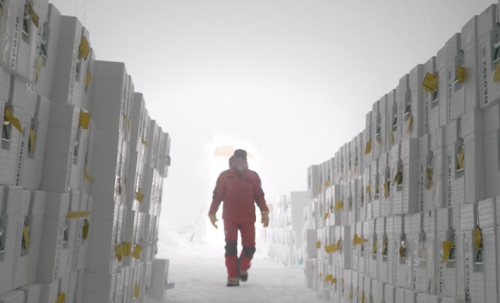
The first two cores come from the Alps: one from Col du Dôme on Mont Blanc, drilled in 2016, and the other from Grand Combin, extracted in 2025. They enclose atmospheric gases, aerosols, dust, and traces of pollutants-valuable information for reconstructing climate history to the present.
The journey to Antarctica lasted over fifty days. The cores crossed the Mediterranean Sea, the Atlantic Ocean, the Pacific and the Southern Ocean aboard the Italian icebreaker Laura Bassi, kept constantly at -20 degrees under the supervision of the National Institute of Oceanography and Experimental Geophysics and the National Antarctic Research Program (NARP). The 1.7-ton load was handled with strict cold chain, monitoring temperature and sample integrity. After reaching Mario Zucchelli Base, a special flight made possible by Enea transferred the cores to Concordia, at an altitude of 3,233 meters, without heating the cargo hold, ensuring that the ice arrived intact.
A vault carved out of ice
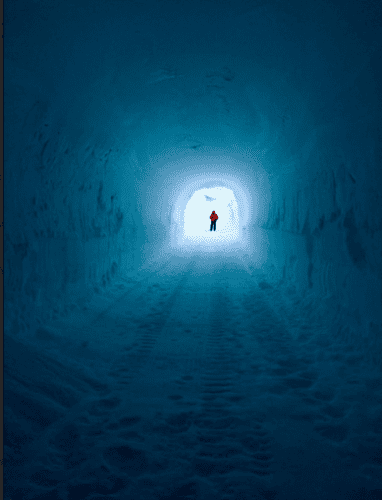
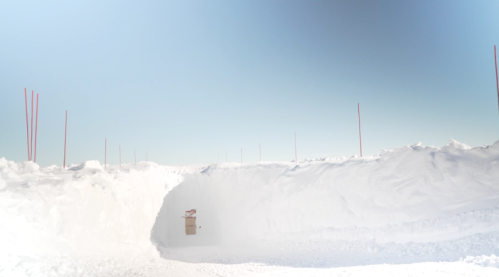
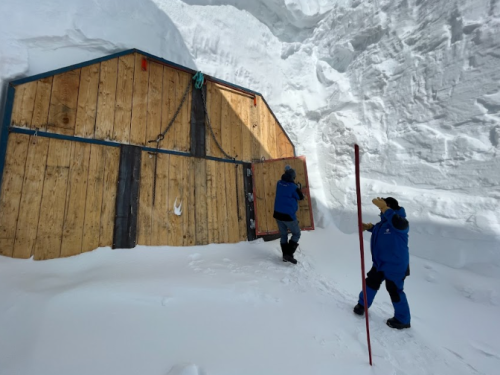
The sanctuary is a 35-meter long, 5-meter high and 5-meter wide cave, carved entirely out of compacted snow to a depth of nine meters. No concrete, steel or refrigeration systems are needed: preservation is left to natural conditions. The design was overseen by Enea’s Antarctic Technical Unit with the collaboration of the French Polar Institute (Ipev) and tested since the 2018-2019 campaign to ensure maximum durability and minimize environmental impact, in line with the Madrid Protocol. Constant temperatures prevent any alteration of the samples, and the archive has been approved by the Antarctic Treaty System (Atcm46).
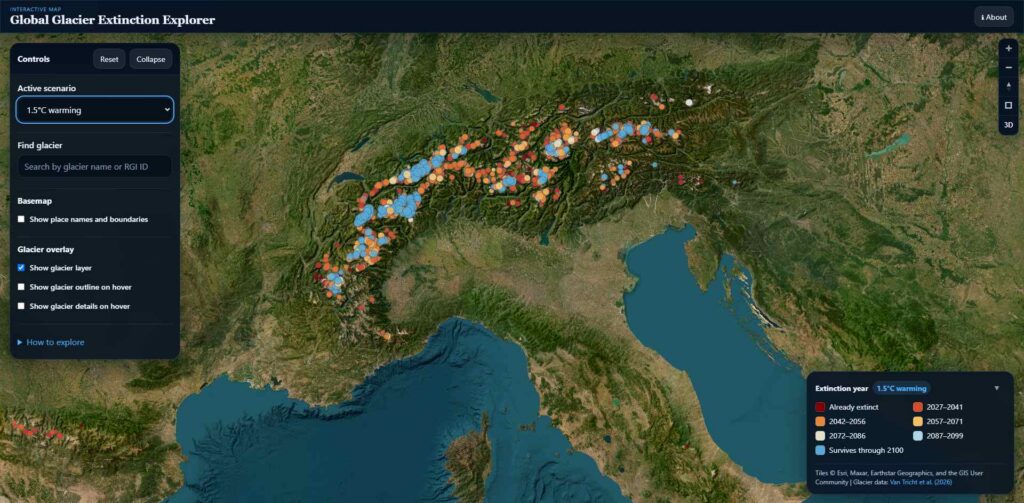
Since 2000, mountain glaciers have lost about 5 percent of their global mass, or more than 9 trillion tons of ice, with regional peaks of up to 39 percent. Each core collected is a direct record of this change and an irreplaceable archive for understanding climate history and future dynamics.
A global legacy
“Our generation is the last one capable of saving these archives,” pointed out Anne-Catherine Ohlmann, director of the Ice Memory Foundation. “It’s not just about preserving ice: it’s about leaving a scientific legacy for those who will come after us.” Carlo Barbante, vice president of the foundation, added, “By saving atmospheric gases, aerosols and trace pollutants, we ensure that future generations can study climate conditions that we can no longer directly observe today.”
Since 2015, the Ice Memory Foundation has already coordinated ten global drilling campaigns, involving scientific teams from more than thirteen countries. In the coming years, dozens more cores from the Andes, Pamir, Caucasus, and other glaciers will reach Concordia. The Ice Memory heritage is conceived as a global commons, to be managed with scientific criteria and international transparency. Thomas Stocker, president of the foundation, stressed, “In order for these cores to serve science a hundred years from now, they must be managed as a heritage of humanity.”
The archive fits within the context of UNESCO’s Decade of Action for Cryosphere Sciences (2025-2034), strengthening international cooperation and long-term research, and is a crucial resource for evidence-based climate policies.
The Ice Memory Sanctuary is a bastion of the Planet’s memory. Each guarded carrot holds information that could disappear forever if glaciers continue to retreat. In this natural cave, the climate’s past finds a safe haven, ready to tell future generations the story of our world before it is too late.