For years we have been reckoning without a key item. A new international study shows that excluding the ocean from climate economic assessments has led to heavy underestimation of CO₂ damage. When you finally put the sea in the budget, the social cost of carbon nearly doubles.
The research-which also involves Cmcc scientists-introduces a basic concept that had been curiously ignored until now: if we also measure what global warming causes to marine ecosystems and economic activities that depend on the sea, the real price of emissions changes dramatically. And not for the better.
The “hidden cost” of CO₂.
The social cost of carbon is the number economists use to estimate how much harm one ton of CO₂ emitted today produces in monetary terms. It is a crucial figure: it guides carbon and climate policy prices in a cost-benefit analysis. The problem is that, until now, the sea has remained out of the bill.
By integrating the latest ocean science into climate-economic models, researchers estimate that ocean impacts alone are worth about $48 per ton of CO₂. That’s extra to add to current estimates. If we then factor in the damages that will fall on future generations, the figure exceeds $150 per ton, bringing the total damages to nearly double those used in many policy decisions today.
Because the sea matters
Oceans cover more than 70 percent of the Planet and support a huge slice of our well-being: food, trade, coastal protection, health, tourism, cultural values. Yet these benefits-especially those not traded in the marketplace-have been largely ignored in economic models.
The study fills the gap by translating physical impacts (warming, acidification, habitat loss) into welfare losses. Inside are the “classic” damages–declining fisheries, struggling aquaculture, more vulnerable ports–but also the invisible ones: nutrition, health, biodiversity, recreational value.
An unsettling fact: Almost half of ocean-related climate damage comes through health. In many countries, especially islands and low-income states, fish is an essential source of protein and micronutrients. When supplies decline, mortality and disease increase. Real costs, often unaccounted for.
Corals and mangroves
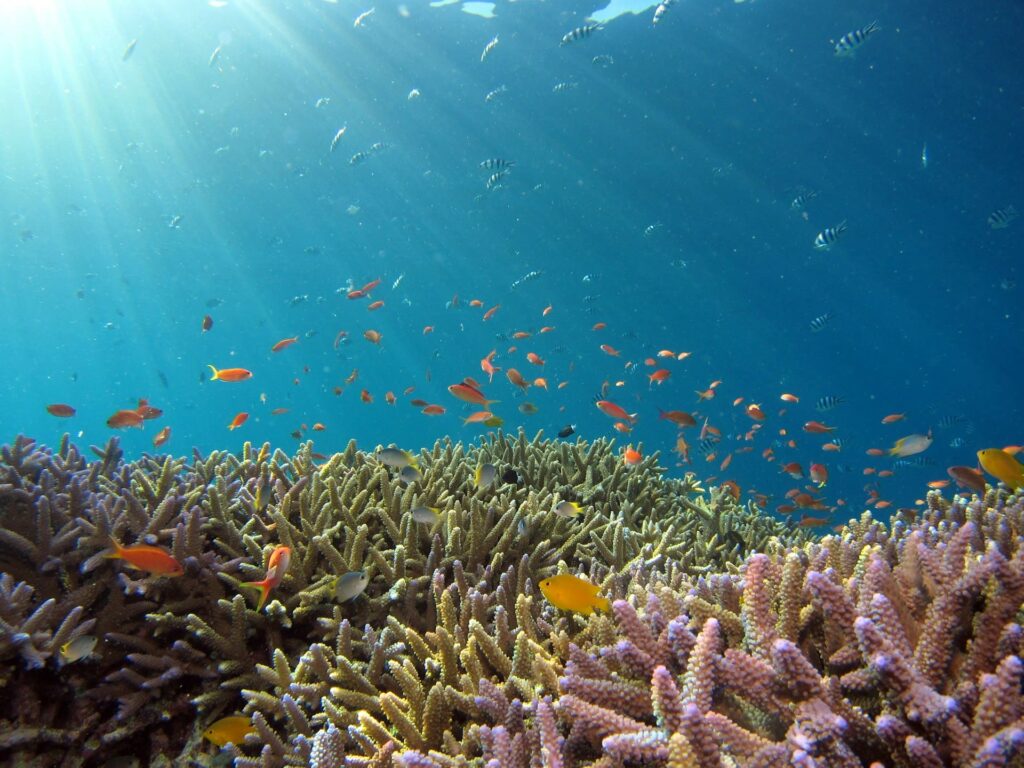
Coral reefs are emerging as a major driver of economic losses. They are extremely sensitive to temperature and acidification, but provide ecosystem services that can be worth hundreds of thousands-sometimes millions-of dollars per hectare: fisheries, tourism, coastal protection, biodiversity.
The same goes for mangroves and other coastal ecosystems, which function as true natural infrastructures against storm surges and sea level rise. Losing them means exposing yourself to more frequent and more costly damage. And no, concrete is not an equivalent substitute.
Most affected
Ocean damages do not affect everyone equally. Where dependence on the sea is greatest-small islands and poorer countries-the welfare losses are enormous. In some economies, ocean impacts are worth 20-30% of total climate damage, amplifying already deep inequalities.
If we ignore the ocean, carbon prices are therefore too low. Today in major markets, such as Europe, they are around 70-80 euros per ton. Estimates that include the sea suggest much higher levels, and thus faster emission cuts not out of ideology, but out of pure economic logic.
The point is not to “save the fish” out of romanticism. It is to recognize that nature supports human well-being in many different ways, and that a changing climate is eroding this foundation. Losing a coral reef or a mangrove forest is not just an environmental loss: it is a dry loss of well-being for people, difficult to replace with man-made alternatives.