In many cities in China, rain is no longer seen as an enemy to be drained into the sewers as quickly as possible. Instead, it is being retained, filtered and reused. This is a stark change of perspective, born of a concrete need: increasingly frequent flooding on the one hand, and chronic water shortages in large areas of the country on the other. The answer is simple in theory, much more complex in practice: turn rainwater into an urban asset.
Sponge cities
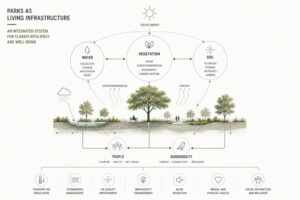
The focus of this transformation is the model of so-called“sponge cities.” The idea is that urban space functions as a large absorbent system, capable of retaining water when it rains a lot and releasing it slowly when needed. Instead of impermeable surfaces that accelerate runoff and multiply the risks of flooding, parks, green roofs, artificial wetlands, catch basins and permeable pavements are spread. Rain is no longer expelled from the city, but let into its metabolism.
This approach solves two problems together. During periods of heavy rain it reduces pressure on sewer systems and limits flooding. In drier months it allows water reserves to be used for irrigation, urban cleaning, building cooling, or sanitation. Not drinking water, but precious water that avoids wasting qualified resources for trivial uses.
In many new buildings, as well as in large public buildings and existing residential complexes, rainwater harvesting systems are now an integral part of the design. Water that falls on rooftops is piped into underground reservoirs, filtered and reused directly on site. The same is true for entire neighborhoods, designed to slow runoff and store rainwater in green basins that also serve a landscaping and recreational function.
Dams and canals are no longer enough
Behind this strategy is a very pragmatic awareness: continuing to build only large dams and canals is no longer enough. Cities are growing, the climate is becoming more extreme, and water is an increasingly uncertain resource. Managing it better, rather than just letting it flow, has become a national security issue as well as an environmental one.
The result is a cultural change before a technical one. Rain is no longer something to be feared or eliminated, but an element with which to design the cities of the future. Water that falls from the sky and, if managed well, can make metropolises more resilient, greener, and less vulnerable to climate shocks. In a world that alternates between droughts and water bombs, treating rain as a resource is no longer a visionary idea-it is simple urban common sense.