Would you be willing to replace your traditional burger with a cultured one if it would concretely help the Planet? A deeply ethical question, which underlies a second one: how will we continue to eat meat without destroying the ecosystem? Is it really possible? There is an answer, and it may not come from pastures, but from bioreactors. Cultured meat, often mistakenly called “synthetic,” is coming out of laboratories and onto menus around the world, from the United States to Singapore. But Europe – Italy in the lead – seems to have pulled the handbrake.
But what is this technology and why is it raising controversy as much cultural as environmental?
What (isn’t) cultured meat
Forget the glass test tubes and fluorescent liquids of science fiction movies: cultured meat production is a bio-engineering process that starts with a simple concept, cell proliferation. In other words, a small sample of stem cells is taken from a live animal through a painless biopsy, then these cells are “nurtured” inside a bioreactor, a controlled environment that simulates the animal’s body. A technique that provides heat, oxygen and a culture medium rich in amino acids, sugars and minerals.
The result is animal meat, identical to traditional meat on a molecular and nutritional level, but raised without the need to raise, feed and especially slaughter a sentient being.
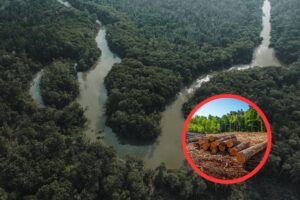
The urgency of this innovation lies in the ruthless numbers of the traditional livestock industry: according to the FAO, intensive livestock farms are responsible for about 14.5 percent of global greenhouse gas emissions. But the problem is not just in the air. Today, about 70 percent of the world’s agricultural land is devoted to livestock between pastures and fodder crops such as soybeans. With this in mind, cultivated meat could reduce land take by up to 95%; which, could mean returning huge areas to nature or reforestation.
Still, to produce a single kilogram of beef requires, on average, 15 thousand liters of water: laboratory production, on the other hand, promises to cut this consumption by between 80 and 90 percent.
Last, and not least, in addition to eliminating animal suffering, cultured meat helps in solving two health problems: antibiotic resistance and zoonosis.
European paradox: why are we standing still?
While giants like Eat Just and Upside Foods obtain approvals in Asia and America, and many nations are investing billions in the industry, Europe appears paralyzed by a mix of bureaucracy and cultural protectionism. In the European Union, any food not meaningfully consumed before 1997 must go through the regulation on Novel Foods, a very rigorous process run by the European Food Safety Authority.. And while this ensures maximum safety for the consumer, the timescales are very long: it can take years before a product is granted approval for sale.
Against this backdrop, Italy has taken a step further, becoming the first country in the world to legally ban the production and marketing of cultured meat, officially to protect its agri-food heritage and the health of its citizens. But many analysts see in this move a risk of technological self-exclusion. And so, while the patents and infrastructure of a supply chain that will be worth billions are being developed in the rest of the world, Europe risks finding itself, ten years from now, having to import this technology from abroad, losing the food sovereignty it ironically claims to want to defend.
A technology not without its critical issues
Huge technological and economic knots remain to be unraveled, however. On the one hand, the cost of energy: running thousands of bioreactors requires an enormous amount of electricity, and if this energy does not come from renewable sources, the ecological advantage of cultured meat tapers off dramatically. Then the issue of culture medium: fetal bovine serum was the key ingredient to grow the cells, which made the process neither ethical nor economical. Today, however, synthetic plant-based alternatives exist and are being developed.
Finally, social acceptance. Indeed, the term “synthetic meat” evokes a sense of artificiality that repels consumers. And overcoming the so-called yuck factor requires transparent communication and tasting that convinces even the most traditionalist palates.
A future of coexistence?
So, net of the challenges that cultured meat poses, however, it seems that it could become the perfect ally in eliminating the most problematic part of the system, namely, intensive mass farming, the kind that produces low-quality meat at very high environmental costs. And a scenario in which raised meat and extensive, regenerative farming, which produces valuable cuts linked to the land and biodiversity, coexist is possible. By including in this scenario the increasing weight of plant-based alternatives that constitute the third option.