It is a confirmation that takes, literally, your breath away. The air in Italian cities is the scene of a structural health emergency that has continued to claim victims in 2025, amid the indifference of much of politics.
According to the final data of the national project“Let’s Change Air” – promoted by ISDE Italy (Physicians for the Environment) in collaboration with Kyoto Club and Clean Cities Campaign – the toll is 7,000 premature deaths a year, in the 27 cities analyzed alone, directly attributable to exposure to PM 2.5, the thinnest and most insidious fraction of atmospheric particulate matter. This means that one in twelve deaths has as an invisible accomplice what we breathe. If, on the other hand, we consider the entire Peninsula and all air pollutants, the total number of victims exceeds 50,000.
The invisible enemy
PM 2.5 is able to penetrate deep into the pulmonary alveoli and, from there, directly reach the bloodstream, and thus our organs.
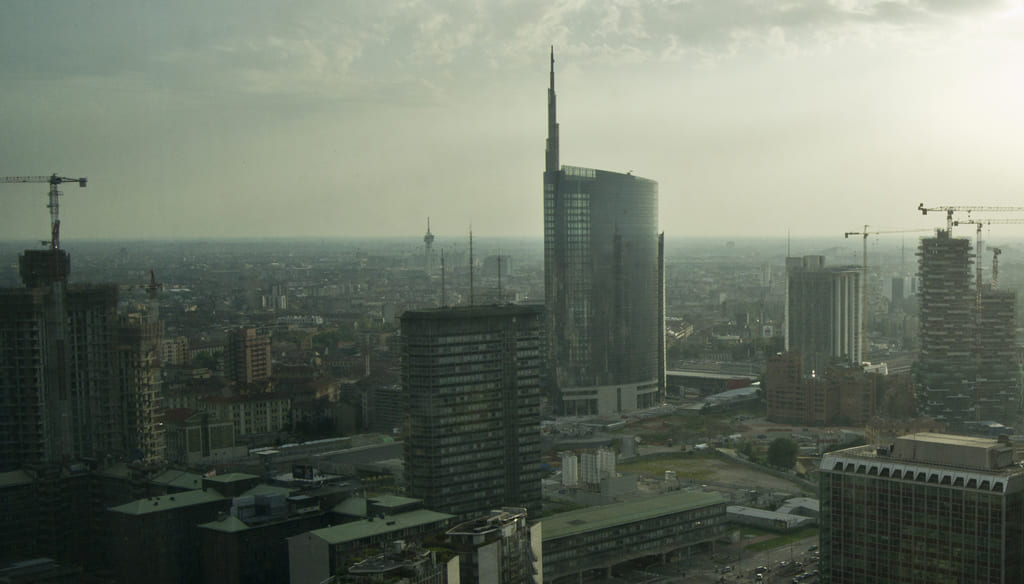
Data from 2025 tell us that in Milan, Turin and Padua the annual averages recorded are almost twice the EU limit (10 µg/m³) and four times above the World Health Organization’s recommended safe threshold (5 µg/m³).
It is, however, when analyzing daily exceedances that the picture becomes more worrisome: against a maximum of 18 days per year allowed by the new EU Directive, Milan reached 206 days over 25 µg/m³. This means that, for more than half of the year, Milan’s citizens inhaled toxic air.
In Lombardy’s capital city, one in seven nontraumatic deaths is caused by exceedances of this particulate matter.
Port cities and nitrogen dioxide: the “Palermo case“
If the North is choking on fine particulate matter from heating and heavy traffic, the South-Central and seaside cities are captive to nitrogen dioxide (NO2). This pollutant, which is inextricably linked to the use of fossil fuels for road and sea transport, shows data that the report calls “alarming.” In all cities studied, NO2 exceeds WHO daily limits for at least half the year.
The case of Palermo is emblematic: 356 days of exceedance out of 365: an entire year spent without breathing clean air. It is not much better in Catania (351 days) and Genoa (333 days). Here the weight of naval emissions is decisive: large ships that keep their engines running at the docks and port traffic create pollution hoods that add to road pollution. Even metropolises such as Rome and Naples continue to record annual averages well above 40 µg/m³, in some cases reaching five times the WHO safe threshold.
The trap of 2030
The new European Air Quality Directive (2881/2024), published in late 2024, sets more stringent targets to be implemented by member states. However, the risk is to view 2030 as a distant deadline, a kind of “good purpose” to be handled with bureaucratic calm. The ISDE-Kyoto Club report chills this approach: to act only close to the deadline is to consciously accept years of disease and death that could be avoided today.
“Citizens of today have the same right as those of 2030 to breathe air that won’t make them sick,” the document reads. At the current rate of improvement in urban technologies and policies, it would take Italy another two decades to meet the 2030 limits, and even until 2070 to align with WHO recommendations. A 40-year delay that will weigh on future generations not only in terms of health, but also in terms of economic and social costs for the national health system. Roberto Romizi, president of ISDE Italy, is clear: “The data unambiguously confirm that pollution in Italian cities is a structural health emergency. To put it off is to accept an avoidable burden of suffering.”
Beyond the rhetoric of “small steps”
Experts call for a decisive swerve that goes beyond the logic of windfall incentives to focus on radical changes in the urban fabric. It is not enough to “moderate” traffic; we need complete electrification of vehicles, home heating systems and short-haul ships.
Paolo Bortolotti, head of the Cambiamo Aria project, warns that without structural interventions on active mobility and public transport, the new European standards will remain a mirage. Reducing private traffic, investing in energy efficiency in buildings and decarbonizing ports are not ideological options, but the “bare minimum” to protect human life.
To continue to ignore official data or hide behind slight percentage improvements is to betray the mission of protecting public health. Changing the air, in 2026, is not an environmentalist wish but an immediate responsibility to every single breath we take.