There is nothing to be done. We always fall off the wagon. The environment slips down the priority list as soon as political tension flares up. Of course, one might say that if the danger of immediate war rises, the prospect of medium-term damage loses interest. One might say, and indeed many do. But it is precisely this psychological mechanism, the difficulty of extending our gaze beyond the immediate, that is one of the main causes of the problems in which we are mired. If,on the other hand,we want to prevent conflicts from escalating,we need to know their causes. And a good part of these causes lead back to the environmental issue.
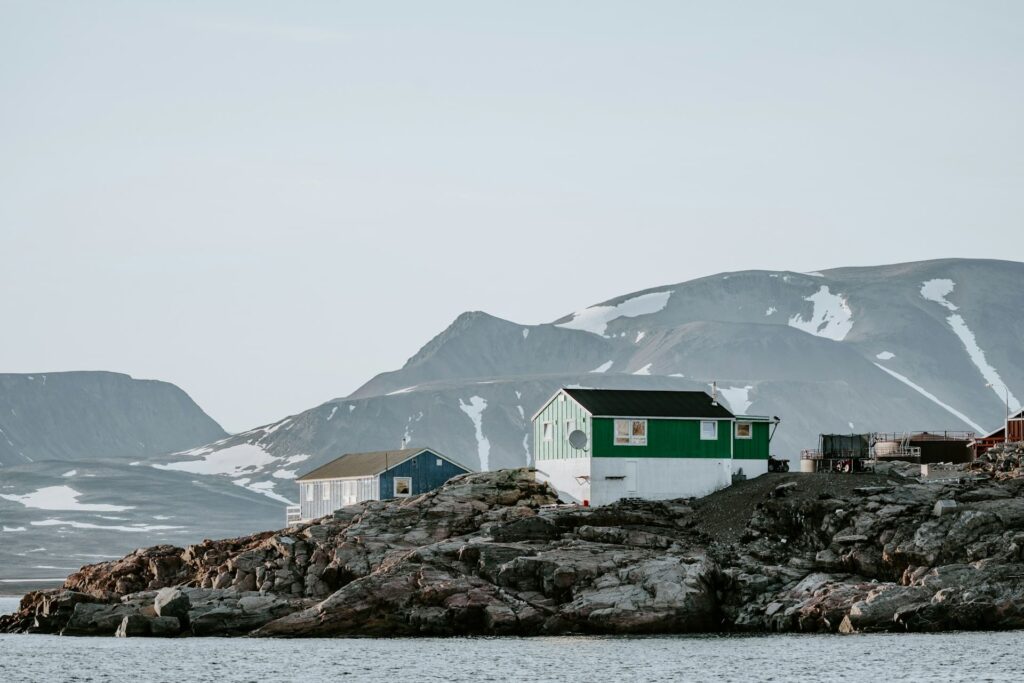
This is demonstrated by the Greenland case, which is a set of paradoxes. First paradox. The issue exists because of the climate crisis because it is the gradual thaw that makes mineral deposits and Arctic routes attractive. But it is raised by the first tenant of the White House who denies the existence of the climate crisis.
Second paradox. U.S. possession of Greenland is claimed by Trump to prevent its conquest by Russia and China. But it is the U.S. attack on NATO’s historic allies that shatters the Atlantic alliance that has been the West’s military instrument of deterrence against global competitors since the middle of the last century.
Third paradox. Trump campaigned on promises to avoid new wars and to keep the United States out of protracted conflicts abroad. But the United States finds itself mired in a growing series of conflicts, and Trump has declared that because he has not been awarded the Nobel Peace Prize, he no longer feels “obligated to think exclusively about peace,” meaning he is ready to use force to take Greenland, part of the European Union’s territory.
To try to escape the risks created by these paradoxes, we need to look up, seeking a path that holds together the conveniences of today and those of tomorrow. The conveniences of today are related to Europe’s need to give a sign of life. And just in the last few days some positive elements on this front have emerged. Brussels has started talking seriously about 93 billion counter tariffs in response to Trump’s trade wrestling. And it has signed Mercosur, which is the first strong response to the White House’s disjointed offensive. Mercosur has critical issues because it negotiates the entry of goods that come from countries with lower levels of environmental and health protection than those in Europe. But overall the deal has a distinctly positive balance.
As Milena Gabanelli and Francesco Tortora pointed out in Corriere della sera, “the agreement reached with Argentina, Brazil, Uruguay and Paraguay creates the world’s largest free trade area: 718 million people and a combined GDP of 22.4 trillion euros. The treaty will phase out tariffs on more than 90 percent of traded goods and will save 4 billion euros a year in customs duties for the 60,000 EU companies involved.” With this move, the European Union attracts to its own market – characterized by the most cautious rules and highest standards globally – an important ally both in terms of spending capacity and geopolitically, as it wins a hand in what Trump considers home.
Similar moves are possible-and in part already underway-in terms of increasing trade and diplomatic exchanges with important countries and areas of the world such as Canada, India, China, and Oceania.
What remains to be fine-tuned is Europe’s growth strategy. Trump and Putin are affraternalized by various ties, one of the main ones being the defense of fossil fuel interests that have fueled Trump’s election campaigns and Putin’s wars. To support this line, the White House and the Kremlin need to simultaneously conduct an attack on the political institutions born in the postwar period to defend the global interests of humanity (starting with peace) and on the scientific institutions born to develop knowledge independent of the regimes that govern individual states (to support fossils one must deny the climate crisis).
The European Union has chosen an opposite path. Based on the development of technological progress and the twin transition (digital and environmental) and the defense of the European quality of life that is the real strength of the old continent. That path is under attack by far-right parties openly encouraged by the White House and the Kremlin.
Giving in on this point, backtracking on the ecological transition would be an act of surrender that would deprive Europe of its best cards to spend. While relaunching, paying more attention to the needs of the continent’s industries and creaking social balances, would give it the strength to renegotiate across the board a stronger global presence, opening important interlocutions with new markets.
Greenland is the indicator of this process: it measures the ability of the European Union to exist in the context created by the dissolution of the Atlantic pact. Defending it is not only a necessity, it is an opportunity to expand the defense system (economic, environmental and military) of the continent to countries that have entered a collision course with the White House. A large majority.