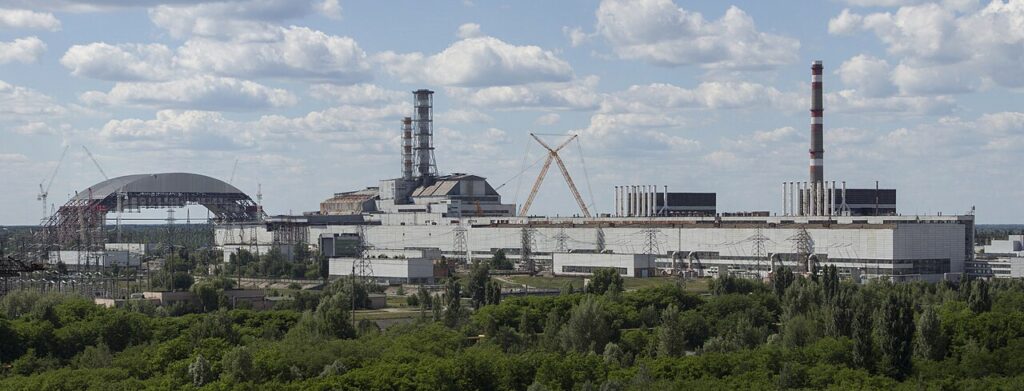
It happened again last Friday. “Ukraine’s nuclear power plants temporarily reduced output this morning after a technical problem with the grid affected the power lines,” reported the director of the Vienna-based IEA, the nuclear agency, Rafael Mariano Grossi. The plant at Chernobyl, the IEA reported, “briefly lost all external power supply. Ukraine is working to stabilize the grid and restore power; no direct impact on nuclear safety is expected, but the overall situation remains precarious.” So it was: crisis overcome. But one cannot live on the brink all the time. And Grossi did not mince words. “After four years, the conflict in Ukraine continues to pose the greatest global threat to nuclear security,” he said during a meeting of the IEA Board of Governors at the UN agency’s headquarters in Vienna, Austria.
The situation remains precarious
Friday’s crisis is only the latest in a long series. The penultimate chapter dates back to Jan. 20, when military activities damaged a critical substation, causing several power lines to be disconnected. The site had to resort to emergency diesel generators to secure the new sarcophagus and fuel depots until power lines were restored. “The Chernobyl plant,” Grossi said Jan. 20 in announcing the emergency, ” has lost all external power supply. Ukraine is working to stabilize the grid and restore power; no direct impact on nuclear safety is expected, but the overall situation remains precarious.” The line was then reconnected without damage a few hours later, with the plant kept safe by emergency diesel generators.
The most immediate threat to Chernobyl comes from spent nuclear fuel stored in the obsolete ISF 1 facility, a pool system built in Soviet times. Here, as of the end of 2020, 21,284 highly radioactive rods were stored, with a charge between 7.3 and 10²⁰ becquerels, including 6.3 tons of plutonium 239. This is a material that, by international regulations, should remain in water only in the first few years after extraction from the reactors, and then be destined for safe facilities for long-term storage.
Two repositories for radioactive rods
ISF 2, a modern “cold” storage facility built by American Holtec for $400 million, was built to meet this need. Completed in 2020, it began receiving the first rods the same year, continuing on a regular basis thereafter. On February 22, 2022, the day of the Russian invasion, there were 2,060 rods transferred – less than 10 percent of the total. The occupation of the plant blocked any further movement throughout 2022. Only with the return of the area under Kiev control could transfers resume. At the end of 2025, 5,321 rods were reportedly stored in ISF 2, while most still remain in the old ISF 1 facility. The new blackout that has hit the plant re-proposes a risk well known to experts: without electricity, it is not possible to cool the pools, resulting in higher water temperatures, possible evaporation, and the release of radioactive gases. Even ISF 2, though more modern and safer, is not immune: a prolonged interruption of cooling could result in radioactive leaks
According to IAEA at the center of Ukraine’s power grid vulnerability, even more than Chernobyl, is the Zaporizhia nuclear power plant, Europe’s largest, located in southern Ukraine. Although closed, it continues to depend on a continuous supply of power to cool its reactors and spent fuel pools. In recent months, the IEA has had to negotiate four temporary ceasefires with Ukrainian and Russian authorities to allow repairs to damaged power lines. On Jan. 19, the plant was reconnected to the last 330-kilovolt backup line, which was repaired after more than two weeks of outage. Until then, Zaporizhia had only one 750-kilovolt main line to power its security systems, a situation the IEA considers extremely precarious.
Pillars of security in crisis
Without a reliable external power source,” recalls the IEA, ” no power plant can operate safely, even when it is shut down. The existence of a secure off-site energy supply is one of the seven basic pillars of nuclear security in armed conflict and one of the five principles established to specifically protect the Zaporizhia nuclear power plant. These principles, Grossi points out, enjoy broad international support, including from the parties to the conflict, but their implementation on the ground remains incomplete. “I have repeatedly called, both here and at the UN Security Council, for compliance with these principles, particularly when it comes to maintaining the essential external energy supply, without which a nuclear power plant cannot operate safely.”
“In a war in which the front lines are constantly shifting, even the power lines have become fault lines. And with them,” Rafael Grossi concluded, “the nuclear security of an entire continent continues to depend on temporary repairs, negotiated under the bombs. The best way to ensure nuclear safety, as well as the safety of the people who have been suffering from the fighting for almost four years, is to end this conflict.”