Tourism continues to be one of the expenses Italians have the hardest time saying no to. Even in 2026, despite widespread price increases on transportation, lodging and energy, travel remains a priority. Taking a snapshot of the phenomenon is an updated analysis conducted by Vamonos Vacations, which cross-referenced Istat, Bank of Italy and Eurostat data: total tourism spending by residents, between Italy and abroad, is around 86 billion euros a year.
A figure that confirms tourism as one of the main “discretionary” consumption items of Italian households. In other words, you cut back on other things, but travel remains. However, the protagonists and spending patterns change.
Single and childless, the new engine of tourism
The most interesting data concerns the composition of travelers. About 60 percent of tourist spending is borne by people without cohabiting children, with an increasing weight of single adults and those over 50. This is a segment that not only travels more, but also spends more: the average vacation expenditure of an adult without children is 35 percent higher than that of family travelers.
Those who leave alone or as a couple tend to travel more often during the year, even off-season, do not share the costs of transportation and lodging and are more likely to choose organized tours, cruises or cultural trips. Fascinating experiences, certainly, but with a higher average receipt, especially when the destination is medium- to long-haul.
Overall, single travelers account for more than 38 percent of Italian adult leisure tourists. The share even exceeds 45% in the 45-65 age group, making an increasing contribution to the overall value of the domestic tourism market.
North more spendthrift, South more prudent
The spending map also tells of a two-speed Italy. The regions where people spend the most on travel are Valle d’Aosta, with more than 1,730 euros per capita, followed by Liguria and Trentino-Alto Adige. Right behind come Lombardy, Piedmont, Emilia-Romagna and Veneto, all well above 1,600 euros annually.
At the opposite extreme are Sicily, Calabria and Sardinia, along with Basilicata, Campania and Molise, where average spending remains below 1,250 euros per capita. The territorial differences are marked, but the desire to travel nevertheless runs through the entire country.
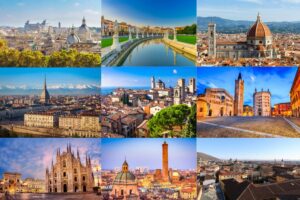
Looking at provinces and metropolitan cities, on the podium of tourism spending are Brescia, Aosta and Turin. They are followed by Genoa and a number of northern provinces, from Mantua to Verona to Bergamo and Modena. Among large cities, Milan leads the ranking, ahead of Rome, Bologna and Florence.
At the bottom of the ranking, however, are several provinces in the South and the islands, from Vibo Valentia to Agrigento, from Crotone to Nuoro. A signal reflecting differences in income, but also more prudent consumption habits.
The journey remains a need
Tourism therefore is no longer just a summer family vacation, but an increasingly fragmented experience, spread throughout the year and driven by new traveler profiles. Costs are rising, yes, but the desire to leave endures. And, judging by the numbers, for many Italians travel remains a small, indispensable luxury.