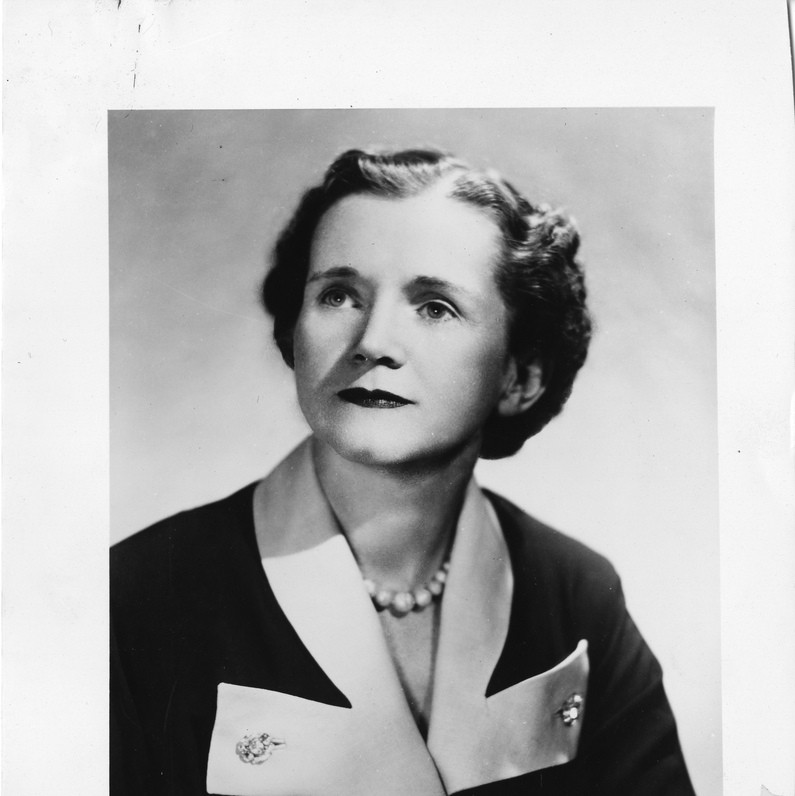
The point is not that Rachel Carson was not right. The point is that no one was ready to listen to her. The American biologist and zoologist, born in the early twentieth century in Springdale, USA, published a book in 1962 that began as a short story and ended as an indictment. Silent Spring, that was the title, was about pesticides, disappearing birds, aesthetically perfect but silent fields. It was about something we know all too well today, invisible pollution.
It is no coincidence that this story returns today, Feb. 11, International Day of Women and Girls in Science. Because more than an anniversary, it is a reminder of the price that science can exact when it is a woman who practices it without discounting anyone.
By bringing to light the problem of pollution produced by synthetic chemistry, Carson in fact challenged her time, breaking the “technocratic pact” of the time: until then, the dominant narrative postulated a shadowless coincidence between scientific progress, industrial expansion and human welfare. In other words, with her “silent spring” she dared to suggest that human intervention in nature, when driven by hubris and short-term profit, produced not liberation but a chain of unintended and deadly consequences. So, she indicted the whole philosophy of “control of nature.”
Mind you: her accusation was constructed with unassailable methodological rigor. Yet, the reaction that ensued was a veritable campaign of delegitimization. For this was not a scientific debate aimed at the search for truth, but a political and media counteroffensive orchestrated to defend threatened economic interests.
Anatomy of discredit
The reason for this machination is quickly stated: after World War II, dichloro-diphenyl-trichloroethane (DDT), whose indiscriminate use was condemned by Carson, was sprayed over entire counties, in urban suburbs and even on crowded beaches. In short, it was celebrated as a miracle of modernity that would rid humanity of hunger and disease.
To question its safety, in the eyes of the establishment, was to question science itself and, by extension, American progress. But as a former U.S. Bureau of Fisheries biologist, Carson possessed all the credentials and expertise to read the data that the industry in the field preferred to ignore-from avian mortality reports to cancer risks.
Hence, the lobbying response, which resulted in a full-fledged discredit campaign. The strategy, in fact, did not aim to refute the point data on toxicity; rather, it shifted the debate to the macroscopic and apocalyptic consequences of any regulation.
The public face of this strategy was Robert White-Stevens, biochemist and spokesman for American Cyanamid, who used an economic argument against Rachel Carson’s scientific work: either accept the indiscriminate use of chemical pesticides, or face the collapse of civilization. The biologist described a silent spring without bird songs because of poisoning, the counterpart a world ravaged by famine because of the absence of chemistry.
In addition to the economic argument, which served to frighten the public, there was the personal attack, to delegitimize the source. Carson was a woman, and as such incapable of the cool rationality necessary to understand the benefits of modern chemistry. Because science was “male.” Science was “control.” And ecology, with its emphasis on interconnectedness and vulnerability was “female,” “weak.”
A discredit, this, that continued even after her death in 1964. In 2007, when DDT had been banned as early as 1972, some conservative think tanks launched a campaign of vicious revisionism, blaming the scientist for the deaths of millions of people in Africa from malaria. This was the syllogism: Carson caused the global ban on DDT; without DDT, mosquitoes proliferated; ergo, Carson killed more people than Hitler and Stalin. A blatant falsification, because the ban on the substance included public health exceptions.
The climate crisis as a battlefield
If this rhetoric does not sound new to you, the reason is simple: in the contemporary debate, this structure of falsification has been integrally transferred to the climate crisis. Because climate science is not treated by its opponents as a body of physical knowledge, but as a political ideology to be defeated.
We find the same media and political treatment used, for example, against Greta Thunberg, accused by various media figures as irrational, hysterical and a puppet of subversive forces.
For example, Fox News commentator Michael Knowles called her a mentally ill child exploited by the international left; or again, Australian pundit Andrew Bolt called her “deeply disturbed” and “hysterical,” using her Asperger’s diagnosis to delegitimize her political message.
Comparative analysis between the Rachel Carson affair and the current climate crisis reveals a disturbing continuity. The tactics are unchanged: in 1962 Carson was a hysteric who wanted to starve the world. Today climate scientists and activists are ideologized alarmists who want to destroy the economy and cause energy poverty.
In short, this story teaches us an important lesson: that science, when it touches vital economic interests, is inevitably intertwined with political choices. The scientific approach struggles to survive in a world dominated by large concentrations of economic power. Especially when it is women who challenge them. That is why it is important to celebrate February 11.