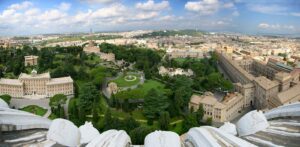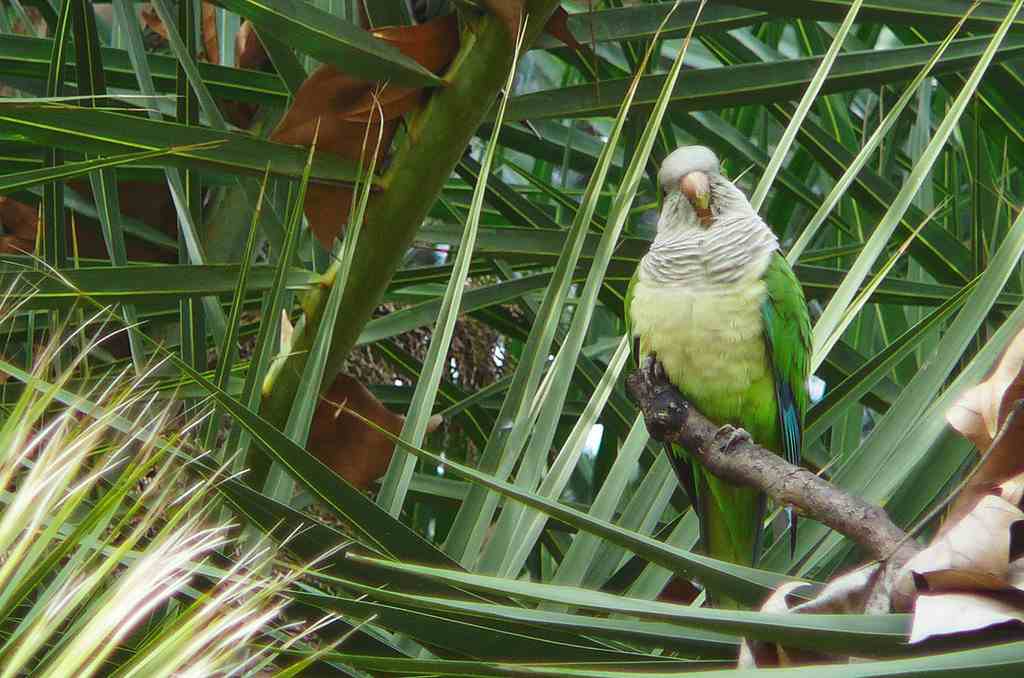
For the past few decades in Rome, from the domestic pines of Villa Borghese to the cedars of Piazza Vittorio, if you raise your nose upward, you can observe a sound and visual panorama made of a darting of green feathers, of shrill calls. For many citizens and tourists, it is a pleasant splash of color; for experts, it represents a case study of nature’s resilience and the dynamics of allochthonous species.
The occupation of “empty spaces“
But let’s take a step back. According to a recent study by the University of Turin, published in Ecological Indicators, the success of parakeets in Italian cities is not a result of chance or violent overpowering. On the contrary, it is the result of the ability to occupy an empty space.
In urban bird communities, in fact, there are ecological niches unexploited by native species, such as sparrows, blackbirds or robins. And specifically, the research, conducted by analyzing the situation in six Italian cities, showed that these species did not exactly “steal” the place of the local fauna; rather, they seem to have colonized urban habitats that native populations could not fully exploit.
Parakeets, and particularly the two species known as “collared” and “monk” parakeets, have benefited strategically from the city’s microclimate, which is warmer than the surrounding countryside, and the constant availability of food provided by public parks.
Open-air laboratory
While the study carried out by researchers at the University of Turin offers a general framework, Rome, on the other hand, represents Italy’s most significant open-air laboratory: the presence of these birds in the capital is not a recent phenomenon, but is rooted in a history that is now 30 years long.
The first stable reports, in fact, date back to the mid-1990s, when small nuclei began to settle in some of the city’s green areas, such as the Caffarella Park. Initially, people fantasized about daring escapes from airport expeditions or mass releases, but the reality is related to the spread of budgies as pets: many specimens escaped captivity, while others were released by owners who could not handle their “noisiness” and longevity.
Over time, then, the population literally exploded, and colonized large green lungs such as Villa Pamphilj, Villa Ada, the Aqueducts Park and the historic gardens of the center. And today there are thousands of specimens living in balance with their urban surroundings, which offer them exotic trees and ideal nesting cavities. As mentioned, however, there are two main species that inhabit the capital.
Two species, two strategies
There is the collared parakeet, native to the tropical belts of Africa and Asia: slender, it likes to nest in the natural cavities of trees, and it is because of this characteristic that it is the main competitor for native species such as woodpeckers, with which it competes for holes in the most suitable trunks.
Then there is the monk parakeet, which comes from South America and follows an opposite strategy: it is the only parrot in the world capable of building condominium nests by weaving twigs. These structures, particularly visible on large trees in historic squares, can reach considerable weights and house several families. A complex architecture, which makes this budgerigar much more visible and rooted in the urban fabric: it transforms Rome’s trees into natural “skyscrapers” for the birds.
Urban management between protection and monitoring
The management of this parrot population is an issue that deeply divides public opinion between those who cheer for the exotic and those who fear for the protection of the original biodiversity.
Currently, the City of Rome and regional agencies operate constant monitoring with scientific support from the Istituto Superiore per la Protezione e la Ricerca Ambientale – ISPRA – and leading environmental associations such as LIPU. There are no plans for bloody eradication: the approach is focused on control and prevention.
How. Authorities intervene as a priority to ensure public safety, especially in the case of the heavy nests of monk parakeets, which can compromise the stability of the most fragile branches. And they act with extreme caution, carrying out removal and securing operations at times furthest from breeding, so as to protect the welfare of the animals.
In parallel, work is being done in peri-urban areas, such as the Maccarese shoreline, to mitigate through sound deterrents the damage that parrots can do to orchards. Finally, environmental education work remains key: experts urge citizens not to feed these birds to avoid further altering natural balances and to remember that, despite their banding, they remain an alien species embedded in a delicate ecosystem.
In short, the challenge for Rome is the search for sustainable coexistence.