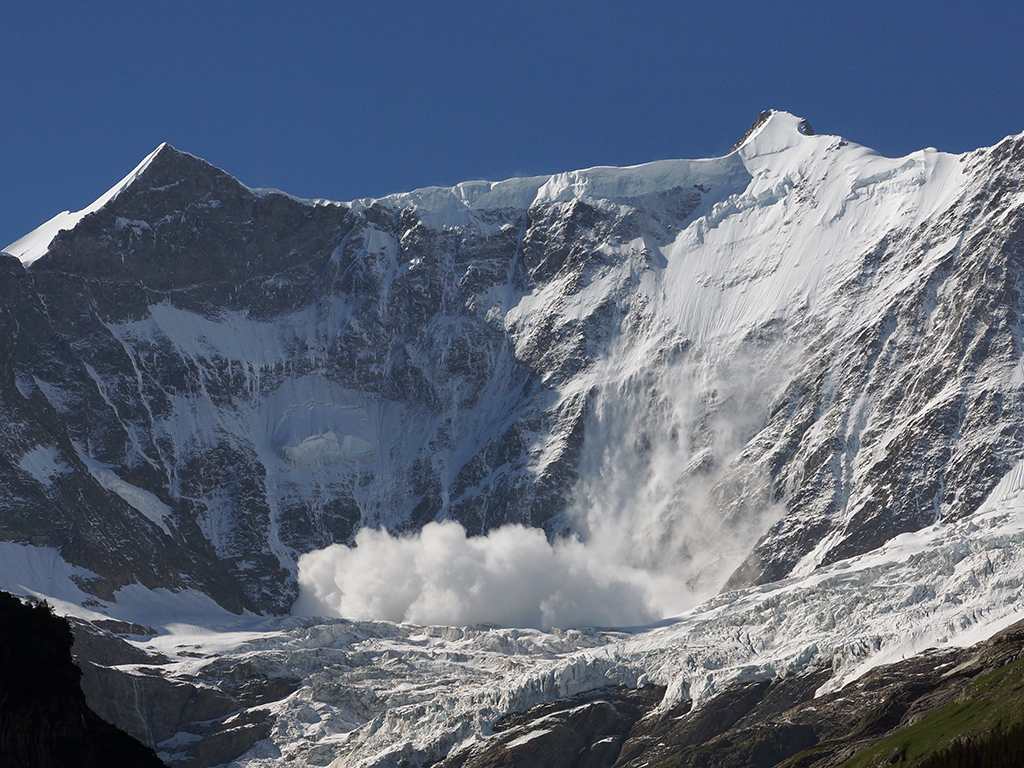
Alpine reports these days draw an ever-expanding – and increasingly tragic – risk map. In just two weeks, some 20 people have lost their lives swept away by avalanches in the Alps. It is a tally that is difficult even to update accurately, as the death toll grows by the hour, making it clear how out of scale the situation is by seasonal standards.
Four deaths were reported last Sunday alone. Three young French freeriders, residents of Courmayeur, were swept away by an avalanche in Val Veny, on the Italian side of Mont Blanc. The fourth death occurred at Lago Nero, in the Madesimo area, where two snowmobile groups were hit by an avalanche: one of the tour participants was swept away and lost his life.
These incidents come on top of the 10 deaths recorded in the first week of February in Trentino, South Tyrol, Veneto, Friuli Venezia Giulia, and the province of Sondrio, and other accidents in the following days. Also on Sunday evening, two snowboarders died under an avalanche on the Stubai glacier in the Austrian Tyrol, while another snowboarder lost his life in the Ticino canton. A list that continues to lengthen and returns the measure of a particularly unstable winter season.
In Valle d’Aosta, the orange alert for avalanche danger covers the main massifs, from Mont Blanc to the Matterhorn, while in Switzerland an avalanche caused a train derailment in the canton of Valais, with injuries and heavy repercussions on rail traffic. In Piedmont, in Bardonecchia, a municipal ordinance forced the evacuation of a hamlet and the closure of two valleys. Different episodes, united by a common dynamic: an unstable snowpack, made more vulnerable by erratic rainfall, intense wind and rapid thermal fluctuations.
The Aosta Valley Civil Defense bulletin speaks of particularly delicate conditions in the basins, gullies, and near the forest line, where the wind has accumulated large amounts of fresh snow. Newer layers rest on fragile surfaces, with the risk of detachment even at the mere passage of a skier or hiker. Slabs can reach medium to large sizes and come down very steep slopes, especially at high elevations facing southeast, areas that had already shown signs of instability in recent weeks.
Vulnerable transportation
The most emblematic case comes from Valais, where an avalanche encroached on the tracks of the Frutigen-Brig line just moments before a regional train passed through. The train derailed just outside a tunnel, causing five injuries and the evacuation of twenty-nine passengers. Traffic was suspended for hours, with strategic links closed and several locations temporarily isolated. Swiss authorities have ordered extensive checks and complex work to remove the convoy, slowed by the high residual danger of new avalanches.
Difficulties were not limited to the rail network. Major roads to tourist resorts such as Zermatt, Saas Fee and Arolla were temporarily shut down, while vehicle transport through the Lötschberg tunnel suffered lengthy suspensions. A chain of disruptions that highlights how mountain infrastructure is exposed to increasingly frequent and less predictable phenomena.
Community on alert
On the Italian side, in Bardonecchia, the order signed by the mayor imposed the evacuation of the hamlet of Rochemolles and the closure of Valle Stretta and Rochemolles itself. About forty people, including residents and tourists, were temporarily removed from their homes. The decisions were made based on assessments by the local avalanche commission, which identified the Grand Vallon as one of the most sensitive areas, with similar characteristics to those that preceded a major event in 2018.
In upper Ossola, State Road 659 in Val Formazza has been closed at Roccette according to the Anas ordinance that provides for the automatic suspension of traffic in the presence of high risk. Precautionary measures that affect the daily life of Alpine communities and the tourism economy, already tested by increasingly less regular winter seasons.
Snow more fragile, risk more widespread
Underlying these episodes is a progressive transformation of snow conditions: decreasing average snowpack thickness and increasing temperature fluctuations promote the formation of persistent weak layers that remain unstable for long periods. Intense snowfalls, concentrated in short time windows, create uneven accumulations that the wind redistributes unevenly, increasing the probability of detachment.
The result is a higher overall risk, affecting not only off-piste sports activities, but also infrastructure, population centers and strategic connections. Avalanches thus become a concrete indicator of how climate change is changing the parameters of safety in the mountains, imposing new prevention, land-use planning and emergency management strategies.
In an increasingly unstable environment, prudence is not an abdication, but a necessary condition to continue living and crossing the Alps without turning normality into a gamble.