Chikungunya is no longer a sporadic event linked to intercontinental travel. New scientific data indicate that much of Europe now has climatic conditions compatible with stable local transmission of this virus. Rising temperatures and the spread of the Asian tiger mosquito are extending the season of infection and widening the perimeter of areas at risk, with direct impacts on the organization of health systems and prevention policies. In 2025, France and Italy recorded outbreaks on an unprecedented scale, with hundreds of cases. Numbers that mark a leap from the recent past, when indigenous infections remained episodic and limited.
Underlying the change is a new scientific analysis published in the journal Journal of the Royal Society Interface, which recalculated the minimum temperature threshold required for the virus to complete its life cycle in the tiger mosquito, the main vector of the disease.
Revised temperatures, longer seasons
According to the study, chikungunya transmission is possible as early as 13 to 14 degrees, well below previous estimates that placed the limit at 16 to 18 degrees. A seemingly small difference, but one capable of substantially altering the European risk map.
As a result, in countries such as Italy, Spain, Portugal and Greece, favorable conditions can persist for more than six months a year, while in large areas of central Europe the risk window extends to three to five months. A temporal extension that increases the likelihood of triggering and maintaining local outbreaks, especially in the presence of imported cases.
Global warming amplifies this scenario. In Europe, rising temperatures are proceeding at almost twice the rate of the global average, with direct effects on mosquito biology and the rate of virus incubation. A context that transforms an occasional threat into a structural element of the health picture.
The spread of the tiger mosquito
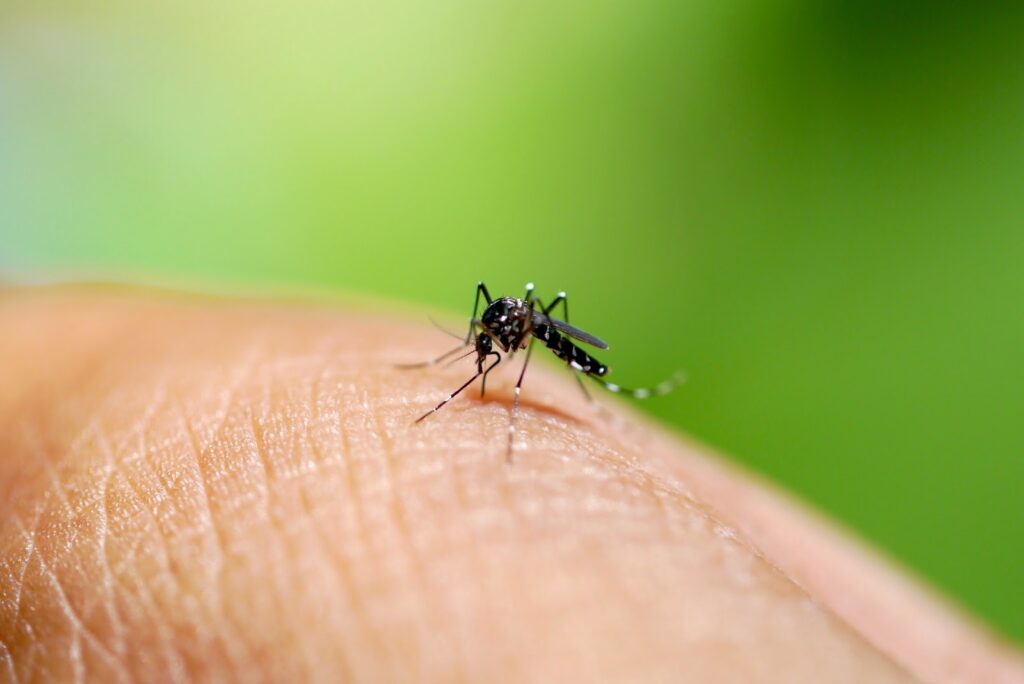
Making the expansion of chikungunya possible is primarily the adaptability of the Asian tiger mosquito, an invasive species now firmly established in much of the continent. Accidentally introduced through commercial trade, it has found urban environments to be an ideal habitat: small water stagnations, backyards, potholes, manholes and abandoned containers constitute a widespread network of micro-sites.
Unlike other species, the tiger mosquito bites predominantly during the day, increasing opportunities for human contact. European epidemics almost always start with infected travelers from tropical regions who are bitten by local insects, thus triggering transmission across the territory.
Until now, harsh winters had been a natural barrier, interrupting the mosquito life cycle and preventing the virus from persisting from one year to the next. But in parts of southern Europe, almost continuous year-round activity is already being observed, a sign that this climatic brake is gradually weakening.
From exception to health normality
France exceeded 800 cases in 2025, compared with only a few dozen recorded over the past decade. Even in Italy, outbreaks have reached a size that requires extraordinary health interventions. Numbers that indicate a change of pace and call for a review of surveillance strategies.
Chikungunya causes high fever and severe, often persistent joint pain. According to the World Health Organization, up to 40 percent of patients continue to suffer arthritis or intense pain even five years after infection. In young children and the elderly, complications can be severe.
More precise identification of at-risk areas and periods now makes it possible to plan targeted interventions, directing entomological monitoring activities, pest control campaigns, and clinical surveillance. Essential tools to rapidly intercept cases and contain the spread.
Prevention, the first line of defense
In the absence of extensive vaccination coverage, prevention remains the main weapon. Eliminating water stagnation, protecting oneself from bites, reporting suspicious cases early and strengthening collective awareness are decisive measures. Risk management also involves everyday behaviors that can reduce mosquito density in urban settings.