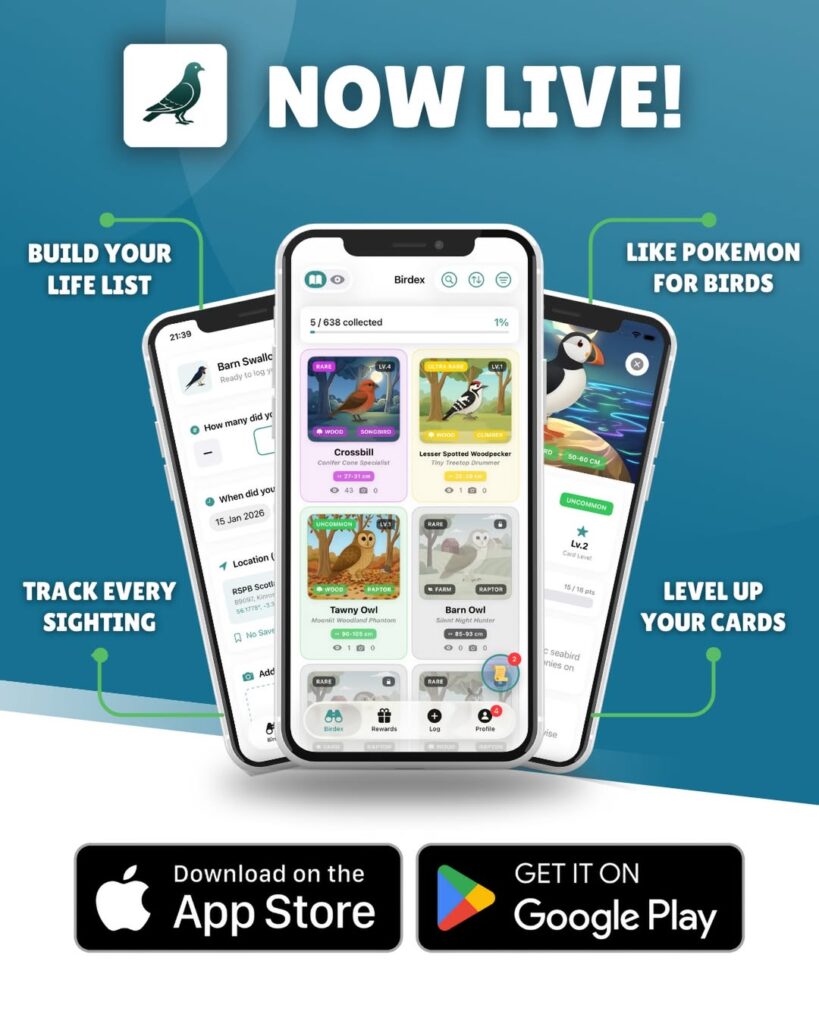
A recently launched app in the United Kingdom has reimagined birdwatching as a digital and interactive experience. Birdex allows users to collect bird cards every time they spot one and accumulate points based on the rarity of the species. The rarer the sighting, the higher the score, and users can compare themselves with friends and family, turning a walk in the park into a light and fun competition. To date, more than 200,000 birds have already been registered by users.
Harry Scott, one of the developers, pointed out to the Guardian that Birdex began as a side project developed over six months, with the goal of attracting a young audience to nature. “We’re trying to make sure that the time people spend in front of the screen is much more positive,” Scott explained, highlighting the educational intent of the platform.
Technology and learning
The app does not just record sightings: it also exploits graphic elements, some of which are generated with artificial intelligence, to depict birds. This choice has divided users: some appreciate the speed and variety of the images, while others criticize the lack of actual illustrations. Scott clarifies that the use of AI was motivated by limited resources, but he plans to involve professional artists in the future.
Michelle Williams, a psychologist and user of the app, told the British newspaper that Birdex has stimulated her children’s interest: “It’s an opportunity to get out and help them connect with nature. There’s something nice about collecting a set, isn’t there?” The experience shows how gamification can bring children and young people closer to direct contact with the environment, without relegating birdwatching to a solitary activity.
Scientific opportunities and responsibilities
In addition to fun, Birdex could have real spin-offs for scientific research. Viola Ross-Smith of the British Trust for Ornithology (BTO) pointed out that user data, if shared, could complement official bird monitoring through platforms such as BirdTrack. However, safety issues also arise: incentivizing the tracking of rare species, such as grouse, could pose risks to the birds themselves. Ross-Smith suggests the inclusion of warnings to protect sensitive habitats and comply with nesting regulations.
A model of citizen science
Birdex represents an example of citizen science in which collective participation entertains and, together, produces knowledge. The app combines gamification, environmental learning, and potential scientific data collection, offering a tool for those who want to watch birds without going digital. The future of birdwatching may lie in this kind of hybridization of real and virtual, with the challenge of protecting the observed species at the same time.