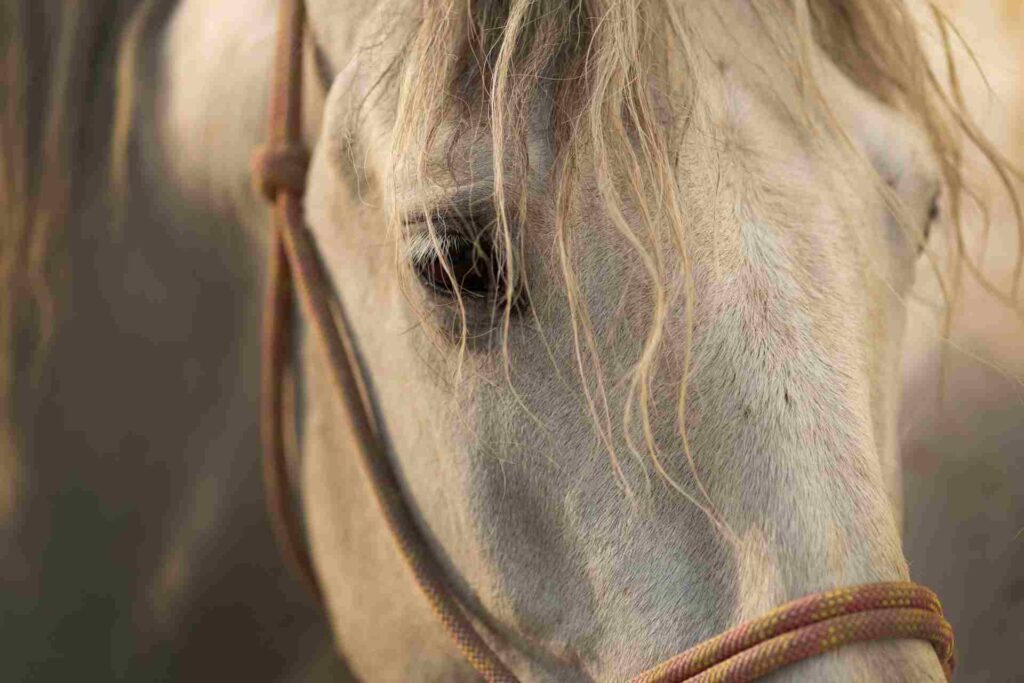
“Horses are friends. And friends are not eaten.” The slogan is simple, almost disarmingly so, but the political effect is anything but light. A reform proposal aimed at recognizing horses and equids as companion animals, equating them with dogs and cats, lands in the House. Hence: a stop to slaughter, a ban on the sale and consumption of their meat, stricter rules against exploitation and mistreatment, and limits on their use in shows and events that are not compatible with their dignity.
The basic text bears the signature of Michela Vittoria Brambilla of Noi Moderati, but there are other similar parliamentary initiatives by Luana Zanella of Avs, Stefania Cherchi of M5S, and Eleonora Evi, Patrizia Prestipino and Debora Serracchiani for the Pd: moving toward a unified proposal. The idea was not born today: it has been circulating for more than a decade, but now it finds a formal space in the work calendar. And this is where the issue moves out of the animal rights niche and into a cultural, economic and identity issue.
The heart of the reform is the change of perspective. Horses no longer as farm animals, but sentient beings and companions in life. It is a redefinition that draws on European principles on animal welfare and would have concrete consequences: no slaughter or export for food, exclusion from experimentation and cloning, and a gradual move away from animal-drawn carriages in urban centers. Uses such as equestrianism and pet therapy would remain possible, but within a stricter framework: no doping, no dangerous racing, yes to controls and certified training for those working with horses through a kind of “equine license.”
It is a cultural revolution before it is a normative one. Because changing the legal status means rewriting the boundary between use and protection, between tradition and contemporary sensibilities. Changing a situation that still sees, as the PD proposal states, “every year 21,000 horses killed in Italian slaughterhouses. A number that does not take into account all the horses that lose their lives, in a brutal and uncontrolled way, in the illegal trade supply chain.”
The proposal promises sparks especially where horsemeat is part of the local gastronomic culture. In many regions, the horse is also an ingredient in identity recipes even though 83 percent of respondents to a large Ipsos survey say they do not consume horse meat and 73 percent feel empathy for this animal considered on par with dogs and cats. Parliament is thus faced with a classic dilemma: to what extent can – or should – a society revise its habits in the name of ethical evolution?
Proponents speak of the time being ripe for a cultural leap. Critics retort that banning is not necessarily the same as convincing. In the middle is a large majority of citizens who already never or very rarely consume horse meat, a sign of a transformation in food choices already taking place.
Then there is the economic chapter. Livestock farms, supply chains, employment: the reform provides conversion paths for the activities involved, even with public support. But trade associations fear ripple effects and call for time, resources and certainty.
And yet the wind is blowing in the direction of greater attention to animal welfare. “I certainly do not intend to impose my food choices through legislative proposals, but I believe that politics has the task of intercepting the needs for change and realizing them,” explains Eleonora Evi. “Taking refuge in ‘it has always been done this way’ in the face of injustice does not, cannot hold up. People have always smoked on airplanes, owned slaves, employed children in factories, banned women from voting and many other medieval injustices. Slaughtering horses to eat their flesh may be one of those things we can decide to leave without remorse in the past, as the majority of Italians demand.”
It is no longer just a battle of sensible minorities, but a piece of the mosaic that in recent years has seen growing regulations and expectations about animal rights, protection and responsibility toward animals. The debate does not stop at the plate. It touches sports, folklore, urban mobility. The eventual exclusion of horses from some historical events or the final farewell to horseboxes evoke scenarios that intertwine collective memory and new ethical standards.
The parliamentary process will be long and bumpy. But beyond the final outcome, the reform has already achieved one goal: to force the country to question its relationship with animals, what we consider acceptable, and how sensitivities change over time.