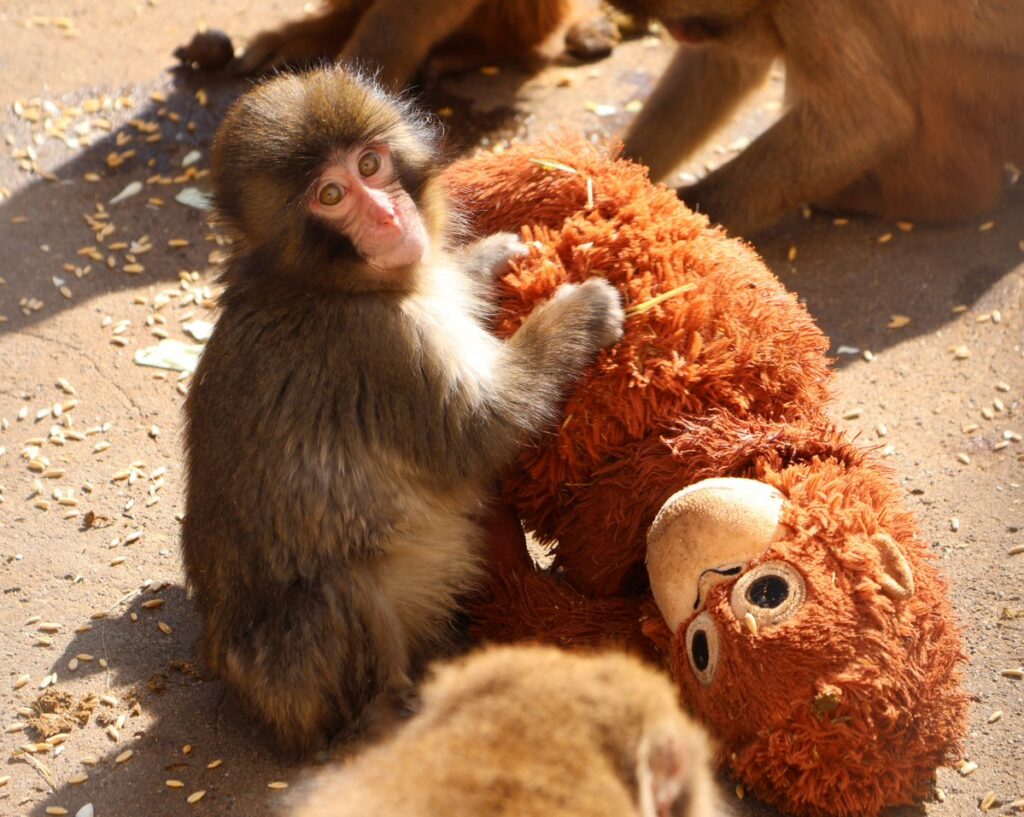
It is not often that the daily routine of a Japanese zoo becomes a global case. It happened with Punch, a Japanese macaque cub born in July 2025 who went viral for a simple reason: he always carries an orangutan-shaped stuffed animal with him. He clutches it as he walks, drags it by climbing, and uses it as a pillow to sleep on. An instinctive gesture that ignited social attention and turned an ordinary story of wildlife management into a narrative capable of speaking to millions of people.
~お知らせ~
— 市川市動植物園(公式) (@ichikawa_zoo) February 5, 2026
現在、サル山の中にぬいぐるみを持った子ザルがいます。
2025年7月26日に生まれ、放置されていたところから人工哺育で育ち、今年の1月19日から群れで過ごしています。
名前は「パンチ」という男の子です!
パンチの成長を暖かく見守ってください!#市川市動植物園 #ニホンザル#パンチ pic.twitter.com/jNpFSH0LOV
Punch was born at the Ichikawa Zoo in Chiba Prefecture and was abandoned by his mother soon after birth. A condition that in primates leads to serious difficulties in development and socialization. Zookeepers at the zoo chose to raise him, feeding him artificially and providing him with emotional support: an orange stuffed animal, designed as a symbolic substitute for the mother figure. From there, a bond was born, documented in dozens of videos showing the baby macaque moving around the enclosure without ever separating from its colorful furry companion.
The impact of social and the construction of a global phenomenon
When Punch was reintegrated into the macaque group in January, the adjustment was not immediate. Initial images show him isolated, rejected, sometimes pushed away by the other specimens. Social media followed this delicate phase step by step, turning it into a kind of public diary. The hashtag #HangInTherePunch went viral within days, garnering messages of encouragement from all over the world.
Millions of views, constant shares, comments that oscillate between concern, empathy and irony. In a short time Punch has become a digital symbol, a recognizable face within the incessant flow of platforms. Big brands have also intercepted the phenomenon: Ikea, for example, has dedicated several posts to the little macaque and donated new stuffed animals to the zoo, helping to further amplify the story’s resonance.
A case study for animal welfare
Over time, however, the situation in the enclosure changed. According to updates released by the zoo, Punch has begun to interact with an increasing number of group members: small games, grooming moments, more frequent contact. There also remain episodes of correction and distance, normal in building social hierarchies among primates. “He is learning the rules of the pack,” the janitors recounted, noting how the integration process takes weeks, sometimes months.
パンチは少しずつ群れのサル達との交流を深めています!
— 市川市動植物園(公式) (@ichikawa_zoo) February 6, 2026
毛づくろいされたり、ちょっかいをかけてみたり、怒られたりと毎日色んな経験をして、サルとして群れで暮らすための生き方を日々学んでいます!#市川市動植物園#ニホンザル#パンチ #がんばれパンチ#市川ファン pic.twitter.com/Ds0NT7FKFg
From an ethological point of view, the case is far from marginal. Animals raised by humans often struggle to reintegrate into natural social groups, with consequences for their behavioral balance. Punch represents an example of how delicate these paths are and how crucial it is to accompany them with careful protocols, constant observation and long time frames, avoiding forcing.
Meanwhile, the media effect has had a direct impact on the zoo: visits have increased significantly, with lines at the entrance and attendance more than four times the average.
Punch continues to grow, to experiment, to find his place in the pack. His fluff is still there, but progressively less central. A positive sign, keepers explain: it indicates that the pup is developing new forms of security and relationships. And while the web follows his every step, one certainty remains: behind yet another viral phenomenon is a real story of care, patience and adaptation. Three elements that should guide any of our attempts to coexist with the animal world.