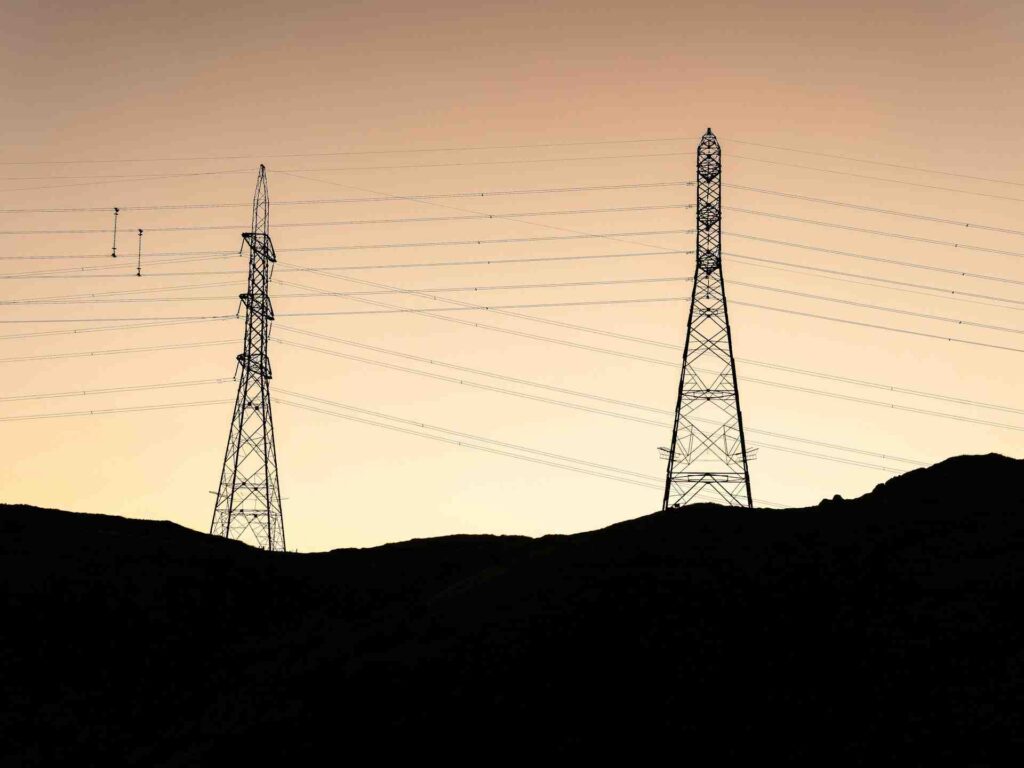
The global power grid is becoming the big player in the energy transition. According to a BloombergNEF analysis, global spending on grid infrastructure in 2025 would exceed $470 billion for the first time, with double-digit growth for the second year in a row: up 16 percent from the previous year. An increase driven by the need to connect new renewable plants, support the electrification of industries, and power a wave of data centers, which are reshaping electricity demand in many markets.
The United States leads the ranking with $115 billion, accounting for about a quarter of the world’s investment. Right behind, China and the European Union/UK each weigh in at around 20 percent of the total, confirming how modernization of transmission and distribution systems is now a priority across major economies. But the aggregate figure hides growing tensions: equipment costs have risen and high inflation has pushed up budgets, without necessarily translating into rapid removal of bottlenecks.
The connection queues
Indeed, next-generation connection queues remain outsized in most countries, despite reforms initiated to speed up the bureaucratic process of building network infrastructure. Meanwhile, demand-side connection requests are accelerating: large data centers and high-demand industries are submitting connection requests at a rate that many networks cannot handle. The result is an increasing mismatch between the timing of investment and the timing of development of new loads and facilities, with obvious risks of commissioning delays and congestion.
The dynamics between transmission and distribution is another key junction. BloombergNEF estimates that transmission investment will grow almost twice as fast as distribution over the three-year period 2024-2027: a compound rate of 16 percent versus 9 percent. Today, distribution still absorbs more capital, but overtaking could come by the end of the decade if the trend remains unchanged. In transmission, the increase is driven by specific projects: long-distance connections to integrate large renewable hubs, new substations, and high-voltage direct current lines, essential assets to transport power over large backbones with lower losses and greater control.
Supply chains are strained
“Grid expansion is a complex issue and will be decisive for a successful energy transition,” notes Peter Wall, head of grid research at BloombergNEF. “Even with more investment, significant barriers remain to meeting the needs of new generation and demand in time. With data centers and industrial electrification driving up consumption, investors need to consider how essential timely grid expansion is to connect not just new demand, but all the generation needed to ensure continuity and reliability after more than a decade of stagnation.”
Difficulties are not limited to capex. Supply chains are strained and skilled labor is in short supply, with many transmission and distribution companies reporting delays in project execution and delivery. Permitting and permitting procedures remain a drag in several jurisdictions, slowing the start of construction sites and postponing delivery dates. In many countries, grid operating costs fall on consumer bills with no profit margin for utilities-a structure that disincentivizes the adoption of capacity “enabling” technologies, such as advanced management systems or sensors to increase the maximum load on existing lines.
Investment in innovative solutions continues to grow
Despite this, investment in innovative solutions continues to grow: from dynamic line ratings, which modulate line capacity in real time based on environmental conditions, to advanced power flow control devices, to artificial intelligence-optimized smart grid software that can predict congestion, allocate resources and integrate demand-side flexibility.
For many regulators, the challenge is to rebalance incentives and accountability: to encourage investments that maximize the use of existing infrastructure and reduce activation times, without offloading unwarranted costs on households and businesses. For operators, it will be crucial to plan with greater granularity, anticipating the location of new demand – data centers, electrified industrial hubs, charging hubs – and new generation, so as to avoid queues and structural congestion.