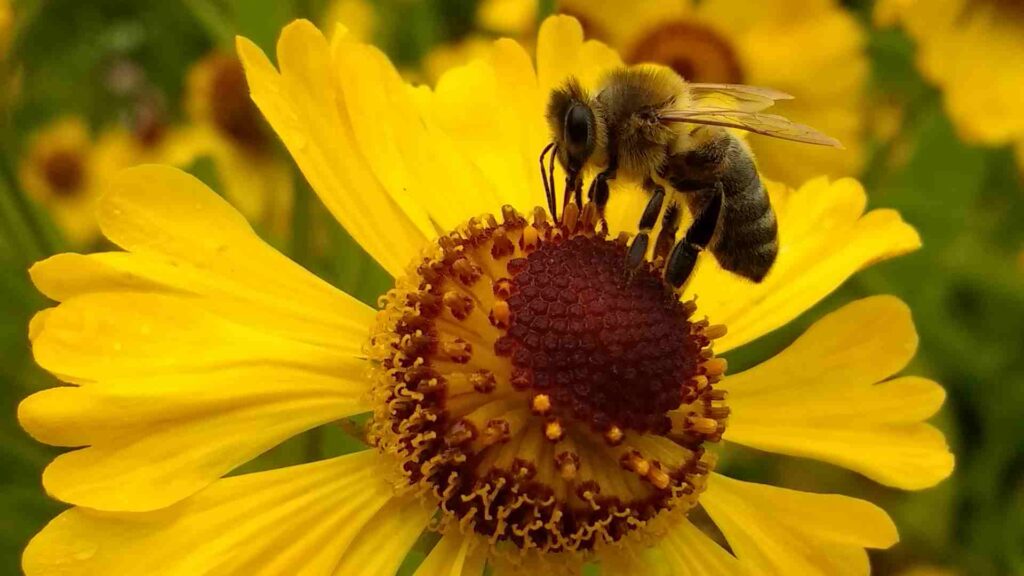
Every summer, above the Belgian town of Chimay, a spectacular biological event is repeated: about a thousand young virgin queens are mated in a controlled area with selected males to ensure the transmission of the European black bee genes. This is the so-called “nuptial flight,” a key moment in ensuring the genetic continuity of a now rare subspecies.
Beekeepers arrive from Belgium, France, Germany and the Netherlands, booking a place months in advance in the Maison de l’Abeille Noire, a facility that functions as a specialized breeding center. The queens stay for about two weeks, enough time to mate with up to twenty males and accumulate a reserve of sperm that will allow them to lay fertilized eggs for several years. Once they return to their respective territories, they become the basis for the establishment of new, genetically pure colonies.
A project born out of the territory
The initiative was started in the early 2000s by Hubert Guerriat, a Belgian biologist and beekeeper, with the aim of countering the gradual disappearance of the black bee, caused by the massive introduction of selected hybrid bees to maximize honey production. Over time, Chimay has been transformed into a true sanctuary: in a protected area of about 30,000 hectares, beekeepers can raise exclusively black bees, creating a buffer zone against hybridization.
The project involves ongoing training, health monitoring of colonies, genetic selection and international exchanges between breeders. The goal is to build a European network capable of strengthening local populations without distorting their characteristics.
Less yield, more stability
Compared to hybrid bees, black bees produce less honey but are longer-lived and more resilient. The colonies consume less stock in winter, suffer fewer losses, and respond better to unstable weather conditions. This makes them particularly well adapted to an environment affected by increasingly frequent extreme events.
For beekeepers, the choice involves a change in perspective: less quantity, more focus on hive health and balance with the environment. In return, a niche market emerges for so-called “black honey” and a range of artisanal products that value a slower, more sustainable supply chain.
Bees and forests, a link to be rebuilt
A central part of the project also concerns the return of black bees to the wild. Hollow logs are being installed in forests to replicate the natural nests that once formed in large trees. This makes it possible to create self-sustaining populations that are useful for both genetic conservation and pollination of forest ecosystems.
According to researchers, strengthening the presence of the black bee means increasing the overall resilience of forests, improving plant reproduction and habitat stability. A benefit that goes far beyond the beekeeping world.
A replicable model
In the face of the collapse of many colonies in Europe and the United States, linked to pests, diseases and environmental stress, Chimay’s experience proposes an alternative model: valuing local subspecies, adapted over centuries to their territories, instead of focusing on standardized production lines.
In the synchronized flight of a thousand queens is an idea of living with nature: less control, more knowledge, more attention to the invisible relationships that keep ecosystems in balance.