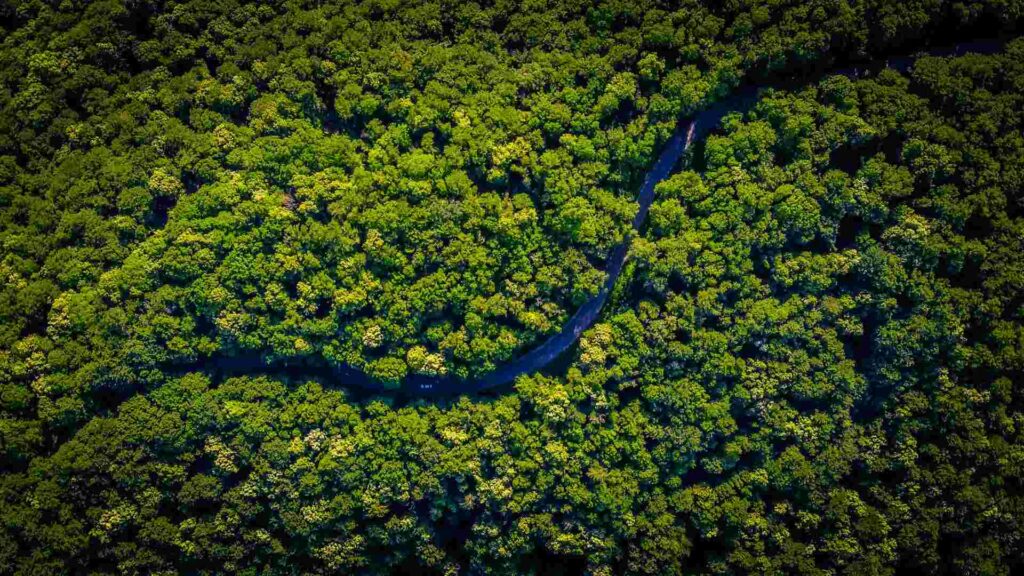
For the first time , Brazil has awarded a startup the reforestation of a public area in the Amazon through a structured concession on carbon credits. The auction, held at the São Paulo Stock Exchange, awarded the project to Re.green, the sole bidder for the management and reforestation of a 145,000-acre(nearly 59,000-hectare) area in the Bom Futuro reserve in Pará state. The term of the agreement is 40 years.
A competition without competition
The most striking feature of the operation is the absence of competition: only one participant for the main lot and no bids for a second, slightly smaller area included in the same complex of concessions. This is a sign that reflects the still experimental stage of the model, designed to attract private capital into industrial-scale reforestation.
Re.green will operate in a context already defined by years of forest degradation. The company is in the business of buying degraded or unused land to replant native species and generate carbon credits that can be sold in the voluntary and regulated market.
The economic model of carbon credits
The economic structure of the concession is based on a percentage of revenues: the Brazilian state will receive 0.7 percent of the value generated from the sale of carbon credits produced by the project. Official estimates indicate a potential of about $2 million per year.
The mechanism aims to turn forest recovery into a financial asset. Planted trees absorb CO₂, which is converted into tradable credits to offset corporate and government emissions. It is a model still being tested, but increasingly central to the climate strategies of some tropical countries.
Amazonia under pressure
The concession is part of a critical environmental picture. The Amazon is increasingly approaching a threshold of ecological instability beyond which, according to several scientific studies, large areas could turn into degraded and less resilient ecosystems.
The Brazilian government has set ambitious goals: the reforestation of about 30 million acres by 2030. To get there, the executive has already mapped out 3.2 million acres of protected areas in need of restoration and plans to put about 750,000 acres out to tender by 2027.
Local people and land governance
The Bom Futuro project also includes the participation of the indigenous Karitian community, which is present in the area. The involvement of local people is indicated as a structural element of the concession, both in terms of land management and resource protection.
Environment Minister Marina Silva called the initiative an attempt to transform compromised areas into tools for climate and social regeneration, emphasizing the role of reforestation alongside policies to curb deforestation.
A test for the reforestation market.
The deal is seen as a test case for Brazil’s ability to build a carbon market linked to public forest management. Investor interest remains selective: the lack of bids for a second reserve area signals that perceived risk is still high.
But the political and economic fact remains: for the first time, a portion of the public Amazon is being entrusted to a private entity with a long-term contract based on environmental performance measured in carbon credits. This is a step that could reshape the relationship between state, forest, and climate finance in the coming years.