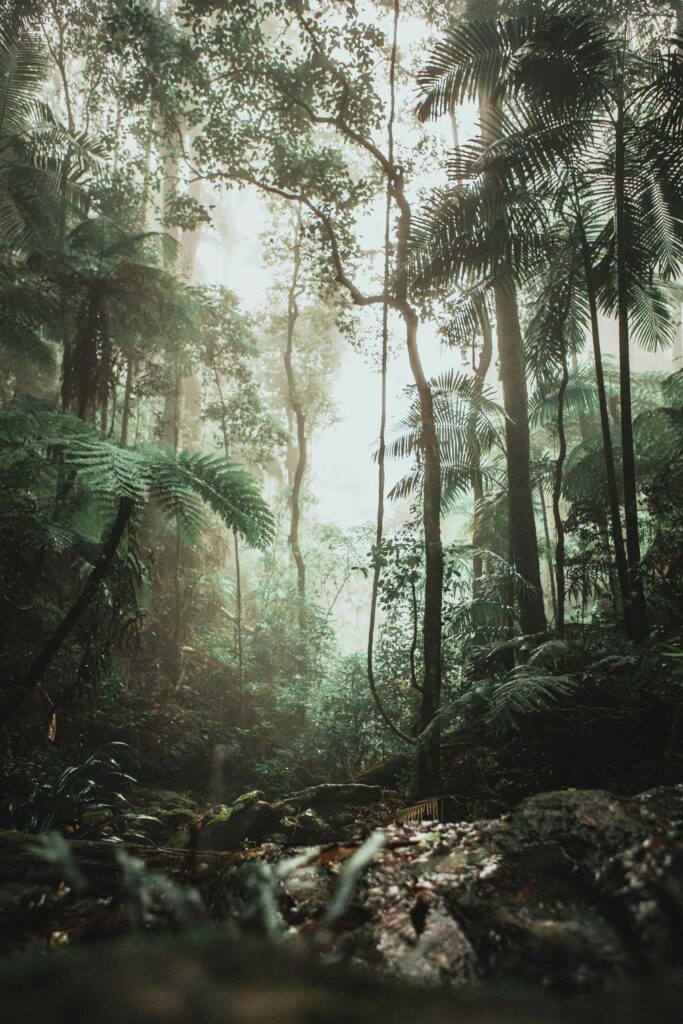
In the heart of the Ecuadorian Amazon, far from major international conservation programs, a family has been carrying out an almost solitary mission for years: to save plant species threatened by advancing deforestation and the effects of climate change. It is a story that shows how much the protection of biodiversity often depends on local initiatives, little known but decisive for the survival of ecosystems.
In the indigenous Quichua community of Alto Ila, about 130 kilometers southeast of Quito, Ramón Pucha and his family have transformed a plot of over thirty hectares into a living conservation laboratory. Seeds of rare or endangered plants are collected, cultivated and then reintroduced here in patient work that requires time, botanical expertise and a deep knowledge of the forest.
Work involves the whole family
The process begins with long expeditions into the jungle, during which Pucha searches for rare trees to collect their seeds. It is not an easy task: many species produce seeds only at certain times, and in recent years the increasing frequency of droughts and changing seasons have made the task even more difficult, reducing the availability of reproductive material. Once brought back to the nursery, the seeds are planted and cared for until they become young plants that, when they reach maturity, are used in reforestation programs or distributed to local communities engaged in the restoration of degraded areas.
The work involves the whole family. The children collaborate in the cultivation and management of the nursery, while one of them, with botanical expertise, supports the parents in species identification and outreach, accompanying researchers and interested visitors to learn about the experience. Over time, the farm has become a kind of genetic bank of native species, contributing to the conservation of plant varieties that are disappearing in many parts of the Amazon due to deforestation, agricultural expansion and mining.
No incentives
Despite the environmental value of the initiative, institutional support is limited and the project continues to rely primarily on family resources. The lack of economic incentives highlights a frequent contradiction in conservation policies: while tropical forest protection is considered a global priority, many of the more concrete activities on the ground are carried out by local communities with minimal or no funding at all.
The story of this family highlights an often overlooked aspect of the environmental debate: biodiversity conservation is not only through large natural parks or international agreements, but also through a widespread network of small local projects that protect seeds, genetic varieties and traditional knowledge. Without these territorial garrisons, many species would risk disappearing before they are even studied or catalogued.
A concrete example of conservation from below
The Amazon, one of the Planet’s main reservoirs of biodiversity, continues to suffer from the combined pressures of intensive agriculture, mining and climate change. In this context, initiatives such as the one started by Pucha and his family take on significance beyond the local dimension: each species saved contributes to maintaining the ecological balance of the forest, which in turn plays a crucial role in regulating the global climate.
Their project began not as a structured program, but as a personal choice driven by a desire to preserve the natural wealth of the land. Over time it has turned into a concrete example of bottom-up conservation, proving that even small groups can contribute to the protection of global ecosystems. It is a daily battle of seeds, patience and long vision, that of those who continue to plant trees with the thought of forests that may never see adulthood, but could make a difference for future generations.