Five thousand years ago, when penicillin was not even an idea, some bacteria had already learned to defend themselves against molecules similar to today’s antibiotics. This is shown by an analysis of a microorganism trapped for millennia in the ice of the Scarisoara cave in Romania that can resist ten modern drugs. A discovery that reshapes the history of antibiotic resistance and opens urgent questions about what may emerge from melting ice.
The finding, published in Frontiers in Microbiology, concerns a strain called Psychrobacter SC65A.3, the finding of which forces a reconsideration of the still widespread idea that drug resistance is only a consequence of the intensive use of antibiotics in the contemporary era.
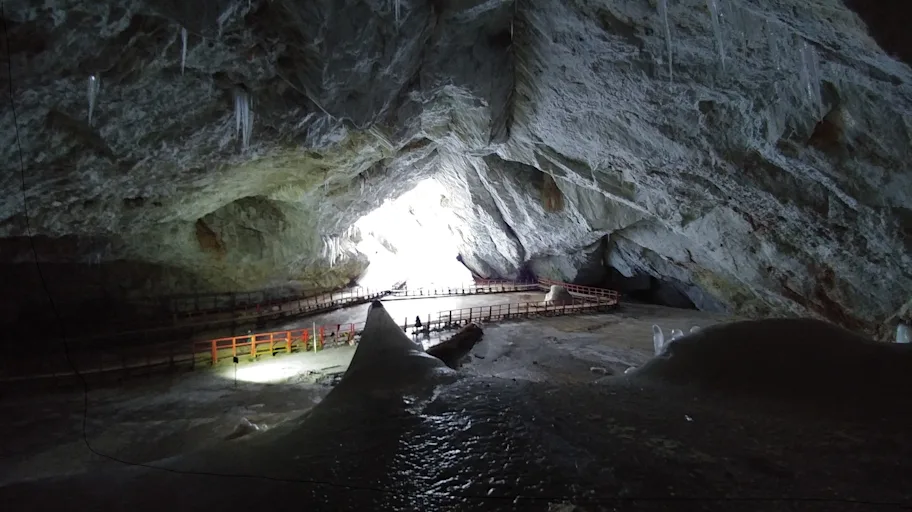
Scholars at the Bucharest Institute of Biology extracted a 25-meter-long ice core from the so-called Great Hall of the cave, a kind of natural archive that preserves a 13,000-year climatic and biological chronology. Following strict protocols to avoid contamination, the fragments were analyzed in the laboratory. Well, the SC65A.3 strain was found to be resistant to ten modern antibiotics from different classes, including molecules widely used to treat serious infections, such as rifampin, vancomycin and ciprofloxacin.
A biological archive in the ice
The presence of resistance genes in such an ancient microorganism suggests that such mechanisms are part of the natural evolution of bacteria, long before antibiotics were introduced into medicine. In the genome of SC65A.3, more than one hundred genes associated with resistance and nearly six hundred with as yet unknown functions have been identified. A gene pool that testifies to how extreme environments, such as ice caves, can represent untapped reserves of biological diversity.
The genus Psychrobacter is known for its ability to adapt to low temperatures. Some species are potentially pathogenic, but many show interesting biotechnological potential. In the case of SC65A.3, in addition to resistance, enzymatic activities have emerged that can inhibit the growth of other microorganisms, including some multidrug-resistant bacteria. An aspect that opens concrete prospects for the development of new antimicrobial compounds and industrial applications.
Between risk and opportunity
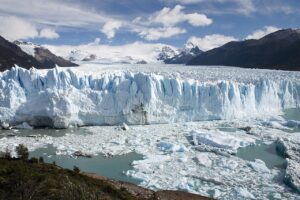
However, the discovery also has a critical implication. Accelerated ice melt, linked to global warming, could release ancient microorganisms and their resistance genes into the environment. In this scenario, the possibility of those genes being transferred to modern bacteria is an additional risk factor in an already serious health crisis. Indeed, the World Health Organization considers antibiotic resistance to be a major global threat to public health.
According to the researchers, studying these strains provides a better understanding of how resistance has evolved and spread over time, offering useful tools for anticipating its future trajectories. The analysis of ancient genomes makes it possible to distinguish what is the result of natural processes from what results from human impact, providing a stronger scientific basis for containment strategies.
A lesson from the depths
Eleven genes potentially capable of counteracting other bacteria, fungi and viruses were also identified in the Dna of SC65A.3. This is a clear indication of the value of these microorganisms as research resources. In an era when the pipeline of new antibiotics has been drastically reduced, exploring remote biological archives may prove decisive.
The Scarisoara cave thus becomes a natural laboratory, where time has stored evolutionary solutions that come in handy today. The challenge is to manage this heritage while preventing knowledge from turning into a new risk. Science, once again, is called to move on a fine ridge: understand to prevent, explore to protect.