It’s not just a matter of melting ice. Something decisive is changing in Antarctica: the behavior of the atmosphere. From the mid-twentieth century to the present, especially on the Antarctic Peninsula, surface temperatures have increased significantly, triggering a transformation affecting the lower layers of air.
This is the finding of a study coordinated by ENEA together with six international scientific institutions and published in the Journal of Climate. The key finding is the progressive loss of atmospheric stability near the ground-a direct effect of warming that changes the way energy and air flows are distributed over the White Continent.
In other words, Antarctica is no longer that“stable capsule” that for decades helped maintain a balance in global atmospheric dynamics.
The rise of invisible waves
This loss of stability has a crucial consequence: it encourages the formation of so-called atmospheric gravity waves. They have nothing to do with gravitational waves in deep space: they are air oscillations generated when air masses are disturbed and try to return to equilibrium.
The Antarctic Peninsula has always been a major source area for these waves. But today something is changing. The study shows for the first time a marked and consistent increase in these phenomena, linked precisely to surface warming and changes in lower atmospheric flows.
In a more unstable atmosphere, these waves arise more easily and are able to propagate with greater intensity upward through the entire atmospheric column.
From Antarctica to the stratosphere: global effects
The most relevant point is that these changes do not remain confined to the Antarctic continent. Atmospheric gravity waves travel to the stratosphere and beyond, affecting circulation on a global scale. They can alter the behavior of the polar vortex, affect the processes that regulate ozone, and help change the weather even in the mid-latitudes, that is, our own.
This is where the picture becomes more interesting – and also more disturbing. An increase in these waves is a sign of a deeper reorganization of the Earth’s climate machine. This is not an isolated effect, but a gear that is shifting, with possible cascading repercussions.
The results are not based on a single observational method. The researchers integrated data from weather stations, satellite observations, climate reanalyses and model simulations. All indicators converge in the same direction: the intensity and frequency of gravity waves are increasing.
A signal deemed so relevant that the study was selected by the American Meteorological Society among the Early Online Highlights, a kind of showcase for scientific contributions considered most significant internationally.
A dimly visible wake-up call
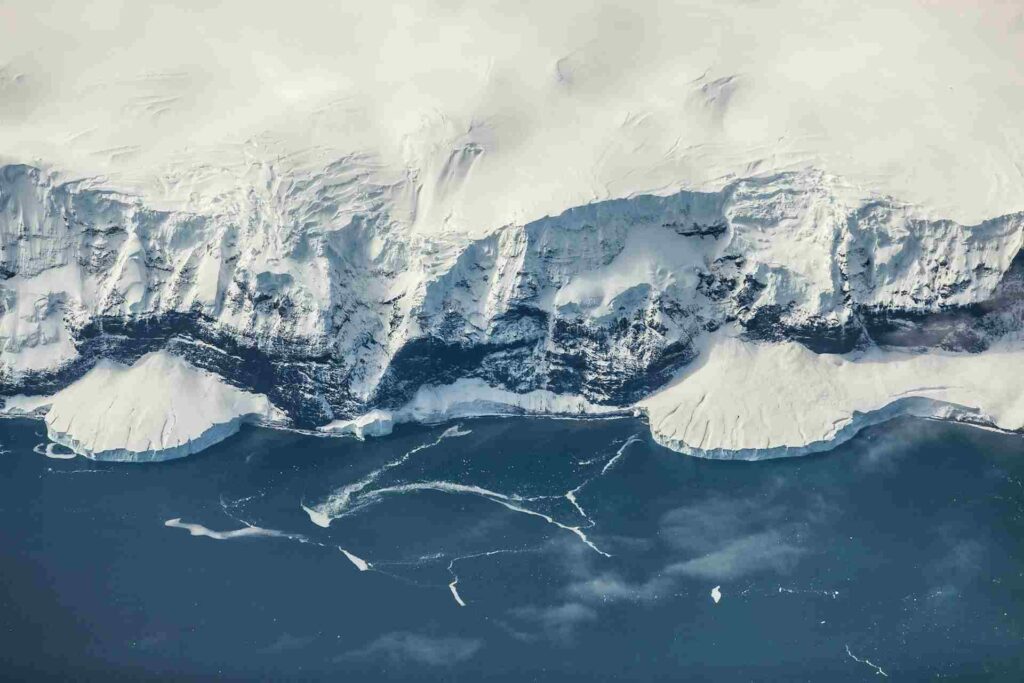
Global warming is often told through powerful images: collapsing glaciers, calving icebergs, rising sea levels. But there are less visible signs, like this one, that tell of even deeper transformations.
The change in the stability of the Antarctic atmosphere and the increase in gravity waves is one of them. A technical, almost invisible phenomenon, but one that could have very real effects on global climate. After all, it is the classic climate paradox: the most decisive transformations are often the ones that are unseen. And that is precisely why they are likely to come when it is too late to ignore them.