Outside the Buenos Aires Parliament they were shouting “water is more precious than gold.” Inside, the majority voted the opposite.
On April 9, the Argentine Chamber of Deputies gave final approval to the reform of the glacier law, clearing the last parliamentary hurdle after the Senate gave the green light in February, marking a turning point in the management of the country’s glacial areas. The original legislation, passed in 2010, prohibited mining activities in glaciers and periglacial areas. The new text promoted by President Javier milei, a denier of anthropogenic climate change, reduces the perimeter of white-collar protections in favor of mining development.
With 137 votes in favor, 111 against, and three abstentions, the House gave the green light to a measure that could unlock more than $30 billion in investment, opening a sharp rift between government, industry, and the environmental community.
The new protection map
The most significant change concerns the definition of protected areas. The 2010 law established a blanket ban on mining even in periglacial areas, which were considered essential for regulating water resources. The reform restricts protection to only glaciers with “specific hydrological functions,” leaving it up to the provinces to identify them-a power previously held by a national scientific body.
According to Mines Minister Luis Lucero, the old regulatory framework introduced “absolute prohibitions” that discouraged investments of up to $3 billion per individual project. The new framework, in the government’s intentions, would provide greater legal certainty and international competitiveness.
Investment versus water security
Industry estimates indicate that about 70 percent of the expected capital will go to copper, gold and silver mining. In parallel, the Central Bank of Argentina forecasts a possible tripling of mining exports by 2030.
On the opposite front, environmental organizations are preparing a legal counterattack. “If they refuse to listen in Congress, they will be forced to listen in the courts,” said Greenpeace and Fundación Ambiente y Recursos Naturales, denouncing real risks to water security. According to Enrique Viale, president of the Argentine Association of Environmental Lawyers, the reform could jeopardize water supplies for 70 percent of Argentines.
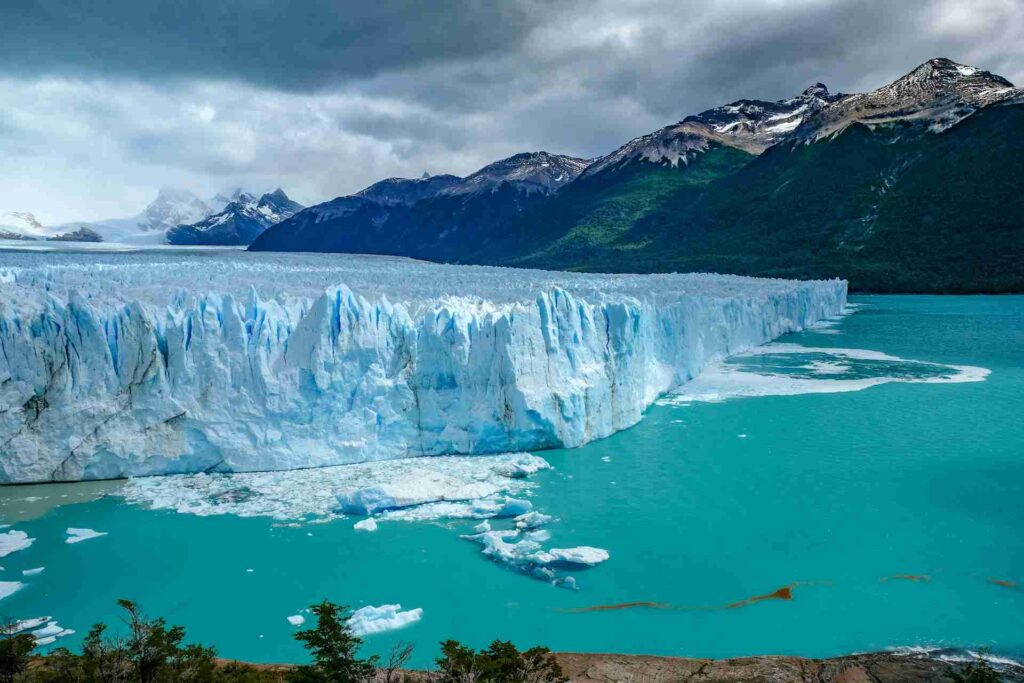
Argentina has nearly 17,000 glaciers distributed along the Andes Mountains, covering more than 8,400 square kilometers. In the northwestern regions, where most mining activity is concentrated, reserves have already shrunk by 17 percent in the last decade, aided by climate change.
Protests and political rift
During the long parliamentary process, culminating in the April vote after nearly 12 hours of debate, thousands of people took to the streets in Buenos Aires. Slogans-“Water is more precious than gold” and “A destroyed glacier cannot be rebuilt”-summarized the crux of the protest. Seven Greenpeace activists were arrested after climbing a statue in front of parliament and unfurling a banner calling on deputies not to betray the Argentine people.
The opposition speaks of an unconstitutional rule and a potential impact on access to water for much of the population.
Energy transition or contradiction?
The reform opens up mining not only on copper, gold and silver, but also on lithium, an element now crucial for batteries, solar panels and the entire global energy transition chain, of which Argentina is already a major producer. It would be a glaring contradiction to create a serious environmental damage to remedy another serious environmental damage. A paradox clearly denounced by environmentalists, who call for using clean mining cycles for lithium and focusing on the circular economy to reuse what is already in use.
With a presidential signature expected soon, the confrontation will move to the courtrooms. Meanwhile, in the mountains of San Juan and Salta, glaciers continue to retreat.