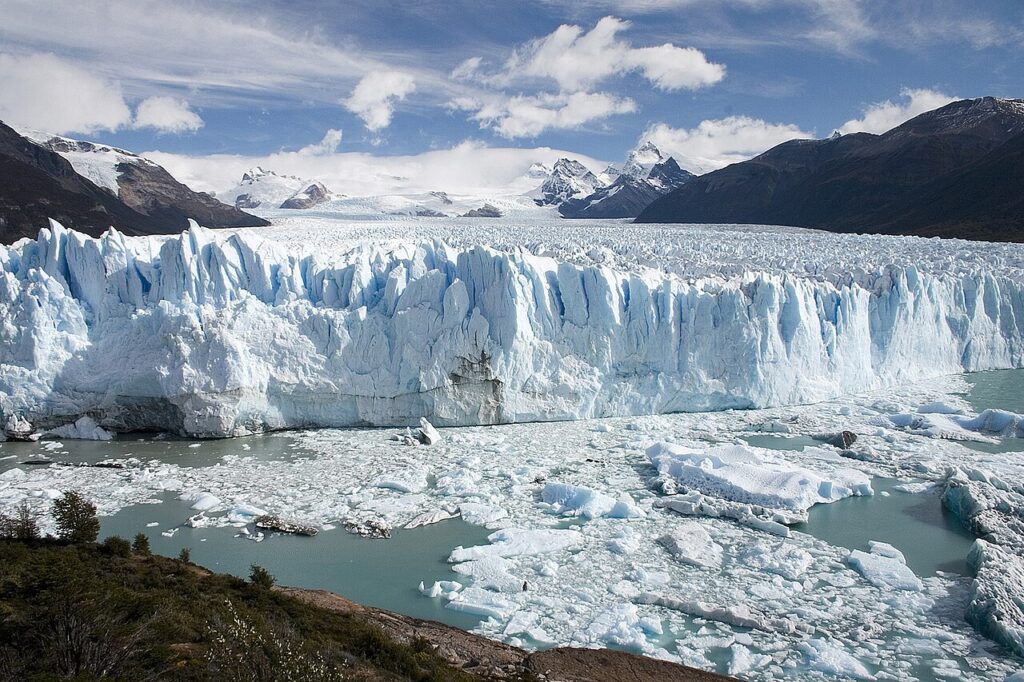
In Argentina, political confrontation has reached the heights of the Andes Mountains. At the center of the debate is one of the pillars of the country’s environmental protection: the Glaciers Law, passed in 2010 to protect strategic freshwater reserves. The reform proposed by President Javier Milei has reopened a deep rift between the government, the scientific community, environmentalists and local governments.
The current legislation was created with a clear objective: to consider glaciers and periglacial areas as assets to be preserved because they are fundamental to the balance of ecosystems, water availability, agriculture, and tourism. In a country that is home to nearly 17,000 glaciers spread across 12 provinces, from the Andes to Patagonia, that law has long been touted as one of the most advanced examples of environmental protection in Latin America. Not just a symbol of nature protection, but an insurance policy on the future of water.
Copper and lithium are gluttonous
However, the Milei-led executive argues that that regulatory framework has become a brake on development. The reform aims to redefine the criteria for classifying protected areas and expand the role of provinces in managing economic activities, including mining. The government’s argument is straightforward: more flexible rules are needed to attract investment and enhance natural resources, especially copper and lithium, key minerals in the global energy transition. In short, less protection and more mining.
Criticism has not been long in coming. Researchers and environmental associations fear that delegating the definition of areas for protection to individual provinces could result in uneven and more permissive protections. The risk evoked is that of a gradual erosion of national standards just as climate change accelerates ice melt and increases water stress. Glaciers, experts recall, function as natural reservoirs that release water gradually, stabilizing entire watersheds. Weakening the safeguards would expose them to environmental and social effects that are difficult to reverse.
The knot is not only ecological, but also legal. Some constitutionalists note that the glaciers law is among the so-called “presupuestos mínimos,” the minimum environmental standards that the federal state must guarantee throughout its territory. A revision that reduced its scope could open legal litigation, as well as raise questions about compliance with the principle of environmental non-regression enshrined in several international agreements signed by Argentina.
Local communities try to put the brakes on
Concrete economic interests are at the bottom. Part of the Andean political world sees mining as a driver of employment and growth, especially in territories marked by economic fragility. While local communities and civic organizations fear that inadequately controlled expansion could jeopardize landscapes, water resources and sectors such as agriculture and nature tourism.
The reform project is now in the hands of the Argentine parliament, which is being called upon to decide whether to retain the original structure of the law or change its balance between resource protection and exploitation. At a time of climate crisis and global competition for critical resources, the fate of Argentina’s glaciers becomes a litmus test for a broader question: how far can the economic accelerator be pushed without eroding the natural reserves that guarantee stability and security for future generations?