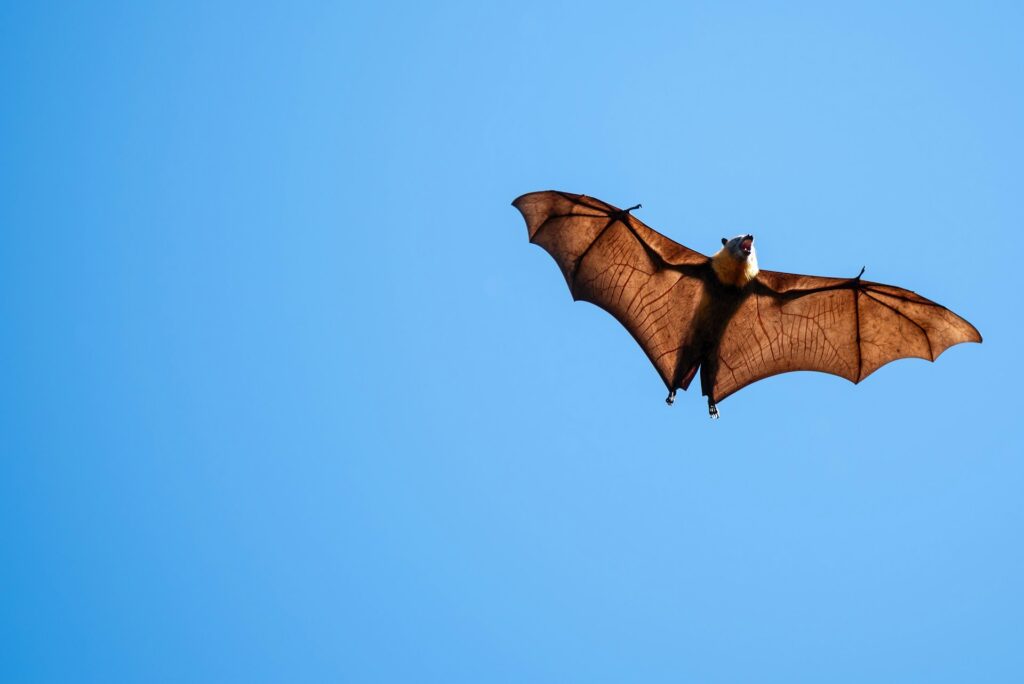
In Australia, heat is not just a nuisance: when it exceeds certain thresholds, it becomes a test of survival. In recent days, waves of extreme temperatures have brought flying foxes, the large bats that usually dominate the sky at dusk, to their knees. This time, however, the sky remained empty. Thousands of animals were found on the ground, exhausted by the heat, unable to withstand a thermometer that exceeded 45 degrees.
The problem is determined by the fact that flying foxes do not sweat: when the air gets scorching hot, the only way to disperse heat is to breathe faster, change positions, and seek shade and water. But if the air is boiling hot and the trees offer no refreshment, their bodies go haywire. Above 40-42 °C the risk of collapse is very high. It only takes a few hours for the heat stress to become fatal. Worsening the picture is the scarcity of food: blooms are reduced, nectar is scarce, and the energy to react is lost.
Lack of escape routes
This is not an isolated incident. In recent decades, extreme heat waves in Australia have become more frequent and more intense. For animals that live hanging from trees, often in huge colonies, this means no quick escape routes. And when they do fall, the blow is double: the mothers die, too, with their young still clinging to their bellies. Recovery centers speak of orphaned cubs by the hundreds, rescued one by one by exhausted volunteers. A race against time that tells how fragile the balance is now.
Flying foxes are key animals for ecosystems: they pollinate trees, disperse seeds over vast distances, and keep entire forests alive. Without them, the landscape changes.
Then there is the other side of the coin, the one that explains why each of their images strikes the imagination. Flying foxes ignite the imagination. They are bats the size of eagles, with a snout that resembles a small fox and wings that look like capes. They fly at dusk, come out en masse, turning the sky into a dark wave. It is inevitable that they have ended up in myths, legends, and nighttime tales for centuries.
Ambiguous symbols
That imagery is not just Western. In Asia, especially among Japan and Southeast Asia, giant bats and nocturnal winged creatures often appear in animation and pop culture. They return in cartoons as ambiguous symbols: a little bit creepy, a little bit protective, linked to the night and transformation. It is no coincidence that one of Pokémon’s most recognizable creatures, Zubat (and its evolutions), invokes precisely the idea of the nocturnal bat suddenly emerging from the dark.