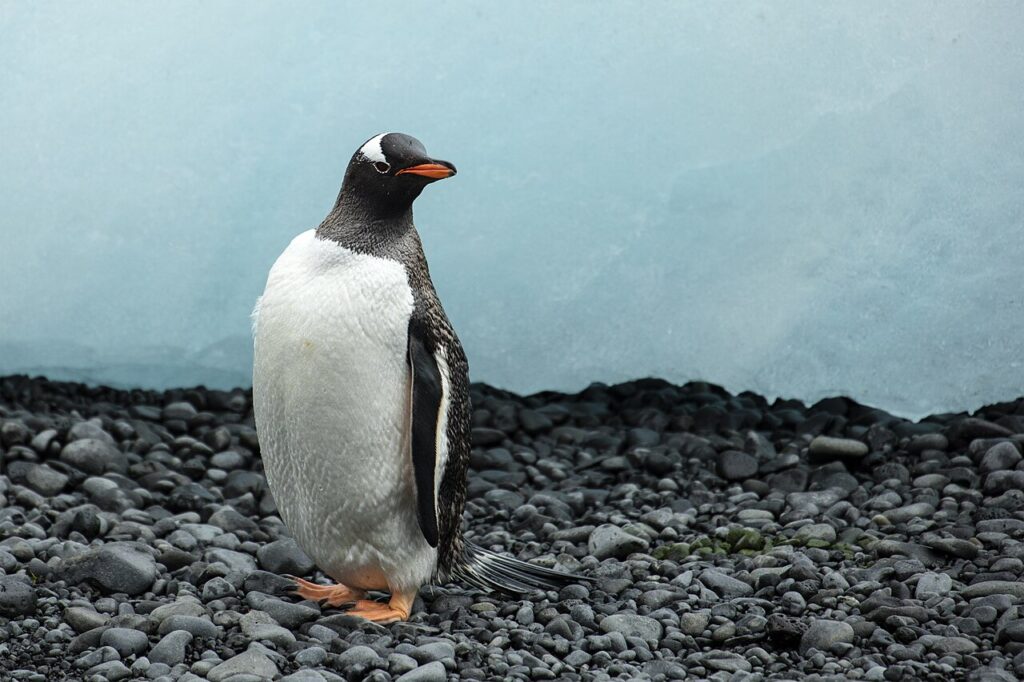
H5N1 avian influenza has reached a new boundary. For the first time, the virus has been detected in birds living in an Australian territory: the gentoo penguins of Heard Island, a remote subantarctic outpost suspended between the Indian Ocean and the ice of Antarctica. The news marks a delicate shift in the global geography of the epidemic, which has been advancing along migratory and marine routes for months, involving ever-changing species.
Samples collected by Australian Antarctic Program scientists during a second expedition to the island confirmed the presence of the virus in sea lions as well. A finding that, for the researchers, reinforces the hypothesis of a cross-spread and capable of overcoming the ecological and geographic barriers that had so far protected Australia.
A sentinel island
Heard is located about 4,000 kilometers from Perth and 1,700 from Antarctica. An isolated place with no permanent human settlements, it is, however, home to crucial colonies of seabirds and mammals. This very biological richness makes it a natural laboratory for observing the advance of H5N1.
“The Heard Island gentoo penguins are now the first birds in an Australian territory to test positive for this virus that has compromised wildlife worldwide,” Hugh Possingham, vice president of BirdLife Australia, told the Guardian. “They certainly won’t be the last.” According to the scientist, the arrival of H5N1 represents “a very worrying development,” especially for endemic species that don’t live elsewhere, such as the cormorant and the island’s sable-billed gull.
A southern route to the continent
H5N1 entered Antarctica in the 2023-24 season, with the first cases in South Georgia and the Antarctic Peninsula. From there it continued northward, touching Marion Island and the French archipelagos of Kerguelen and Crozet. The landfall at Heard closes a geographical circle that brings the virus closer to the Australian coast.
Virologist Michelle Wille, of the University of Melbourne, described the disease as “catastrophic for wildlife” and recalled that the virus has already crossed “thousands of kilometers of ocean.” For the expert, it is “conceivable” that H5N1 could reach other subantarctic islands, such as Macquarie, and from there to the mainland. “We run the risk of this virus coming to Australia, either from this potential southern route or from a northern route,” she explained, stressing the urgency of strengthening surveillance and preparedness.
Prevention, between investments and shadows
The Australian federal government reiterated that the country remains formally free of the virus and maintains that the new detections have not substantially increased the level of risk. Agriculture Minister Julie Collins announced investments in excess of $100 million to enhance response and prevention capabilities. “Biosecurity is a shared responsibility,” she said, calling for collaboration between institutions, industry and communities.
But from the scientific world come signs of dissatisfaction. Possingham denounced the lack of clear answers on measures taken to protect wildlife. Experience on other continents shows that once it enters a new environment, H5N1 can produce rapid and devastating effects.
Heard Island today is a sentinel. What happens among its ice and animal colonies could anticipate larger scenarios. To ignore those signals would be to waste valuable time in a race against a virus that has already shown it can move with surprising speed.