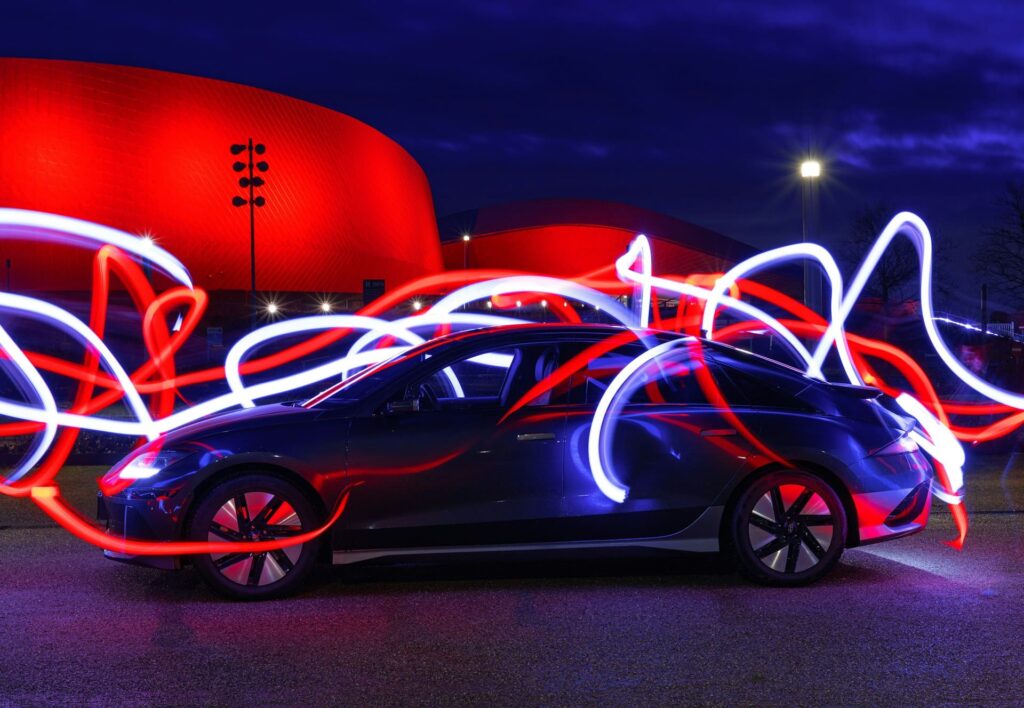
The European Union backtracks on stopping the sale of cars with heat engines starting in 2035. It will no longer be necessary to reduce emissions to zero; it will suffice to reduce them by 90 per cent. It seems little, but this opens a window that is likely to become a much wider opening that will lead to new concessions, always in the name of “technological neutrality.” What came from Brussels was an expected backtrack that is part of the ongoing trend of softening, if not dismantling, some of the cornerstones of the Green Deal, the 2019 legislation that was swept away by the combined Covid-war in Ukraine-growth of sovereignist and conservative parties that have always hated green regulations. It is a different Europe, with different values and priorities, and these are the results.
The new rules
In detail, the Commission proposes that, from 2035 onwards, car manufacturers will have to meet a 90 per cent exhaust emission reduction target, with the remaining 10 per cent of emissions to be offset through the use of low-carbon steel produced in the Union, or from e-fuels and biofuels. “This will allow plug-in hybrid vehicles (PHEV), range extender vehicles, mild hybrids and internal combustion engine vehicles to continue to play a role after 2035, in addition to all-electric vehicles (EVs) and hydrogen vehicles,” the commission stressed.
“This does not mean,” said Stéphane Séjourné, executive vice president of the European Commission for Prosperity and Industrial Strategy,” an EU retreat from environmental ambitions. Is Europe questioning its climate goal? The answer is no. Europe is confirming its path of decarbonisation by 2035 for the automotive industry. It is a clear path that has been maintained and implemented. However, the calculation methods are changing. The flexibilities we are introducing do not challenge this goal. Any additional emissions generated by these flexibilities will have to be fully offset upstream. These flexibilities will cover up to 10 per cent of emissions by 2035.”
The adjustment is relatively large. In addition to the lowered threshold to 90 per cent, before 2035, automakers will be eligible for ‘super-credits’ for affordable small electric cars produced in the EU. Additional flexibility is then provided for the van segment, where the uptake of electric vehicles has been structurally more difficult, with a reduction in the CO2 emissions target for vans by 2030 from 50 per cent to 40 per cent.
The proposal includes a targeted change to CO2 emission standards for heavy-duty vehicles, “with flexibility to facilitate compliance with the 2030 targets.” For corporate fleets, targets are set at the member state level to support the deployment of zero- and low-emission vehicles. In Italy, the target for the combined share of zero- and low-emission company vehicles, from 2030, is 40 per cent and the minimum target for the share of zero-emission vehicles, from 2030, is 36 per cent. The target for the combined share of zero- and low-emission vehicles, from 2035, is 95% and the minimum target for the share of zero-emission vehicles, from 2035, is 80%. For vans, the percentages are 40%, 36%, 95%, and 80%, respectively.
🚗⚡The Automotive Package is a pragmatic low-carbon path.
— Internal Market, Industry, Entrepreneurship & SMEs (@EU_Growth) December 16, 2025
How:
✂️cutting red tape
💪strengthening EU industry
🇪🇺backing clean tech made in Europe
✔️ €700m/year saved via the Automotive Omnibus
✔️ €1.8bn Battery Booster for EU-made batteries
🔗 More: https://t.co/Bh69gBoU0j pic.twitter.com/BYPNskFOfT
To support the transition, the EU will provide €1.8 billion in funding for the Battery Booster aimed at supporting the development of an all-EU battery value chain. Under the Battery Booster, 1.5 billion euros will support European cell manufacturers through interest-free loans. Additional targeted policy measures will support investment, create a European battery value chain, and foster innovation and coordination amongst member states.
These measures will improve the industry’s cost competitiveness, ensure upstream supply chains and sustainable and resilient production in the EU, and help reduce risks from major global players. The Automotive Omnibus will reduce administrative burdens and costs for European manufacturers, increasing their global competitiveness and freeing up resources for decarbonization. The Commission estimates that companies will save about 706 million euros per year, bringing the administrative savings from all omnibus and simplification initiatives presented by the Commission to date to about 14.3 billion euros per year.
Commission sees the glass as half full
For Brussels, the Automotive Package sets out “an ambitious but pragmatic policy framework to ensure climate neutrality and strategic independence by 2050, whilst offering more flexibility to manufacturers.” “Last March,” argued Stéphane Séjourné, executive vice president of the European Commission for Prosperity and Industrial Strategy, “we said that the automotive industry was at risk of extinction due to declining volumes and market share and loss of added value in Europe. And now we are presenting a package of measures to support our automotive sector. The ambition is threefold: to combine industry, climate and the political ambition to make the transition a success whilst meeting consumer expectations, and this is a key element in addressing the challenges of the automotive sector.” But in all likelihood this is only the beginning of “readjustment.” “We have a trajectory,” Séjourné admitted, “that needs to be fine-tuned. Changes are still possible that go along with the transformation of the supply chain.” As if to say that if the geopolitical and industrial scenario calls for further adjustments, European institutions will not back down. Few have any doubt that once a breach is opened, it will be so. The “adjustments” do not end there.
Industry wants more
Germany’s main automobile federation, the VDA, called the European Union’s plan to support the industry “disastrous,” deploring the “new requirements” imposed on manufacturers. “The Brussels proposal, which dropped the obligation for automakers to switch to all-electric vehicles by 2035, has the merit of recognizing technological openness,” said Hildegard Müller, president of the VDA, at a press conference, “but it is full of so many obstacles that it risks being ineffective in practice. Confindustria is also harsh. “A half turn is too little. We make accidents with a half turn. We don’t need them: when you go on the road you either make the turn or go straight,” said Confindustria President Emanuele Orsini, speaking about the car news announced by the EU Commission.
With the publication of the “automotive package”, the @EU_Commission has made a first step to creating a more pragmatic and flexible pathway to align decarbonisation with #competitiveness and resilience objectives.
— ACEA (@ACEA_auto) December 16, 2025
Today’s proposals rightly recognise the need for more… pic.twitter.com/ZEB4zELQ9O
More cautious ACEA, the association of European manufacturers. The “Automotive Package” represents the first major step towards changing CO2 emissions regulations for Cars and Vans. Today’s proposals rightly recognise the need for greater flexibility and technology neutrality to ensure the success of the green transition. Thus ACEA, in a note. “This is a radical change from the current legislation,” said Sigrid de Vries, Director General of ACEA, the European Automobile Manufacturers Association. “However, the devil can hide in the details. We will now analyse the package and work with the co-legislators to decisively strengthen the proposals where necessary.” On the face of it, ACEA continues, the package needs stronger measures to ease the transition in the coming years. Without urgent action on flexibilities for cars and vans by 2030-the milestone four years from now-action by 2035 may have limited effect. In addition, imposing strict conditionalities on various elements of the package could have a counterproductive effect on technology.”