Nine per cent of Italian households, 2.36 million, live in “energy poverty,” a growth of 340,000 households in one year. The worst figure since 1997, when analysis on this issue began. This is denounced by Caritas Italy in the document “Out of the Field. The gaze of proximity,” the 2025 report on poverty and social exclusion in Italy, which dedicates no less than 40 pages out of the total of 160, the longest chapter, to energy poverty. An analysis that starts with the definition. “Energy poverty is that phenomenon that affects those who cannot take advantage of adequate and reliable supplies of electricity and gas due to the unavailability of sufficient economic resources. It is the tip of an iceberg, the submerged mass of which consists of the complex connections between environmental, climate and social issues. It is a ‘new’ poverty on which weigh the effects of the climate crisis, which has created new environmental and social risks that increase inequality and produce new forms of poverty.”
Inequalities well described by other data. The poorest households commit 8.7 per cent of their spending on energy goods and services, compared with 3.3 per cent for the richest households. And there has been a significant increase in the component of households in hidden energy poverty, the hidden energy poor, households that have below-average overall spending and zero heating expenditure. No gas or electricity, no wood either. And maybe you stay indoors with two jumpers. Like in De Filippo’s comedies. These households spend a third less on electricity on average than other households, and it is also significant that only a little more than a quarter benefited from the electricity bonus. But even those who initially benefited have now gone backwards.
A symptom not to be underestimated
In fact, the poor are also those who, as a result of the progressive reduction in resources allocated for bonuses (minus 1 billion between 2022 and 2023), have reduced their spending on energy consumption more than average. Energy poverty, Caritas warns, “is a symptom, like high fever, which so far has been reacted to only by administering doses, more or less massive, of antipyretic, which lowers the fever but does not cure the causes of the illness. The antipyretic in this case was the social bonus electricity and gas to compensate for delinquencies in bill payments. But delinquency is not the only form in which energy poverty is expressed.” Because, according to the report, “the energy crisis and the climate crisis have many elements of contiguity,” but above all, “they are inextricably linked on the level of solutions. And any action to counter one and the other that does not reduce inequalities would be socially dangerous, if not impossible. The costs of transition cannot be paid by the most vulnerable.”
It feels like reading the analysis and accusations of poor countries against rich ones. But this time people in rich countries are also paying. Thus “a public hand is indispensable for people without alternative resources, and the measures taken will have to be rewarding precisely for the most vulnerable.” The climate crisis, the Report warns, “has created new environmental and social risks that increase inequality and produce new forms of poverty. New demands for security arise that require a rethinking of welfare capable of reading the new interdependencies caused by the climate crisis, the energy crisis and the social crisis.” The climate crisis, Caritas recalls, “is also and above all a crisis steeped in interdependencies that cause consequences in terms of health, urban organisation, the production system, energy supply, technological innovation, hydrogeological systems, consumption, and the social imaginary.”
Integral ecology
It is what Pope Francis, and even earlier Alex Langer, called “integral ecology,” characterised by the perverse connections and synergies between fragilities of different natures and new risks. This is why “the transition can only be fast if it is just.” Because “the climate crisis is universal and affects everyone, and poses personal security needs for all,” but, Caritas warns again, “it is an asymmetrical universalism, because it is true that it affects everyone, but not everyone equally. The climate crisis is a multiplier of inequalities that transforms social vulnerabilities into environmental vulnerabilities, which in turn translate into new forms of social and economic exclusion, intertwining progressive impoverishment and climate risk.”
Caritas knows this well, having to deal with new and growing poverty every day and everywhere. Because “the further down the social scale one goes, the greater the fragility to risks and the inability to react.” So it gives the example of heat waves “destined to intensify and prolong as global warming progresses” but which “disproportionately affect the elderly, children, people with chronic illnesses, exposed workers, and inhabitants of dense, sparsely green urban areas.”
A complaint reinforced by data, cited in the Report, from the CMCC—Euro-Mediterranean Centre on Climate Change. “While high-income households allocate between 0.2 per cent and 2.5 per cent of their income to summer cooling, the poorest ones commit 8 per cent,” so for many it is an unbearable cost. The consequences are dramatic. “Those who can afford air conditioning, well-insulated housing, and work flexibility have significantly lower mortality than those who live in overcrowded housing, work outdoors, and cannot afford the energy costs of cooling.” And, remember, we are talking about Western countries like Italy.
The myopia of current policies
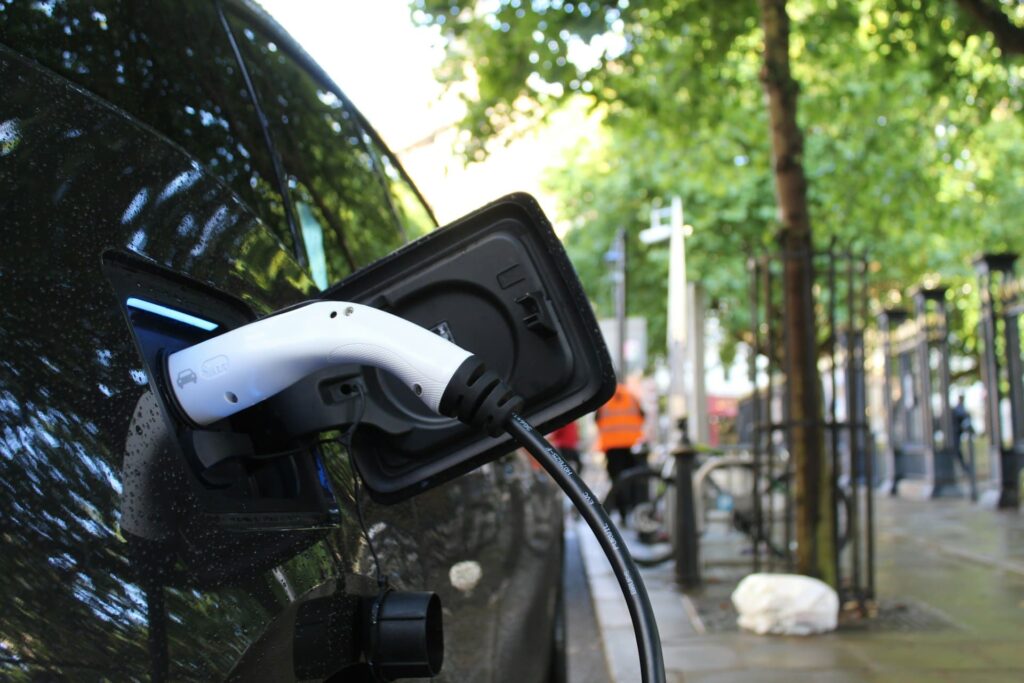
Caritas then has very harsh words about decarbonisation policies that “have so far been inspired by criteria that exacerbate inequality, because they are blind to the distributional implications.” In fact, it denounces, “much of it has been constructed through economic incentives, which have taken regressive forms, from tax breaks for the purchase of electric vehicles, to subsidies for the installation of solar panels, to deductions for energy-efficient home renovations” because they “have excluded all those who do not have fiscal capacity or investment capacity or do not own property or do not have the ability to access useful information.”
And in the end, is the bitter conclusion, whilst on the one hand only “the wealthy can easily adapt to the new rules by investing in new durable goods,” on the other hand “these ways of constructing environmental and climate policies generate growing hostility, with the vulnerable pitted against a supposed elite.” Which, moreover, is most responsible for environmental damage. Even in Italy, where “the richest 10 per cent of households, ranked by total expenditures, account for 27.4 per cent of total greenhouse gas emissions and the richest 0.1 per cent of Italian households emit more than 300 tonnes of greenhouse gases per year compared to the average Italian household of about 20 tonnes.”
In short, “all the short-sightedness of existing policies emerges, which look at a portion of the problem without intervening on a more general and systemic level.” In particular, “on the side of specific policies to safeguard the weaker segments of the population, the interventions of the Energy Authority (instalment payments, maximum interest rates, prohibitions of service suspension in cases of particular hardship) and the social bonus electricity and gas have shown themselves to be ‘palliative cures’ which did not go to the root of the problem, so much so that the overlap between households in energy poverty and beneficiaries of the electricity bonus in 2023 was limited to 18 per cent, confirming that the ISEE (and consequently the current configuration of the bonus) fails to satisfactorily intercept the phenomenon of energy poverty.”
A new social risk
Because “energy poverty is not an isolated phenomenon, but the most visible manifestation of a profound transformation urged by the convergence of the climate crisis, the commodification of energy, and transition policies inattentive to social inequalities. Access to energy has become a new social risk that cuts across Italian society, involving increasingly large segments of the population.” And therefore, “in order for the fight against energy poverty to be effective, too, it should be conceived as the piece of a mosaic of responses, which should constitute the energy-climate welfare: a set of measures to support the ecological transition, such as subsidies for the energy efficiency of homes, contributions for the self-production of energy from renewable sources, identification of social spaces with functions of aggregation and at the same time of adaptation to extreme climatic events, such as climate shelters, and in which people can meet, exchange knowledge and share the use of electrical and thermal energy.”
And it is therefore crucial that “energy welfare is not limited to individuals and their homes, but involves the entire urban neighbourhood fabric, creating an integrated system that reduces energy costs, improves climate comfort and promotes equitable access to clean energy resources for the whole community.” Caritas points out possible ways because, “access to technological innovation, energy upgrading, renewable sources through self-production and/or proximity exchange and/or suppliers of 100 per cent renewable energy at affordable prices, is a fundamental measure to govern the transition and counteract social impacts, as in theory the Social Plan for the Climate, requested by Europe and presented this summer by the Italian government, should guarantee, even if the scarcity of available resources opens more than a few doubts about its actual ability to impact in the perspective of social and environmental justice.”