In the Italian auto market, traditional fuels are rapidly losing ground. According to data from the National Association of the Automotive Industry Supply Chain (ANFIA), as of March 2026 gasoline and diesel together stand at 27 percent of registrations. A paradigm shift that photographs not only technological evolution, but also the choices-and uncertainties-of consumers and industry.
The collapse of traditional engines
Gasoline cars lose 18.6 percent year-on-year, stopping at 20.2 percent of the market. Even more pronounced is the decline in diesel, which gives up almost 30 percent and falls below 7 percent. In the quarter, the trend does not change: both fuels remain in structural contraction.
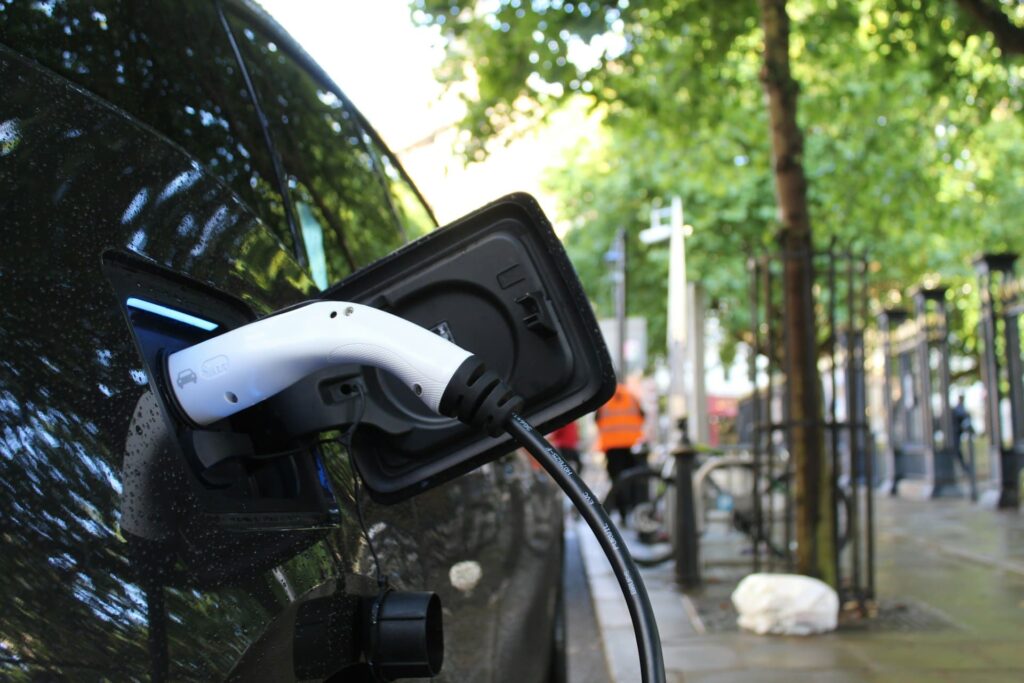
Supporting the market, however, are hybrid and electrified solutions, which are now dominant. Mild and full hybrids alone exceed 50 percent of the monthly share, while rechargeables-pure electrics and plug-ins-accelerate with growths in excess of 85 percent.
Hybrids: what really changes
Inside the “hybrid” category coexist very different technologies. Mild hybrids are the most common: they use a small electric motor that flanks the heat motor during start-up and acceleration, reducing fuel consumption and emissions but without allowing driving in electric-only mode. Full hybrids, on the other hand, have larger batteries and can travel short distances in electric, especially in the city.
Fully electric cars reached 8.7 percent of the market in March, up 72.1 percent from 2025. Even more dynamic are plug-in hybrids, which double their registrations (+100.7%) to a share of 8.5%.
Overall, rechargeable cars account for 17.2 percent of the monthly market. This marks a significant threshold for a country historically slow in the transportation energy transition.
Public incentives are also helping to push demand, albeit with obvious limitations. “We must avert the risk of not reaching the PNRR target,” warns ANFIA President Roberto Vavassori, pointing out that delays in reimbursements are creating “a vicious cycle of missed registrations”.
Emissions down, but is the system holding up?
The environmental effect is already measurable. Average CO₂ emissions from new cars registered in March dropped to 110 grams per kilometer, down 6.4 percent year-on-year. A signal consistent with European decarbonization goals, but still far from long-term targets.
The problem, if anything, is the tightness of the system. Dealers complain of excessive financial exposure related to incentives that have not yet been repaid, while consumers remain price-sensitive, as evidenced by the decline in the confidence index found by Istat.
China and SUVs: the other two pushes
Alongside the energy transition, two structural trends are emerging. The first is the increasing entry of models produced in China, which exceeded 13 percent of the Italian market in the quarter. The second is the dominance of SUVs, which come to account for nearly 60 percent of sales. Two dynamics that redefine supply and competition, including on the price front.
Overall, the auto market is growing: +7.6 percent in March and +9.2 percent in the quarter. But growth rests on delicate balances. Rising energy prices, falling confidence and uncertainties over incentives risk slowing a transition that, in the numbers, appears already underway. The direction, however, is set. It remains to be seen whether the system – industrial and political – will be able to sustain it without braking.