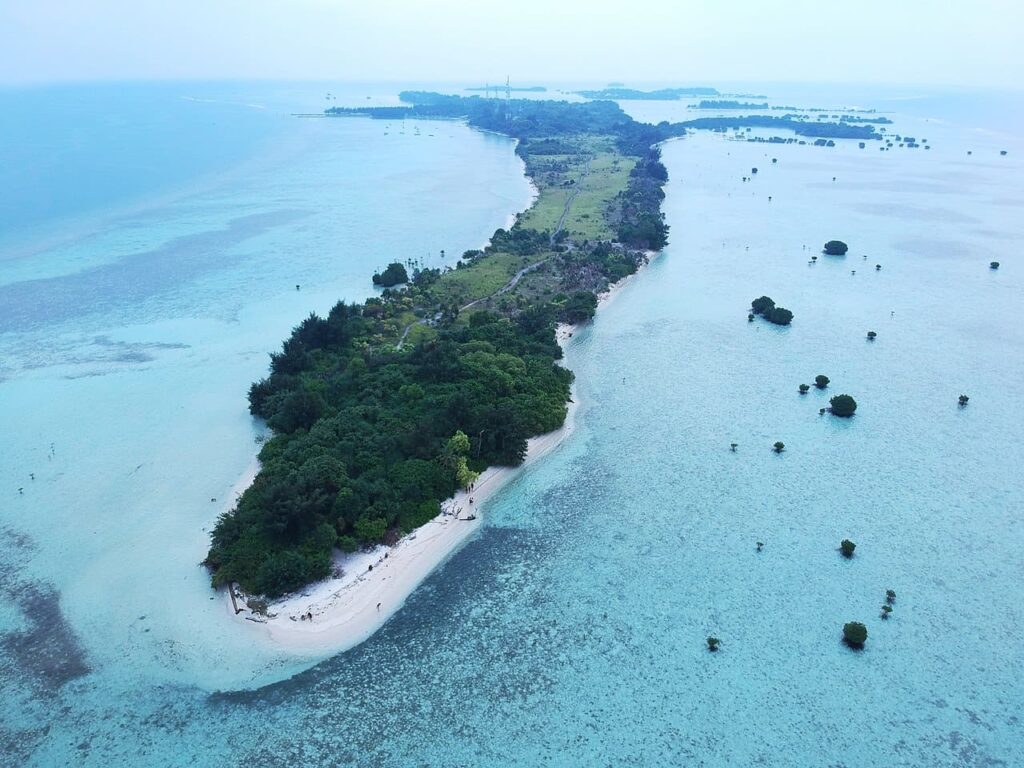
A small Indonesian island threatened by rising seas and one of the world’s largest cement groups. In between, a court decision that could set an important precedent in European climate litigation. Indeed, a Swiss court has agreed to hear a climate damage lawsuit brought by some residents of the island of Pari against Holcim, a Swiss-based multinational considered by environmentalists to be one of the biggest emitters of carbon dioxide.
Just 42 hectares
The proceedings originated in 2023, when four inhabitants of the island in the Java Sea decided to take the case to the Swiss courts, supported by nongovernmental organisations active in human and environmental rights. Pari is a tiny territory, just 42 hectares, but for its inhabitants it represents everything. In recent years, saltwater floods have become more frequent and more violent, damaging homes, compromising crops and putting livelihoods at risk. Estimates suggest that a substantial part of the island could be submerged by 2050, and already a significant portion of its area, residents complain, is compromised.
The plaintiffs demand that Holcim help compensate for damages already suffered, fund flood protection works, and rapidly reduce its CO₂ emissions. The multinational company, for its part, rejects the approach of the lawsuit and argues that setting limits on emissions should remain a matter for legislators, not civil courts. However, this line of defence did not convince the judges, who argued that judicial intervention can complement and strengthen public policy when fundamental rights are at stake.
8% of CO₂ emissions.
The case is part of an increasingly heated international context in which communities affected by the effects of the climate crisis are seeking justice in the courts. So far the main targets have been oil companies, but attention is expanding to other industries with high environmental impacts. Cement is one of the most prominent: global production is responsible for about 8 per cent of CO₂ emissions, a higher share than that of all air traffic. Emissions result from both the use of fossil fuels in very high temperature kilns and the chemical reaction required to transform limestone into clinker.
Holcim has not operated directly in Indonesia since 2019, but – the plaintiffs argue – this does not erase the group’s historical responsibility for rising global temperatures and, consequently, rising sea levels. It is precisely this link between industrial activity, emissions and local damage that is at the heart of the legal battle.
Should the proceedings reach a decision on the merits, the impact could extend far beyond the island of Pari. A favourable ruling would open the way for new lawsuits against large industrial companies, reinforcing the idea that the climate crisis is not only a political or environmental issue, but also an issue of legal responsibility. It is an argument that has been gradually gaining traction and finding its way into the courts for a few years now.