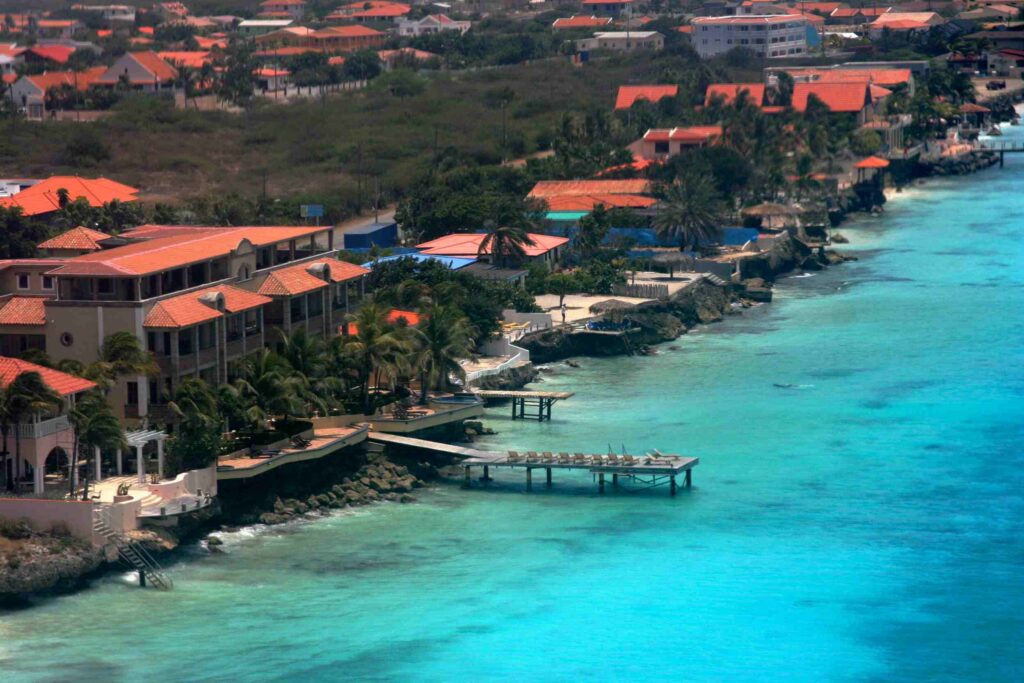
Climate justice is knocking on governments’ doors again. A court in The Hague has ruled that the Netherlands is not doing enough to align with the goal of limiting global warming to within 1.5°C and, more importantly, to protect Bonaire, a Caribbean island under Dutch sovereignty that is exposed on the front lines of the impacts of the climate crisis. The verdict comes at the end of an appeal brought by residents of the island together with Greenpeace Nederland, and marks a nontrivial political and legal step.
At the heart of the decision is a clear principle: combating climate change is not just a matter of targets and industrial policies, but is about the concrete protection of people’s rights. According to the judges, the Dutch government’s action was insufficient on both the emissions mitigation and adaptation fronts, with a clear gap between the measures taken in the European Netherlands and those reserved for Bonaire. A treatment that, with equal citizenship, does not stand the test of fundamental rights.
An unintentional laboratory of the effects of global warming
Bonaire is an unwitting laboratory for the effects of global warming. Rising sea levels, increasingly intense heat waves and deteriorating coral reefs are putting pressure on the local economy, food security and health. Yet, the Court noted, protective policies have come late and piecemeal, despite years of science indicating that island territories are among the most vulnerable. The IPCC reports leave no room for doubt, and ignoring them can no longer be considered a neutral choice.
The ruling does not go into the details of the tools to be adopted, but it sets strict stakes. The government will have to strengthen its climate goals by making them consistent with the Paris Agreement, including sectors often left on the sidelines such as aviation and shipping, and it will have to prepare a credible and timely adaptation plan for Bonaire. Political discretion remains, but it cannot turn into inertia when rights and security are at stake.
A verdict to be translated into concrete policies
The pronouncement is part of a trajectory already familiar from Dutch judicial history, which in the past has seen courts impose accelerations on climate policies. Here, however, the leap is further: the link between climate and nondiscrimination is put in black and white, recognizing that geographic peripheries cannot become peripheries of rights. It is a message that also speaks across national borders, to a Europe where overseas territories and vulnerable communities share similar risks.
The test of facts now remains. The Hague executive will have to translate the verdict into effective policies, overcoming resistance and technical complexities. The ruling, however, has already produced a political effect: it is a reminder that the time for vague promises is over. On climate, the judges are telling governments what science has been repeating for years: it’s not enough to declare yourself virtuous, you really need to protect those most exposed. And do it quickly.