While 2025 did not go down in the annals as the most destructive year ever, it confirmed a trend that is now hard to ignore: natural disasters have become a structural factor in economic risk. Globally, damages reached $224 billion, of which just over $100 was covered by insurance. A threshold that until a few years ago was exceptional and now seems almost ordinary. Drawing the balance is reinsurer Munich Re, which has been monitoring the evolution of climate risks on a global scale for years.
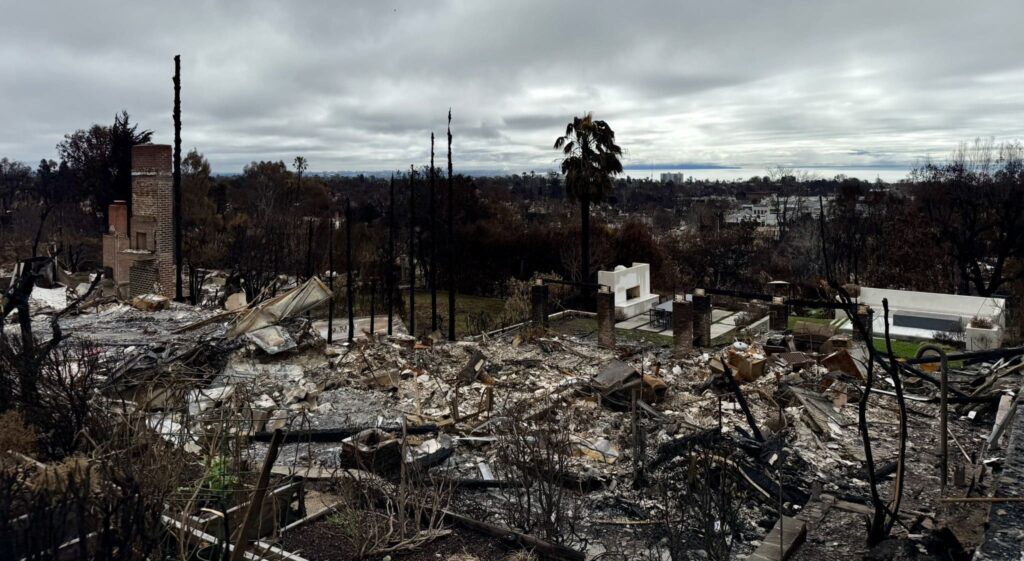
The center of gravity of losses remains firmly in North America, including Central America and the Caribbean. This is where more than half of the world’s damage is concentrated: $133 billion total, with a very high insured share of about $93 billion. Weighing most heavily were the forest fires that hit the Los Angeles area, but also Hurricane Melissa and a long sequence of severe thunderstorms with heavy rain, hail, and tornadoes. Events less spectacular than hurricanes, but increasingly frequent and costly, now generating tens of billions of dollars in annual losses in the United States. In 2025 alone, severe thunderstorms caused $56 billion in damage, as much as $42 billion of which was insured, a level well above the averages of the past decade.
The most expensive catastrophe
Overall, the 2025 global losses were lower than the average of the past decade when adjusted for inflation, but still remain well above long-term averages. Also striking is the figure on the insurance gap: more than half of the losses were not covered by policies, a lower share than usual. The reason is mainly related to the California wildfires, which had an unusually high rate of insurance coverage. With this event removed, the gap between total damages and insured returns perfectly in line with what has been observed in recent years.
The fires that ravaged the Los Angeles area in January were, by far, the most expensive natural disaster of the year. The final bill was about $53 billion, with $40 billion insured, and 30 fatalities. It is the most costly wildfire disaster ever recorded. In terms of total losses, the magnitude 7.7 earthquake that struck Myanmar ranks second: a mostly humanitarian tragedy, with about 4,500 deaths. Economic damage is estimated at $12 billion, but only a small portion was covered by insurance. The effects of the quake extended as far as Bangkok, about 1,000 kilometers from the epicenter, where the alluvial nature of the terrain amplified the tremors.
Looking instead at insured losses, the second most costly event of 2025 was the set of severe thunderstorms that struck the central and southern states of the United States for days in March. More than a hundred tornadoes were surveyed, some of EF4 category, with winds well over 200 kilometers per hour. The tally speaks of about $9.4 billion in damages, seven of which were covered by insurance.
The hurricane chapter tells an ambivalent story. On the one hand, three Category 5 hurricanes formed in 2025 in the North Atlantic, a number not seen since 2005, the year of Katrina. One of these, Melissa, hit Jamaica hard with winds approaching 300 kilometers per hour, causing about 100 casualties and nearly $10 billion in damages, some of it insured. On the other hand, no hurricanes directly hit the United States, helping to keep overall damage from tropical cyclones-$37 billion globally-well below historical averages.
Taken together, the events of 2025 show a fact that is difficult to dismiss as random: wildfires, extreme hurricanes, floods, and violent storms increasingly seem to fit into a climate context that amplifies their frequency and intensity. It is a signal that the insurance industry is well aware of, and one that raises a question that is now unavoidable: without serious investment in prevention and adaptation, the bill for natural disasters is likely to become increasingly steep. And this time, a policy will not be enough to pay it.