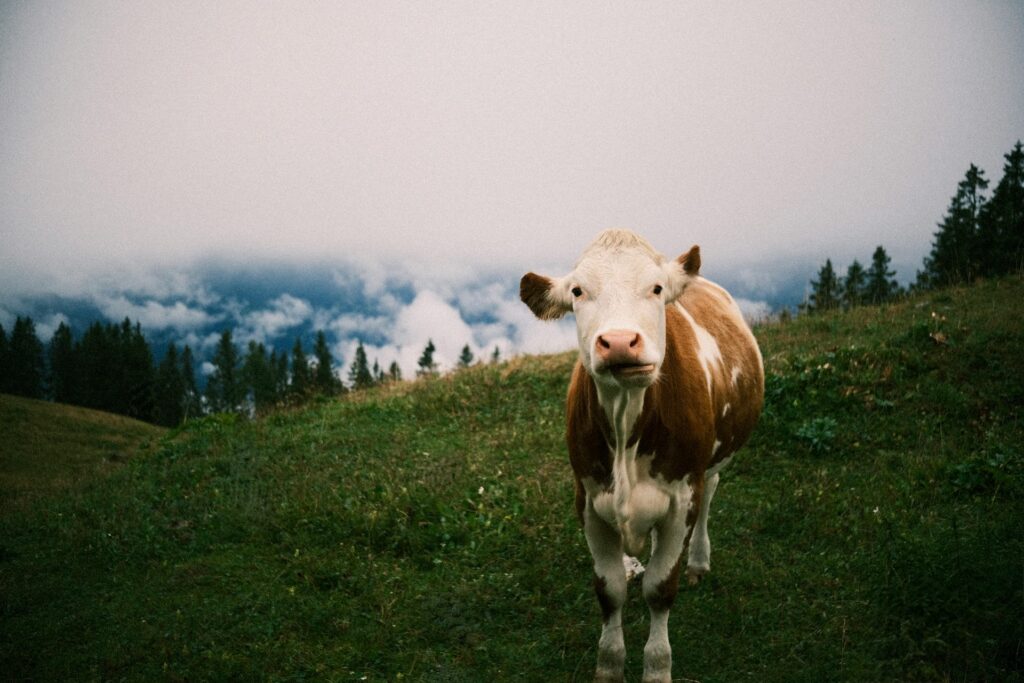
Denmark this time in the crosshairs of the war against climate change is putting emissions from cows and pigs. In what promises to be a world first, the Danish government is about to implement a tax on gases discharged in various ways by livestock farms, but with a decidedly innovative approach: helping farmers avoid paying it.
The initiative was voted on last December, and will go into effect in 2030. But it is not (just) a simple punitive levy. In fact, Green Transition Minister Jeppe Bruus has announced a massive plan for public investment in technologies that will allow farmers to reduce or offset emissions from their animals. “The goal of the tax is not to generate revenue,” Bruus explained during Climate Week in New York. “The idea is that ranchers don’t have to pay it because they simply won’t pollute anymore.”
Forty euros per tonne of methane
In case, however, the tax is there: initially the levy will be 300 Danish kroner (about 40 euros) per tonne of methane, set to increase to 750 kroner (about 100 euros) by 2035. The plan includes a 60 per cent tax break for farmers who manage to reduce their animals’ methane emissions, potentially through the use of various feed additives.
Denmark, a major exporter of pork and dairy products, is deploying significant resources: 10 billion Danish kroner (about 1.6 billion euros) for the development of pyrolysis alone, a technology that converts manure—a major source of methane—into products that can be used as energy and fertiliser. The government is also investing in innovative food additives such as Bovaer, produced by DSM Firmenich, which reduces methane production in cattle burps.
New Zealand had tried
This is not the first time a country has tried this route. New Zealand had tried in 2022, but had to backtrack two years later under pressure from farmers’ protests. Denmark seems to have learned from that experience, relying more on incentives than penalties.
The plan is part of Denmark’s ambitious goal to reduce emissions by 70 per cent by 2030 from 1990 levels. But there is no shortage of challenges: the European Union’s long approval time for new technologies is a significant obstacle. According to Bruus, companies developing biopesticides must wait up to eight years to get the European green light, so much so that some are considering moving to the United States, where regulation is less stringent.
The next five years will be crucial in working out the technical details of the measure, such as calculating emissions according to different breeds of livestock. The government can rely on a proven system of recording agricultural activities, but some additions may be needed, according to Niels Peter Nørring, director of climate policy at the Danish Agriculture and Food Council.