In the Stelvio National Park, amongst peaks that now evoke glaciers and Alpine silences, a discovery has surfaced that can take us back more than 200 million years. Thousands of dinosaur footprints have been identified on extensive rock surfaces, a collection so vast and well-preserved that it stands as one of the largest sites of trace fossils ever found in Italy.
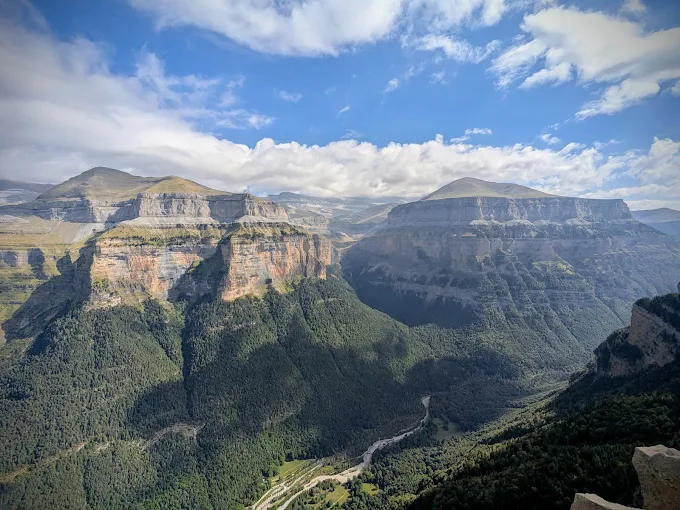
A “dinosaur valley” on dolomite walls
The footprints are not isolated: many form real tracks, up to hundreds of metres long. Some footprints reach 40 centimetres in width and clearly show the shape of fingers and claws. What is special is that today these tracks are found on sloping or even vertical surfaces, due to tectonic movements that have lifted and folded rocks over time, turning ancient coastal plains into mountains.
The footprints date back to the Upper Triassic, about 210 million years ago, and are attributed to large herbivorous dinosaurs, ancestors of the giant sauropods. Massive-bodied, long-necked animals moved in groups along wet, flat areas overlooking what was then the Tethys Ocean. A radically different landscape from the Alps we know today.
A tropical landscape where today there are Alps
In the time when dinosaurs left those tracks, the Stelvio area was not made up of ridges and glaciers, but of warm, coastal environments. The footprints were imprinted in muddy sediments, then solidified and preserved over time. Subsequent uplift of the Alps did the rest, bringing these “rock pages” to high altitudes and to positions that are difficult to reach today.
The discovery began almost by chance, thanks to the intuition of a nature photographer who, whilst hiking, noticed unusual shapes on the rock. From there, scientific verifications began, confirming the site’s exceptionality. However, the complexity of the terrain makes the study anything but simple: many traces are accessible only from above and will require the use of drones and digital surveys.
A job that will last decades
Scholars are cautious: the scientific potential is enormous, but it will take years, perhaps decades, to fully map and analyse all the tracks. The footprints will make it possible to reconstruct not only the species present, but also their behaviour, speed of movement and herd organisation.
The discovery also opens a reflection on protection. This is a fragile heritage, exposed to weathering and the risk of damage. The challenge will be to reconcile research, protection and dissemination, turning this extraordinary “dinosaur valley” into a natural laboratory capable of telling the general public about a little-known chapter in the distant history of the Alps and Italy.