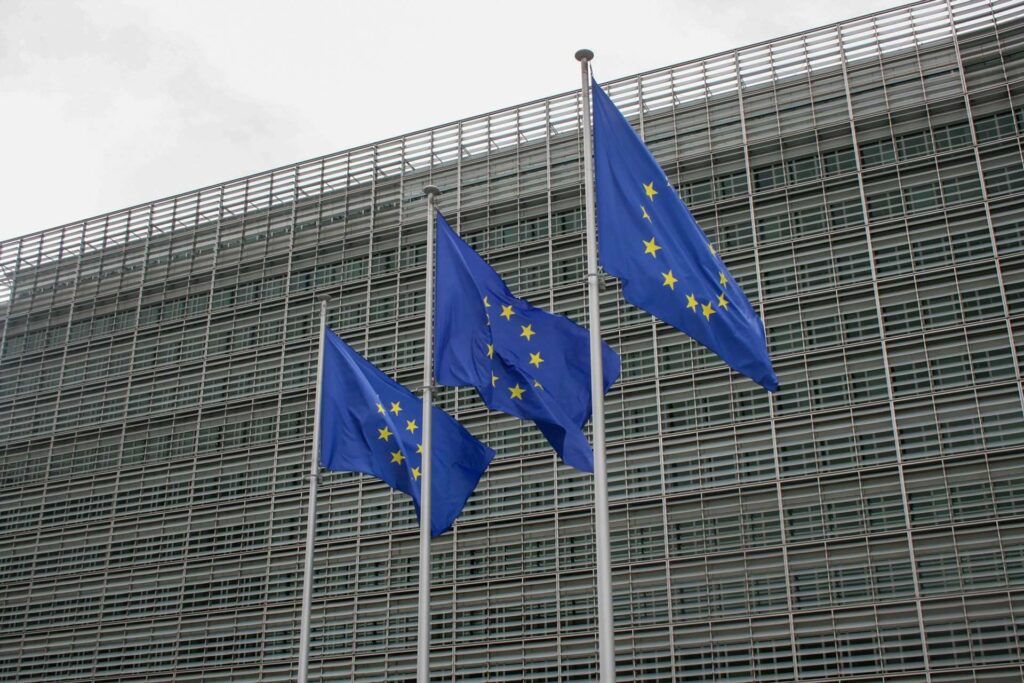
In the appeal coming from the European Union there is a mix of common sense and logical deficit. The common sense is to take note of the situation. After the summit of energy ministers, European Energy Commissioner Dan Jørgensen said that because of the war in the Middle East, Europe is facing a “very serious situation” that “will last even if peace is achieved tomorrow.”
Hence the call to reduce energy consumption: work from home when possible, reduce highway speed limits by ten kilometers per hour, encourage public transportation, use alternative means of transportation to private cars, increase car sharing, and adopt efficient driving practices. It is a call that contains some common sense (some suggestions should be embraced regardless of the emergency), but only a part, other elements of a project aimed at safety are missing.
The logical deficit lies in the avoidance of tackling head-on the real crux of the problem: an energy system that follows a model with a high environmental impact, based on the widespread dominance of fossil fuels concentrated heavily in the Middle East. As seen in recent days, not even the U.S. rush to shale gas, paid for dearly from an environmental point of view, has served to shelter the country from increases at the gasoline pump.
The logic deficit
The energy shocks that have been repeated punctually for more than half a century show that the error is structural: energy security, and therefore social security, are not compatible with dependence on oil, gas and coal. If we then consider that, in the pauses between energy shocks, awareness has grown of the daily damage caused by the consumption of fossil fuels, which are the main cause of the ongoing climate disaster, we see that the logic deficit, the gap between what we know and what we do, is the real culprit behind the dramatically unstable situation we are experiencing.
Now, however, turning a blind eye is no longer possible. The extent of climate risk is now conclusively established: we see its effects growing month after month. And the International Energy Agency and the European Union are confronting us with the other side of the threat: the risk of suffering a slowdown in production capacity such that social stability will be undermined for no short time. The European Union is making it clear to the public that the current energy crisis is not going to be resolved in a few weeks. For the first time since the pandemic, a measure that seemed shelved is explicitly back on the table: working from home. The European Commission is calling for this to be done “where possible,” along with changes to everyday behaviors such as driving less, cutting down on flights, using public transportation more, and car sharing.
Political independence
These are councils largely related to transportation. And why is quickly said: more than half of global oil demand comes from transportation. Not least because it is in transportation that resistance to innovation has been greatest, and in Europe the political wall of the right-wingers has slowed the development of electric vehicles, causing the sector to lose competitiveness. While the acceleration on renewables has secured the electricity bills of European countries that have distanced themselves from fossil fuels.
And another aspect of the issue is not to be overlooked: countries that have greater energy independence are those that can also have greater political independence. This is demonstrated by the fact that Spain, which has focused on renewables, was the first to decisively distance itself from Trump and Netanyahu’s war on Iran. And it is also confirmed by the 9 proof: the Italian government that slows down the green push is also the one closest to the White House’s muscular management. The energy issue is not just energy.