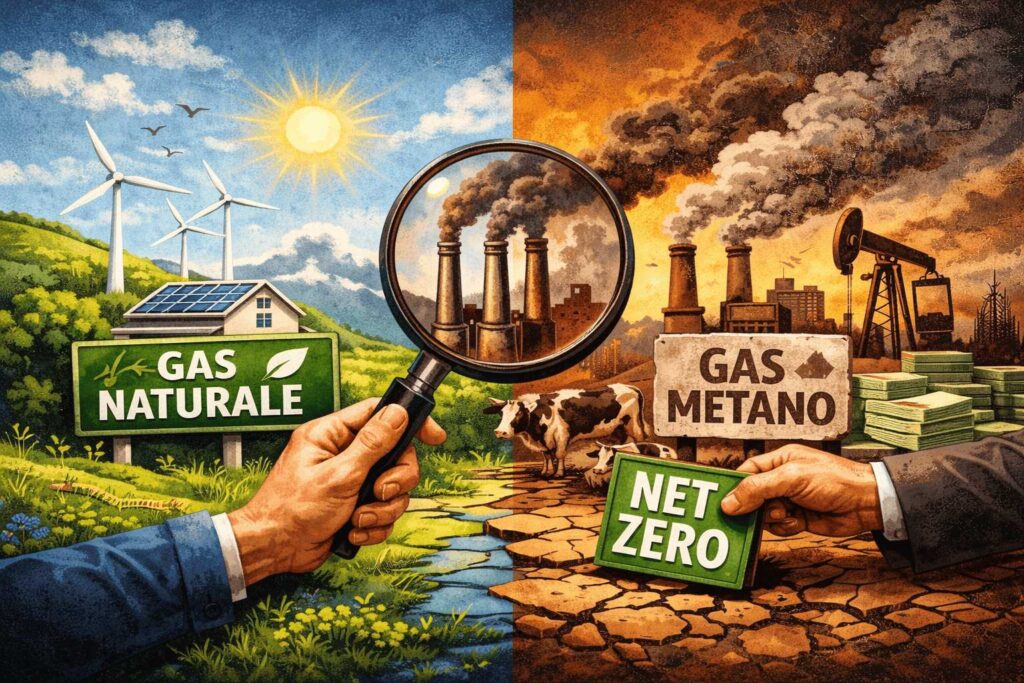
In 2020, Yale researchers did an experiment: they asked nearly two thousand Americans what they associated with the term “natural gas” and what with “methane gas.” Same fuel, different names. The results? “Natural gas” evoked cooking, heating, clean energy. “Methane?” The most common response was: farting cows. And then global warming, pollution. The same chemical compound, opposite perceptions. Language about climate is not neutral.
We constantly talk about “carbon neutrality,” “net zero,” “emissions offsets.” But these terms mean radically different things depending on who is using them, and this ambiguity is not accidental: it allows companies to announce ambitious climate commitments while continuing to do business as usual.
The problem is not only deliberate misinformation, that is, that which is constructed by design to deceive. It is also something more subtle: the absence of a shared vocabulary. If no one has ever clearly explained to you what “carbon neutrality” means, how can you tell when a company is fooling you with empty promises? If you don’t know the difference between weather and climate, how do you distinguish relevant data from background noise?
That is why this column was born: a climatic concept explained without taking anything for granted. Not opinion articles, but tools to navigate a debate where we often argue using different words to say the same thing, or worse, the same word to say opposite things.
Let us start with a fundamental distinction. When we talk about climate misinformation, we need to distinguish between misinformation and disinformation.
Misinformation is false information shared without intent to deceive. Your cousin spinning you the wrong graph on WhatsApp about Arctic temperatures, convinced he is informing you. Your aunt who confuses a cold wave with a denial of global warming. People in good faith who share inaccurate content because they lack the tools to verify it.
Disinformation is something else: deliberately constructed to deceive. The social campaign that seems spontaneous but is orchestrated by PR firms paid by those with an interest in delaying climate action. The message engineered to sow doubt about the science while all indicators point in the same direction. The difference is in the intention, but the result is similar: confusion, polarization, paralysis.
Both thrive in the empty spaces left by explanations never given. In the coming weeks we will address these spaces one at a time. Why “natural gas” is a term that is anything but natural. What offsetting emissions really means and why it is not the same as reducing them. How the Flintstones in the 1960s advertised Winston cigarettes to children, normalizing harmful products from childhood.
Misinformation is fought with clear and verifiable information. And it starts with the simplest question, the one we may have stopped asking ourselves because we take it for granted: what really is the difference between weather and climate? We will talk about that soon.