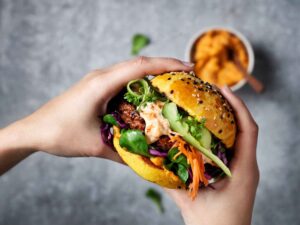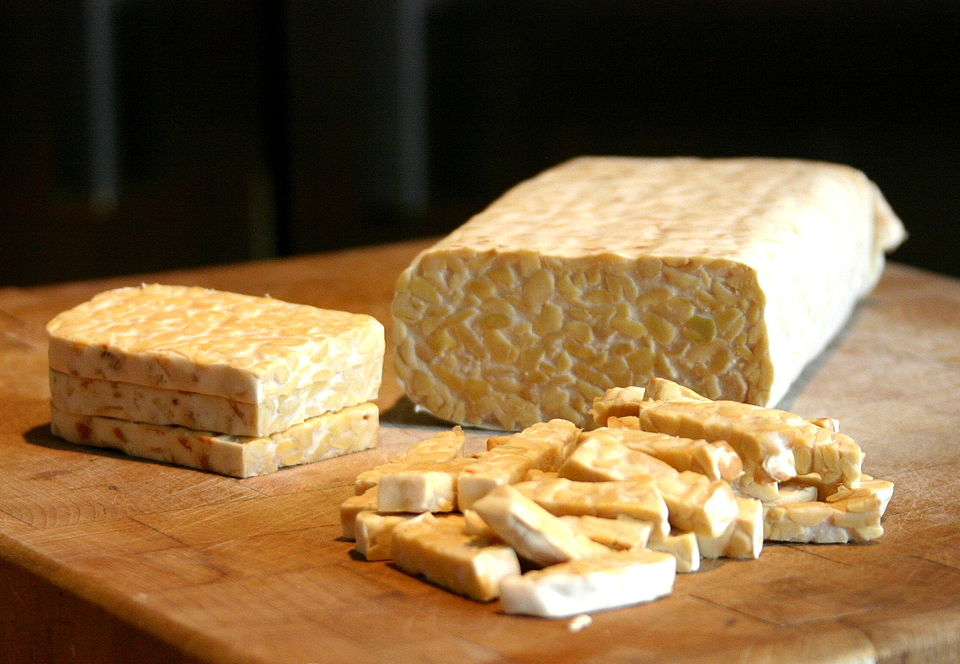
Here we go again. Plant-based products are back under attack. This time it is the European Commission proposing a regulation that would ban the use of terms such as “steak,” “ham,” or “sausage” to describe plant-based foods. A measure reminiscent of Italian Law 172/2023—wanted by Minister Lollobrigida but left unimplemented, lacking implementing decrees.
The Brussels proposal comes at a time when plant-based is no longer a niche, but a booming industry, buoyed by consumer demand and the environmental goals the European Union says it wants to pursue. Not surprisingly, harsh criticism is coming from the industry. “Of course it is very strange,” says Massimo Santinelli, founder and CEO of the Gorizia-based Biolab, one of the first Italian companies of plant-based products, “that whilst both in Europe and in Italy people keep talking about ecological transition and asking citizens for more responsible and sustainable behaviours, starting with food choices, then the same Commission wants to scuttle a sector that represents, to date, the only viable alternative to animal protein consumption. Thus taking a stab, not only at all the best intentions to protect the environment and combat climate change through the reduction of intensive livestock farming, but also at the new propensities for consumption as well as an ever-growing business sector and the agricultural sector itself since the plant-based raw materials all come from there.”
The numbers confirm
The numbers confirm the trend. According to Circana’s latest analysis, prepared by the Good Food Institute Europe, in 2024 the Italian retail market for five plant-based categories (meat, milk, cheese, yoghurt and cream) reached a value of 639 million euros. In just two years, sales volume grew by 6.9 per cent. Plant-based milk remains the dominant item, with 50.7 per cent of the market, but the most significant rise is in plant-based meat substitutes, which generated sales of 228 million euros in 2024.
A change that is reflected in various research. A CREA survey (2023) reveals that more than half of Italians have reduced meat consumption for environmental reasons and 11 per cent have eliminated it completely. Another research, conducted as part of the European SMART Protein project, indicates that in 2024 59 per cent of Italians have decreased their intake of animal meat, mainly for health and environmental reasons. Amongst the countries surveyed, Italy ranks first in vegetable protein consumption and acceptance.
A clear signal
“A signal,” Santinelli stresses, “that Italian consumers are ahead of politics and increasingly aware of how their food choices affect the environment, climate and health. We hope that the EU Parliament will reject the Commission’s proposal and remain consistent with the announced intentions of sustainable transition and animal welfare. With this in mind, facilitating the transition from meat consumption to plant-based products seems to us a due act.”
The paradox is all here: on the one hand Brussels calls for building a more sustainable agriculture, whilst on the other hand it strikes a sector that could accelerate the path to reducing emissions and resource consumption. “Meat-sounding” thus risks becoming not just a label issue, but the symbol of a tug-of-war between old industrial interests and the push for more responsible food models.