Every hour that passes, the global economic system accumulates $5 billion in environmental damage related mainly to food production and fossil fuel use. This is stated in the latest Global Environment Outlook from the United Nations, which we have already reported on https://ultimabozza.it/unep-la-svolta-green-puo-dare-benefici-da-20-trilioni-lanno/. These would seem like clear numbers. But in practice they risk not being so because we reason in watertight compartments: data on politics, environment, economics, and energy are analysed separately, as if the counts are different and the harms and benefits arising from the various choices do not permeate all the boxes at once.
The UN report poses a direct question to Europe, and we cannot turn a blind eye. The European Union has made the green transition an identity flag and an economic and social development project. And just now, when the numbers produced by a long series of international reports (this is only the latest) show the inescapable necessity of this choice, do we want to turn back and give up a positioning that gives us a chance to gain competitiveness in the global scenario? A political battle is underway in these months that has the future of Europe at stake. There are those who want to give in to the trade blackmail of
A crisis with which Europe is familiar
To choose between these two options, it is good to have an eye on the consequences that the two scenarios open up. And the UN report is an important measuring tool. On an annual basis, the pollution damage bill comes to $45 trillion. Because climate, biodiversity, pollution and land degradation are various faces of the same crisis. An approach that we in Europe are familiar with because it is the basis of the Green Deal, from the Farm to Fork strategy to the biodiversity plan and energy market reform.
According to the report, the global food system generates about $20 trillion in environmental damage annually. For Europe, this figure sounds particularly uncomfortable today: on the one hand Brussels is pushing for more sustainable agriculture, whilst on the other hand it continues to support an intensive model that burdens soils, water, biodiversity and climate.
Livestock farming, overuse of fertilisers, loss of soil fertility and food waste are problems that are also well present in the Old World. And whilst there is talk of simplifying environmental regulations to “protect competitiveness,” the UN report reminds us that non-sustainability has a huge economic price, it just doesn’t show up on corporate balance sheets.
Energy and transportation: the fossil bill is not closed
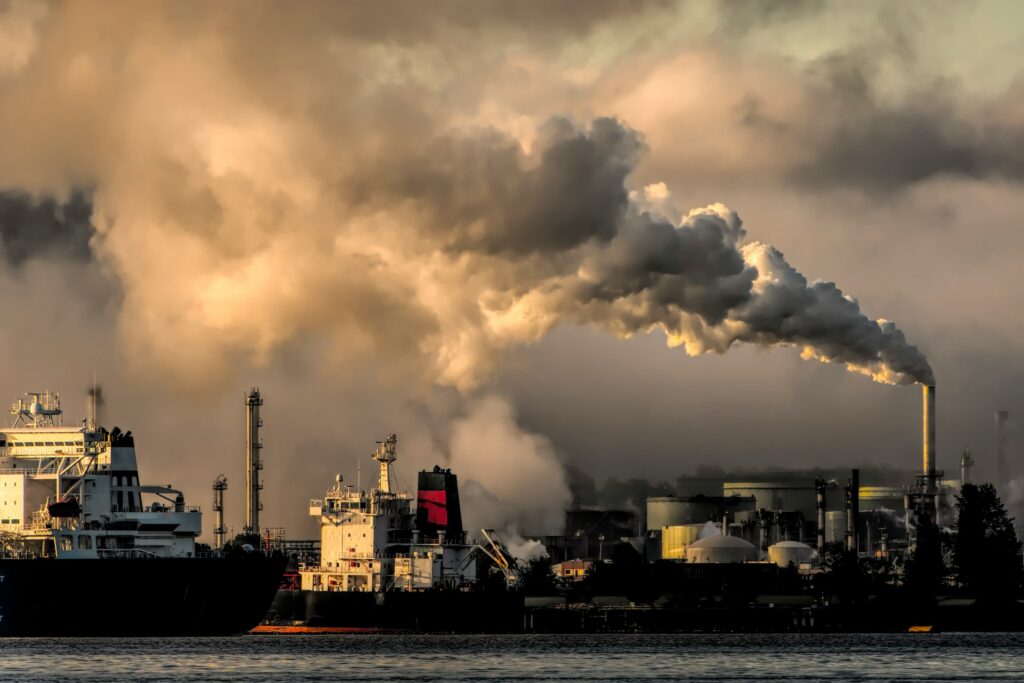
The report attributes $13 trillion in annual damage to transportation and $12 trillion to fossil fuel-based electricity production. Here, too, Europe is experiencing an obvious tension. The energy transition is advancing, but slowly, whilst dependence on oil and gas continues to plague climate, health and public finances.
After the energy crisis of the past few years, many European countries have accelerated on renewables, but have also strengthened fossil infrastructure considered “temporary.” The risk, the report implicitly warns, is that the temporary becomes structural, crystallising environmental costs that will fall on future generations.
The political crux: reform subsidies, not postponement
One of the most sensitive issues concerns harmful subsidies, estimated globally at about $1.5 trillion a year. Europe is no exception: between fossil fuel subsidies, distortionary incentives in agriculture and failure to internalise environmental costs, the system continues to reward practices it officially says it wants to overcome.
The U.N. report is stark: making products pay their real cost, accompanying the transition with appropriate social policies, is a rational economic choice before it is an environmental one. A message that enters on a collision course with the political resistance that is also growing stronger in Europe.
The Global Environment Outlook explains that solutions exist, many are already written into European strategies, but that without coherence and political courage the risk is that we slow down just when the cost of inaction becomes unsustainable. With the result of weakening, rather than strengthening, social defences for the most vulnerable.