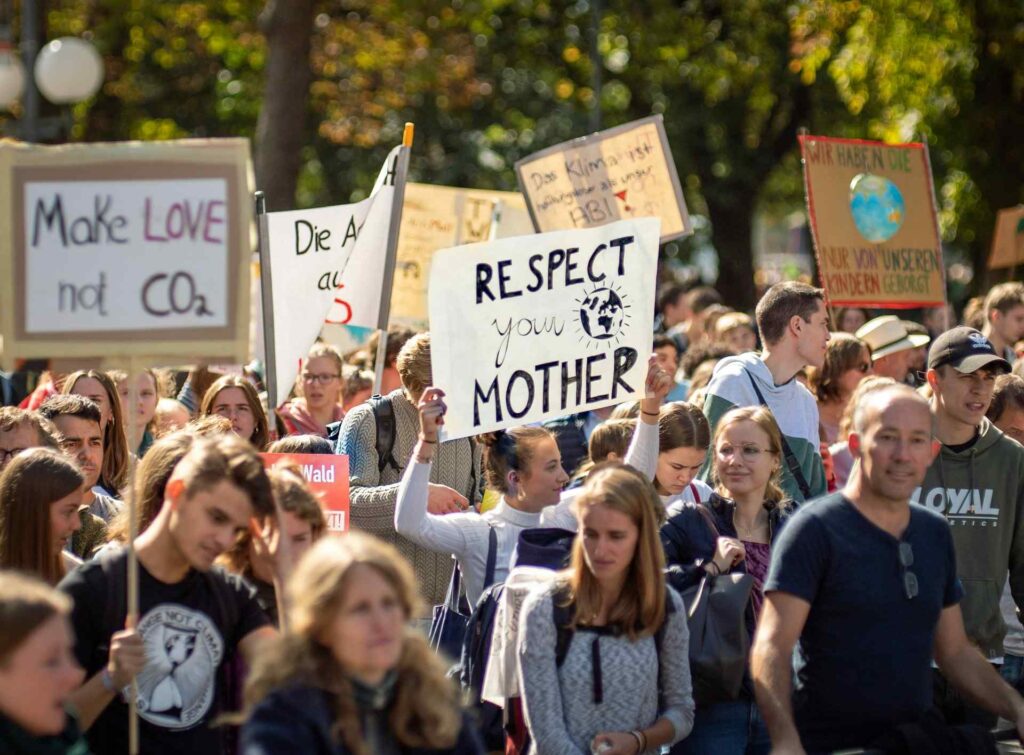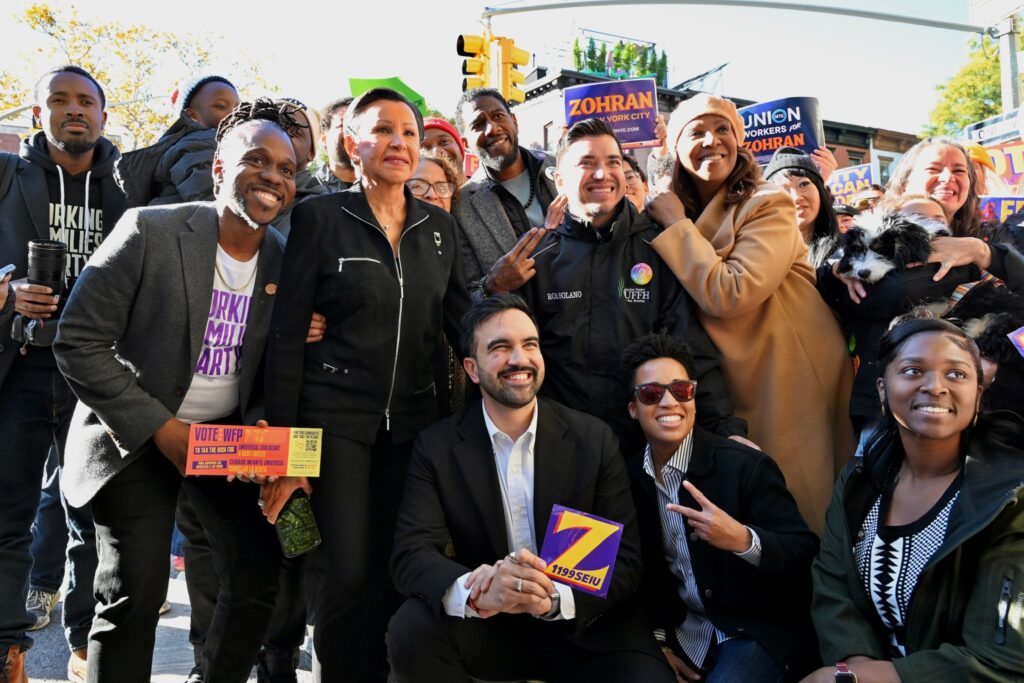
New York City is turning green. The Big Apple has chosen Zohran Mamdani, 34, a democratic socialist of Indian-Ugandan descent, as its new mayor. His campaign, built on an agenda combining climate and social justice, won a large, cross-party majority: 50 per cent of the vote, ahead of Andrew Cuomo and Republican Curtis Sliwa. His victory is a sign: the urban American electorate, tired of growing inequality and an increasingly unstable political (and other) climate, is seeking a policy that combines sustainability and social equity.
In his first speech, Mamdani declared that “if anyone can show a nation betrayed by Donald Trump how to defeat him, it is the city that birthed him.” But his mission is broader: to redefine what progress means in a metropolis that produces 70 per cent of its emissions from buildings and transportation.
From Queens to City Hall: a history of activism
Mamdani grew up politically amongst the city’s working-class and migrant communities. A climate and “tenants’ rights” activist, he made his name by opposing the construction of a natural gas plant in Astoria and advocating for the Build Public Renewables Act, a law passed in 2023 that requires the New York Power Authority to generate all of its electricity from clean sources by 2030. The measure, called “a historic climate victory,” also allows the state to directly build and own renewable energy plants, limiting the role of private energy companies and guaranteeing subsidised rates for low-income citizens.
Mamdani’s political rise is a tale of proximity: neighbourhood assemblies, grassroots organising, door-to-door in the least heard districts. “I want to make the city liveable for those who run it, not just for those who own it,” he repeated during the campaign.
The promise of an accessible New York City
Mamdani explicitly links the climate issue to social justice. “Climate and quality of life are not two separate issues,” he has explained repeatedly. In his programme, the environment becomes the key to reducing inequality—from the Green Schools plan, which calls for the green conversion of 500 public schools, to the construction of 200,000 affordable housing units over ten years.
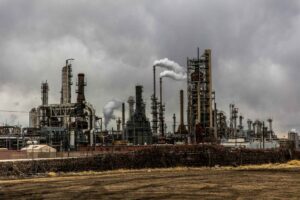
Buildings are responsible for two-thirds of the city’s emissions, and Mamdani has promised to strictly enforce Local Law 97, the municipal law that compels the city’s most imposing and energy-intensive buildings—as well as those responsible for the bulk of emissions—to drastically reduce energy consumption and CO₂ emissions by 2030, with fines for those who do not comply.
He also wants to expand the NYC Accelerator programme, a municipal initiative that helps buildings reduce consumption and emissions by providing free counselling on energy efficiency and access to funds, to help small owners and cooperatives decarbonise, preventing costs from falling on citizens. His unofficial motto, “Green is affordable,” sums up his vision: renewable energy as a tool to reduce utility bills, improve public health, and create stable jobs.
Free transportation and environmental justice
In his plan for a “fairer and more breathable” New York, Mamdani also includes free public transportation. Following the success of MTA’s pilot project with five free bus routes, he plans to extend the measure to the entire network, accompanying it with new express lanes and loading zones to reduce congestion and pollution.
A social investment before an environmental one: poorer neighbourhoods, often exposed to higher levels of smog and consequently more susceptible to the onset of respiratory diseases, would be the main beneficiaries.
A consensus to be built
The enthusiasm does not erase the difficulties. Its policies will require substantial funds, and New York State Governor Kathy Hochul has already expressed her opposition to a tax increase on the highest incomes.
Critics accuse him of economic naïveté and utopian visions, but Mamdani belongs to a new generation of mayors who see cities as the real engine of the climate transition. Mamdani’s victory turns New York into a political laboratory. If he can combine sustainability and social inclusion, the city that invented the skyscraper could become, paradoxically, the model of urban decarbonisation. And perhaps, as the new mayor put it, “the city that never sleeps can finally begin to breathe easier.”