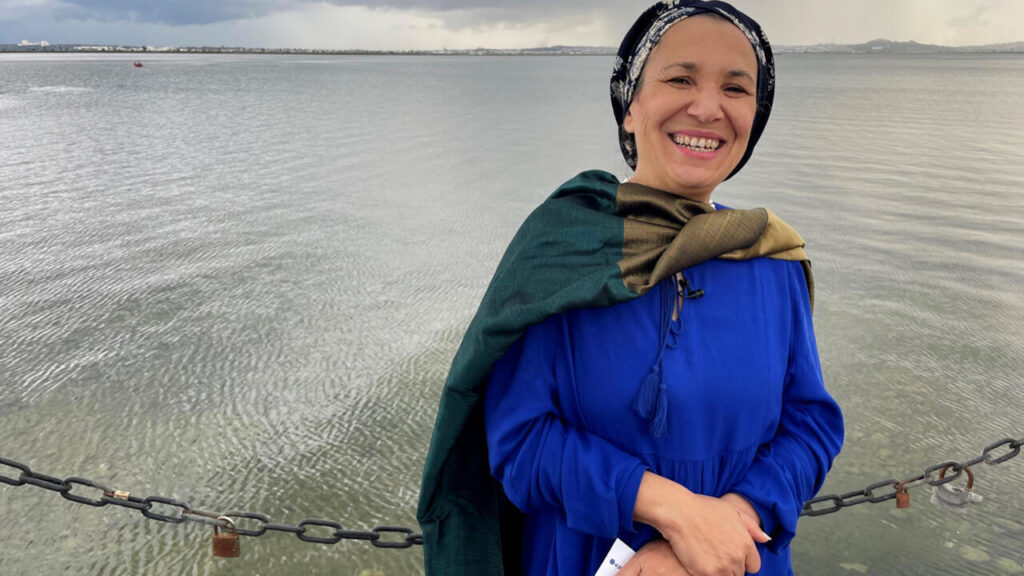
More than two years of investigation, awareness raising and protest work. To get 6,000 tonnes of household waste illegally transported from Italy to Tunisia back to our country. For this, Semia Labidi Gharbi, along with many other activists, has just received the Goldman Environmental Prize. Nicknamed the ‘Green Nobel,’ this award recognises the work of environmental advocates around the world.
“We are not landfills.”
“We are developing countries” but “not landfills,” said Semia Labidi Gharbi. The case dates back to 2020, when this household waste, the importation of which is prohibited by law, was transported to Tunisia in 280 containers by a Tunisian company that claimed it was plastic waste destined for recycling. Once the news broke, protests from the public and local NGOs ensued.
When she learnt what had happened, Semia Labidi Gharbi, who said she has been involved in “environmental issues affecting health” for 25 years, said she found the affair “unacceptable.” “What is toxic for developed countries is also toxic for us. And we also have the right to live in a healthy environment,” she added. Not to mention, she continued, that developed countries have the means “to manage their own waste,” whilst developing countries have “limited capacity.”
Happy ending
Eventually, most of the containers were returned to sender and 26 people were prosecuted in Tunisia in connection with this scandal. Tunisia’s environment minister was removed from office, arrested, and sentenced to three years in prison. Labidi Gharbi’s efforts have led to “policy changes within the European Union, which has now strengthened its procedures and regulations regarding waste shipments abroad,” the Goldman Prize winner said.
Old memories
The case has reopened an old wound, that linked to the international trafficking of waste from Western countries to Africa. An affair that for years saw Italy amongst the main players with the infamous affair of the poison ships, vessels loaded with waste, sometimes even toxic waste, that illegally polluted the African coasts with their cargo. Some, even, were made to sink with their cargo of poisons in the Mediterranean. It seemed like a page closed forever. Instead, the affair highlights the growth of the global waste trade, despite strict regulations designed to prevent rich countries from dumping their hazardous waste in poor countries.