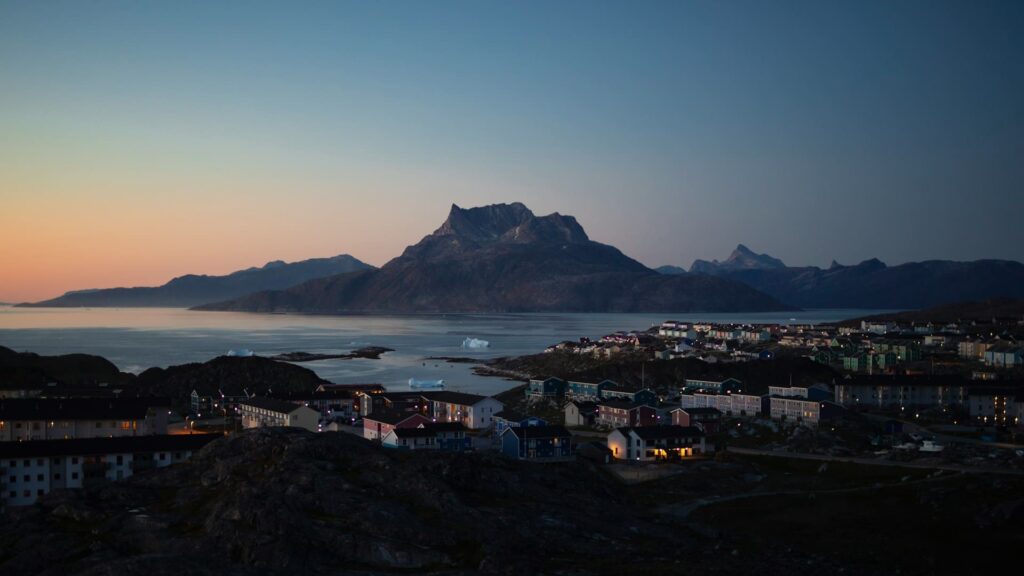
More than two hundred U.S. researchers have decided to step out of their laboratories and break traditional academic secrecy to take a stand on an issue that goes beyond science. In an open letter circulated in the journal Nature, the scholars who have been working in Greenland for years expressed solidarity with the Greenlandic people and sharp opposition to recent statements and political pressure coming from Washington on the territory’s future.
The message is direct and unambiguous: Greenland is not a negotiable commodity. It is not bought, not taken, not treated as a geopolitical pawn. It is a land that belongs to its inhabitants, with a history, a culture and a right to self-determination that, according to the signatories, cannot be challenged by power logics.
Speaking are not activists, but researchers who know Greenland in the field. Many of them spend long periods on the island to study glaciers, atmosphere, oceans and Arctic biodiversity. Among the first signatories is Yarrow Axford, a professor at Northwestern University, who points out how Greenland has become a global benchmark for climate research over the years. Not only because global warming is proceeding faster here than elsewhere, but because what happens on the island has direct effects on the entire planet.
Accelerated melting of Greenland’s glaciers contributes to rising sea levels and can affect major ocean currents, with repercussions for global climate. That’s why Greenland is a crucial natural laboratory, closely watched by the international scientific community. But, the researchers remind us, it is also an inhabited land, with local communities that have been collaborating with science for decades, offering support, knowledge and hospitality.
And it is this human connection, as well as the scientific one, that makes the stance particularly significant. Many of the signatories speak openly of friendships, collaborations and trusting relationships built over time with Greenlandic colleagues and citizens. The letter also stems from a desire to give something back to those communities, making them feel that they are not alone in the face of increasingly explicit external pressures.
In the text, the scholars also urge their colleagues remaining in the United States not to remain silent. Science, they explain in essence, does not live in a political vacuum and cannot ignore when research risks being instrumentalized or when an area critical to the global climate is reduced to an object of strategic contention.
The context is well known. In recent months Donald Trump has revived tones and ideas that have emerged in the past, returning to talk about Greenland from an overtly geopolitical and economic perspective. A choice that has provoked harsh reactions among both Greenlandic leaders and the international scientific community, which is concerned about the political and symbolic implications of this approach.
The researchers’ letter sends a clear signal: those who study Arctic climate know that Greenland is central to the future of the Planet, not to the ambitions of a single administration. And that is also why, now more than ever, defending its autonomy and respect is a scientific and moral responsibility.